

Key Takeaways
- A capsule wardrobe is defined by quality and versatility, not a strict item count.
- The core principle is that every piece should work with multiple others in the collection.
- Neutral, classic pieces form the backbone; personal style is added through smaller accent items.
- A capsule wardrobe can fit any lifestyle, budget, or aesthetic - it is not one-size-fits-all.
- Building one is a process, not a single shopping trip or purge.
Capsule Wardrobe
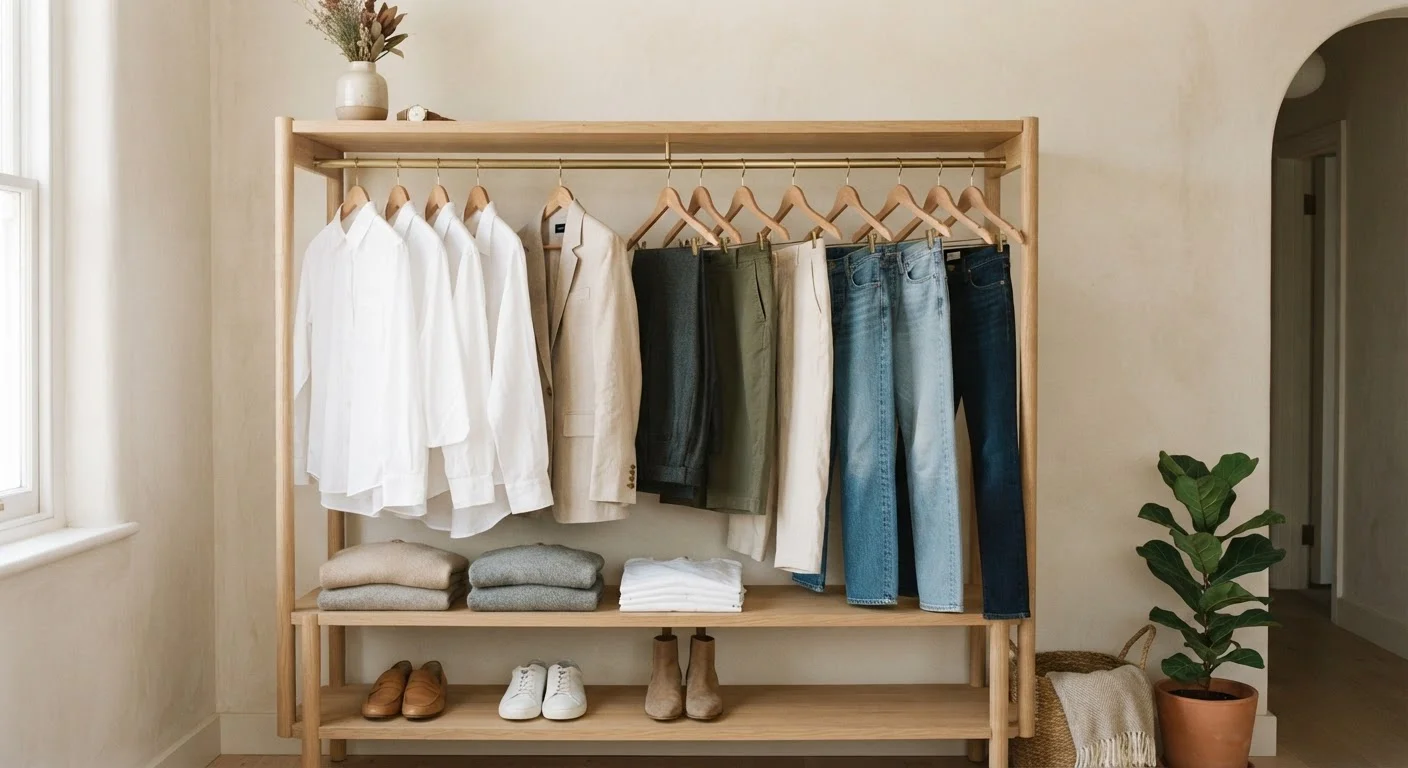
A capsule wardrobe is a deliberately small, curated collection of clothing pieces that work well together, covering most of your everyday needs without excess. The items are typically classic in style, neutral or complementary in color, and chosen to mix and match easily. The goal isn't austerity - it's intentionality: owning fewer things that you actually wear, rather than a full closet of items you don't.
The term was coined by London boutique owner Susie Faux in the 1970s and later popularized by designer Donna Karan, whose 'Seven Easy Pieces' collection in 1985 brought the concept mainstream attention.
What Makes a Wardrobe a "Capsule"
The word capsule implies containment - a self-sufficient unit. In wardrobe terms, that means a collection where everything inside it serves a clear purpose and connects to the rest. It's less about how many pieces you own and more about how deliberately each one was chosen.
The defining characteristic of a capsule wardrobe is interoperability: each item should pair naturally with at least three or four others in your collection. A well-built capsule means you can pull almost anything from your closet and make an outfit that works - without heroic effort or full-length mirror deliberation.
For a deeper look at the concept's origins and everyday value, see what makes a capsule wardrobe work.
80%
Clothes worn only 20% of the time
The often-cited 80/20 rule in wardrobe behavior suggests most people regularly wear a small fraction of what they own, which underlies the capsule wardrobe rationale.
30-50
Typical capsule wardrobe item range
Style educators and wardrobe consultants commonly suggest 30 to 50 total pieces as a functional capsule size, though no single standard exists.
3+
Outfits each piece should support
A general capsule guideline holds that each item should combine with at least three others in the collection to justify its place.
The Three Layers of a Capsule
Most well-structured capsule wardrobes can be broken into three functional layers:
- Foundation pieces - These are your workhorses: neutral-toned trousers, a well-fitting white or light-blue shirt, dark denim, a tailored blazer, a simple dress or skirt. They anchor every outfit and rarely go out of style.
- Bridge pieces - Slightly more expressive items that add variety without clashing. Think a striped top, a textured knit, a mid-layer jacket in an earth tone. These connect your basics to your personality.
- Accent pieces - A small number of bolder or trend-responsive items: a patterned scarf, a statement coat, a seasonal color. They rotate more freely and give the wardrobe freshness without destabilizing it.
The ratio that tends to work for most people: roughly 60-70% foundation, 20-25% bridge, and 10-15% accents. That's a rough guideline, not a rule.
Start With What You Already Wear
Before adding anything new, spend two weeks noting what you actually reach for each morning. The pieces you gravitate toward naturally are the seeds of your capsule. Build outward from those, rather than starting with a blank-slate shopping list.
Color, Fit, and Fabric: The Three Pillars
Capsule wardrobes don't work on concept alone - they depend on three practical decisions made consistently across every purchase.
Color Palette
A cohesive capsule usually anchors around two or three neutrals (think navy, camel, grey, white, or black) plus one or two accent colors the wearer genuinely enjoys. When most of your pieces share a tonal family, mixing becomes almost automatic.
Fit
Fit is the variable that determines whether a classic piece looks intentional or accidental. A well-fitted simple white tee reads as polished; an ill-fitting one reads as neglected. Tailoring a few key foundation pieces - even inexpensively - dramatically elevates a capsule's impact. The guide to adapting staples across body types covers this in useful detail.
Fabric Quality
Classic silhouettes in poor-quality fabric tend to lose their shape quickly, which defeats the longevity goal of a capsule. Prioritizing natural or high-quality blended fabrics - cotton, linen, merino wool, wool-blend - in at least your foundation pieces pays dividends over time.
Building Yours: A Starting Framework
A capsule wardrobe isn't assembled in a single shopping trip. It evolves as you learn what you actually reach for and what quietly gathers dust.
A practical starting point: take stock of what you already own, then identify your most-worn pieces. Those items reveal your real lifestyle - not the idealized version. Your capsule grows from what genuinely fits your daily life, whether that's office attire, weekend casual, or a mix. For a full roadmap, building a wardrobe from scratch walks through the process step by step.
Once you have a foundation, filling gaps becomes much easier. The wardrobe staples every adult should own offers a practical breakdown of the pieces worth prioritizing. And if you're wondering how all of this relates to seasonal trend-dressing, the capsule concept and trend-dressing clarifies the distinction.
Finally, it's worth addressing the myths that stop people from starting: common capsule wardrobe misconceptions covers the most persistent ones clearly.
“A capsule wardrobe should be a tool for liberation, not restriction. When every piece works together, getting dressed stops being a problem to solve.”
— Susie Faux, London boutique owner credited with coining the term 'capsule wardrobe' in the 1970s