

Key Takeaways
- Classic staples need personal adaptation - proportion and fit matter more than generic sizing.
- Understanding your body's natural lines helps you choose cuts that feel balanced and confident.
- Personal style preferences should guide how you layer and accessorize any foundational piece.
- Tailoring even one or two key pieces can dramatically improve how a whole wardrobe looks.
- A well-adapted wardrobe costs less over time because pieces get worn consistently and last longer.
What you will need
Why One-Size-Fits-All Styling Advice Falls Short
Most wardrobe guidance is written as if clothing exists in a vacuum - as if a classic white button-down looks the same on every person who wears it. In practice, two people wearing the same shirt in the same size can look completely different depending on their torso length, shoulder width, and personal sense of scale. That gap between generic advice and personal reality is exactly why so many people build wardrobes full of unworn pieces.
Adapting essentials to your own body and aesthetic isn't about following a new set of rules. It's about gathering a little information - about your proportions, your lifestyle, your preferences - and using it to make smarter choices with the pieces you already know work as classics. The result is a wardrobe that gets used, not just admired from a hanger.
If you're also weighing whether certain pieces belong in a long-term wardrobe at all, our guide to capsule wardrobe myths is a useful companion read.
Avoid Styling Rules That Feel Like Rules
Prescriptive advice like 'petite people should avoid wide-leg trousers' or 'curvy figures must wear wrap dresses' oversimplifies and can steer you away from pieces you'd actually love. Treat body-type guidance as a starting point for experimentation, not a rigid prescription. Confidence and comfort are better style metrics than any formula.
Getting Started: What You Need
This process doesn't require a shopping trip or a wardrobe overhaul. It starts with observation and honesty about what's actually working in your current closet.
What you will need
Full-length mirror
Allows you to assess how a garment sits across your full silhouette, not just from the waist up.
Flexible tape measure
Helps you record your measurements so you can compare them to size charts before purchasing.
A local tailor or alterations service
Makes small adjustments - hemming, taking in a seam, adjusting shoulders - that dramatically improve fit.
Start With What You Already Own
Before buying anything new, pull out your most-worn pieces and ask why they keep earning wear. Identifying what you already reach for - the specific cut, weight, or color - gives you a personal data point far more reliable than any trend forecast. Build from there rather than starting from scratch.
Step-by-Step: Adapting Your Wardrobe Essentials
Identify your natural proportions
Stand in front of a full-length mirror in fitted clothing and note where your waist sits relative to your hips and shoulders, how long your torso appears compared to your legs, and whether your frame reads as narrow, broad, or balanced. You're not assigning yourself a shape category - you're simply gathering information about what your clothing needs to work with.
Map your staples to your proportions
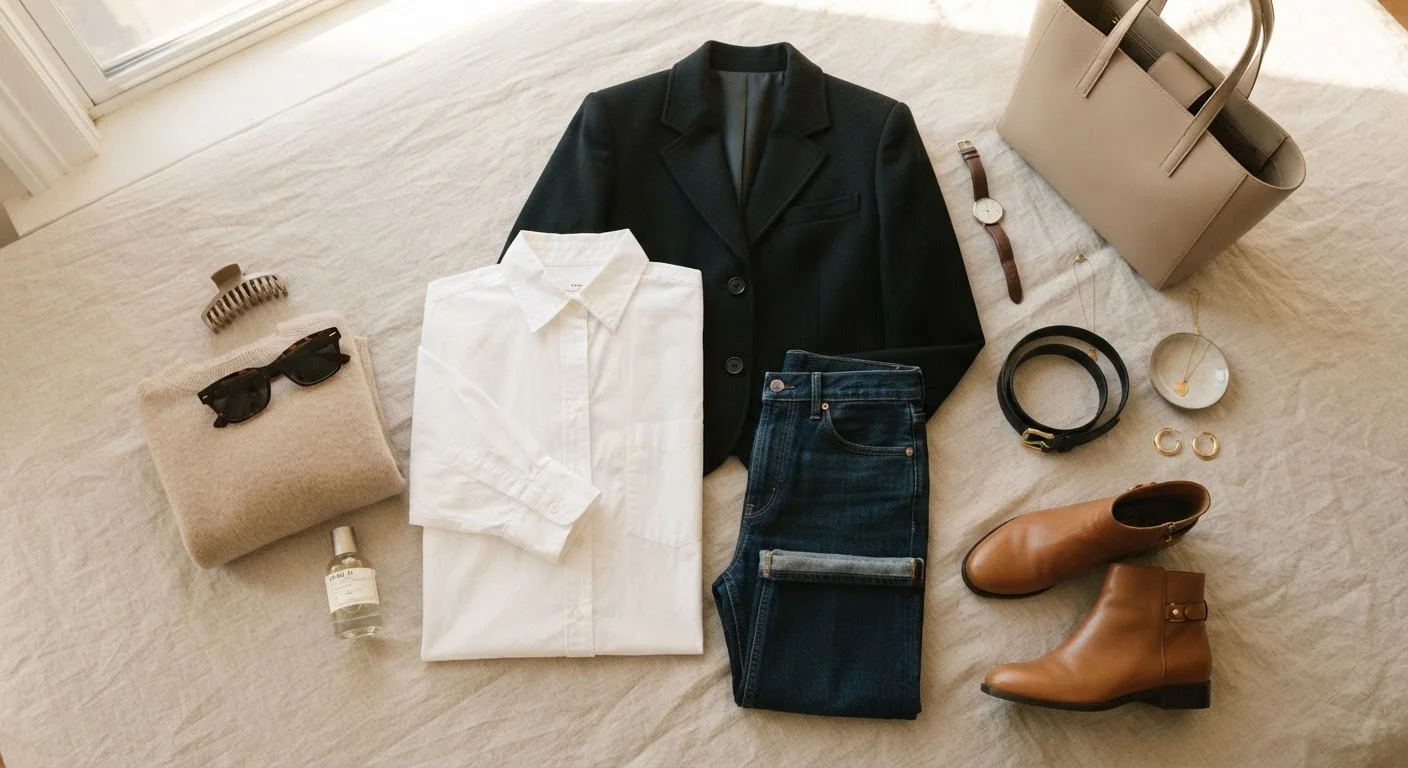
Review the core pieces you want in your wardrobe - a tailored trouser, a structured blazer, a classic white shirt - and consider which specific details work with your proportions. A higher-rise trouser, for example, elongates the leg regardless of height. A slightly cropped blazer can help define a waist when a longer cut would swamp the silhouette. The goal is to identify one or two adjustments per piece rather than reinventing everything.
Define your personal style anchor
Staples adapt differently depending on your aesthetic. A structured blazer styled with wide-leg trousers and loafers reads very differently than the same blazer worn oversized over a slip dress. Before building out your wardrobe, name your style anchor - whether that's minimal and clean, relaxed and layered, or polished and classic. This gives you a consistent lens for how to wear the same foundational pieces across multiple outfits. See our everyday style tips for building that consistent aesthetic in practical terms.
Prioritize pieces that require minimal adaptation
Some staples are genuinely flexible - a good crewneck sweater in a neutral, a straight-leg dark denim, a well-cut trench coat. These tend to work across a wide range of proportions and style anchors with minor adjustments to fit. Start with these high-flexibility items before moving to more structured pieces like tailored suits or wide-leg trousers that benefit from more precise fitting. If you're weighing which classics to invest in first, this guide on classic vs. trendy choices can help you prioritize.
Test combinations before committing
Once you've selected a staple, wear it with three different items already in your wardrobe before deciding it's a keeper. This stress-tests its flexibility and reveals whether it actually integrates with your existing pieces or creates styling friction. A piece that only works in one exact combination is a specialty item, not a staple.
Schedule alterations for key investment pieces
For any staple you plan to wear repeatedly - a blazer, a pair of trousers, a coat - budget time and money for alterations if the off-the-rack fit isn't quite right. Common adjustments include hemming, taking in the waist, or tapering a sleeve. These changes are usually modest in cost and can make a significant piece feel made-for-you. Once altered and cared for properly, these items can last many years. For more on maintaining your pieces, see how to care for wardrobe essentials so they last.
Fit Beats Formula Every Time
No styling rule overrides fit. A perfectly chosen staple that doesn't fit your actual body will always look off, while a simpler piece tailored to your proportions looks intentional and polished. Before applying any style guidance, prioritize how a garment sits on your shoulders, waist, and hips. If it needs adjustment, a tailor is almost always worth the investment.