
Basement Waterproofing: Interior Methods, Exterior Methods, and When Each Applies

Key Takeaways
- Interior waterproofing manages water that has already entered; exterior waterproofing stops it at the source.
- The right method depends on where water is entering, your budget, and your yard's accessibility.
- Exterior excavation is disruptive and costly but offers the most comprehensive long-term protection.
- Interior drainage systems are less invasive and work well when hydrostatic pressure is the main problem.
- Many homes benefit from a combination of both interior and exterior strategies.
- Work involving foundation walls or below-grade drainage typically requires a licensed contractor and local permits.
Our Verdict
Neither interior nor exterior waterproofing is universally superior - each addresses a different root cause of moisture intrusion. Exterior methods are best when you can identify and stop water before it contacts the foundation, while interior systems excel at managing water that reaches the wall or floor regardless of outside conditions. For most homeowners dealing with chronic basement moisture, a professional assessment is the necessary first step.
| Best for | Recommended |
|---|---|
| Homes with soil grading or drainage issues pushing water toward the foundation | Exterior waterproofing |
| Existing finished basements or homes with limited yard access | Interior drainage systems |
| Minor condensation or surface seepage without active wall cracks | Interior sealers and humidity control |
| Severe or recurring flooding from multiple sources | Combined interior and exterior approach |
Why Basements Get Wet - And Why It Matters
Basement moisture comes from three distinct sources: condensation forming on cool surfaces, surface water seeping in through cracks or gaps, and groundwater pushed upward by hydrostatic pressure (the force exerted by water-saturated soil pressing against your foundation walls and floor). Identifying which source - or combination of sources - is causing your problem is essential before choosing any waterproofing strategy. Treating the wrong cause wastes money and may leave the real problem untouched.
Condensation is typically an interior humidity issue and responds to ventilation and dehumidification. Surface seepage and hydrostatic pressure require drainage or barrier solutions. If you're unsure what you're dealing with, tape a piece of plastic sheeting to a damp wall section for 24 hours: moisture forming on the outer face of the plastic points to condensation; moisture behind it indicates water coming through the wall.
For a broader look at how water moves through your home's systems, see how household plumbing systems actually work.
Interior Waterproofing: Methods and Best Uses
Interior waterproofing doesn't stop water from reaching the foundation - instead, it intercepts and redirects water that has already made it inside. The two main categories are interior sealers and interior drainage systems.
Interior Sealers and Coatings
Masonry waterproofing paints and crystalline sealers are applied to the inside face of foundation walls. They can reduce minor seepage and surface moisture transmission but are not effective against significant hydrostatic pressure. Cracks in walls must be repaired before sealing - otherwise, coatings will eventually fail. For guidance on choosing the right sealant material, grout, caulk, and sealant distinctions can help clarify options.
Interior Drainage Systems
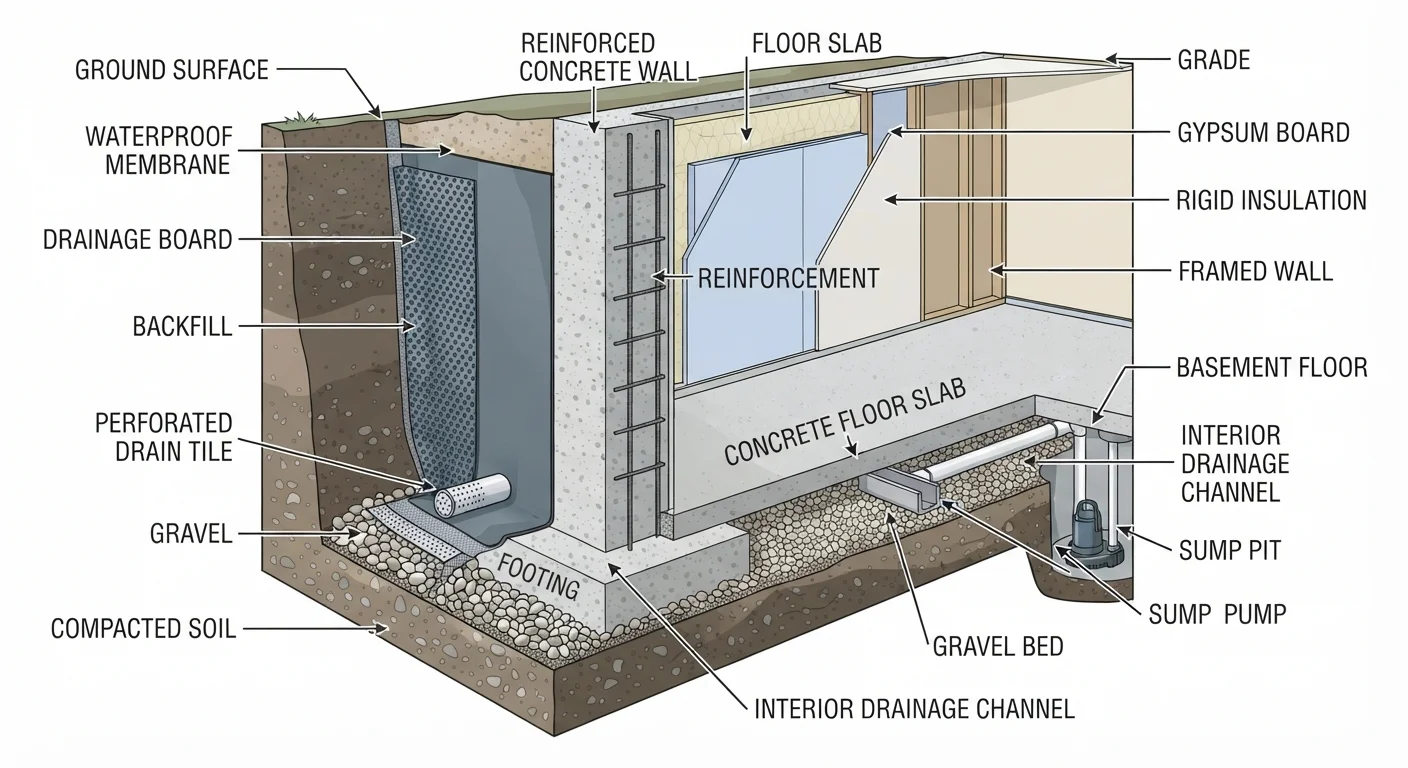
These systems - commonly called French drains or interior perimeter drains - involve cutting a channel along the perimeter of the basement floor, installing a perforated pipe, and routing collected water to a sump pump that discharges it away from the home. This approach is highly effective when hydrostatic pressure is causing water to push through floor-wall joints or porous concrete blocks. It does not waterproof the wall itself but removes water before it causes damage.
Start with a Professional Moisture Assessment
Before committing to any waterproofing system, have a licensed contractor or structural engineer evaluate your foundation, drainage patterns, and soil conditions. A clear diagnosis prevents spending money on the wrong solution. Ask for a written assessment separate from any contractor sales pitch to maintain objectivity.
Interior drainage work requires cutting into your concrete slab and typically involves permits in most jurisdictions. Always hire a licensed contractor for this scope of work and verify local code requirements before proceeding.
Exterior Waterproofing: Methods and Best Uses
Exterior waterproofing addresses moisture at its source - before it contacts your foundation. This is considered the most thorough solution but is also the most involved and expensive.
Excavation and Membrane Application
The foundation wall is excavated down to the footing, cleaned, and coated with a waterproof membrane (typically a rubberized asphalt or polymer compound). A drainage board is often applied over the membrane to direct water downward rather than letting it pool against the wall. Properly installed footing drains carry that water away from the structure.
Exterior Grading and Drainage
Before excavating, many homeowners should first evaluate simpler exterior fixes. Soil grading - ensuring the ground slopes away from the foundation at least six inches over the first ten feet - is often overlooked. Extending downspouts further from the house and adding splash blocks are low-cost measures that reduce water load on the foundation. These steps won't solve severe problems, but they are always worth addressing first.
| Interior Sealers | Interior Drainage System | Exterior Waterproofing | |
|---|---|---|---|
| What it addresses | Surface moisture and minor seepage | Hydrostatic pressure and active seepage | Water before it reaches the foundation |
| Disruption level | Minimal - paint-on application | Moderate - slab cutting required | High - full excavation required |
| Typical relative cost | Lowest | Moderate | Highest |
| Effectiveness on severe flooding | Low | Moderate to high | High |
| Permits typically required | Usually no | Often yes | Yes |
| DIY-friendly | Partially - minor repairs | No - professional recommended | No - professional required |
Exterior excavation is disruptive to landscaping and hardscaping and may take several days. It's most justified when interior methods have failed or when the foundation membrane is confirmed to be absent or deteriorated. For homeowners new to renovation scoping, home renovation for first-timers provides useful context on project planning.
Choosing the Right Approach for Your Situation
The decision between interior and exterior waterproofing hinges on diagnosis, not preference. Use the comparison above as a starting framework, but recognize that chronic or severe water intrusion warrants a professional assessment - preferably from a structural engineer or a certified waterproofing contractor who is not also selling a specific system.
Don't Rely on Sealers Alone for Active Leaks
Masonry coatings and hydraulic cement patches can manage minor dampness but will not hold against ongoing hydrostatic pressure. If water is visibly entering through wall cracks or floor joints, surface-only treatments are a short-term measure at best. Persistent water intrusion can weaken concrete block walls over time and should be evaluated by a professional before conditions worsen.
Seasonal upkeep matters too. Keeping gutters clean, checking window well drainage, and inspecting foundation vents are habits that reduce moisture load year-round. See our guide on seasonal home maintenance tasks for a full checklist of what to inspect and when.
If you have a finished basement, interior drainage systems are far less disruptive than full exterior excavation. If your foundation walls show significant cracking or bowing, exterior work - combined with structural repair - may be unavoidable. In many cases, a combination approach provides the most durable outcome: exterior grading corrections reduce water volume, while an interior drain and sump pump handles whatever residual pressure remains.