

Key Takeaways
- Grout belongs between tiles on flat, rigid surfaces - never in corners or change-of-plane joints.
- Caulk is required wherever two surfaces meet at an angle, such as where a tub meets the tile wall.
- Sealant protects porous grout and natural stone from absorbing moisture and staining agents.
- Using grout in a flexible joint causes cracking because it cannot accommodate movement.
- Most tile jobs require all three materials, each applied in the right location.
Grout, Caulk, and Sealant
Grout is a cement-based filler used between rigid tile surfaces to complete the installation. Caulk is a flexible, waterproof compound used at joints where two surfaces meet at an angle or where movement is expected. Sealant is a protective coating applied over porous surfaces - including grout itself - to resist moisture and staining. Each material is engineered for a different purpose, and substituting one for another typically causes premature failure.
Grout is generally rigid and non-compressible; caulk is elastic and compressible. This distinction matters wherever building movement, thermal expansion, or vibration is a factor - those joints need caulk, not grout.
Why the Distinction Matters
Walk into most hardware stores and you'll find grout, caulk, and sealant shelved in the same aisle, which makes it easy to assume they're interchangeable. They are not. Each material is formulated with a specific physical property in mind, and applying the wrong one in the wrong location is one of the most common causes of early tile failure and water damage in kitchens and bathrooms.
The core issue is movement. Buildings - and the surfaces inside them - expand and contract slightly with temperature changes and settle over time. Rigid materials like grout cannot flex to accommodate this movement. Flexible materials like caulk can. Understanding which locations experience movement, and which don't, is the key to choosing correctly.
For a broader look at how moisture control works throughout the home, see our guide to basement waterproofing methods, which explains how moisture management principles apply at a structural level.
48-72 hrs
Minimum cure time before sealing grout
Most cement-based grout manufacturers recommend waiting at least 48 to 72 hours after grouting before applying a sealant, though some formulations require longer cure times in humid conditions.
1-3 years
Typical sealant reapplication interval for showers
Industry guidance from tile installation associations generally suggests reapplying grout sealant every one to three years in high-use wet areas, depending on the sealant type and traffic level.
Where Each Material Belongs
Grout: Between Tiles on the Same Plane
Grout fills the narrow gaps between tiles on a continuous flat surface - a shower wall, a floor, a kitchen backsplash. Its job is to complete the tile installation structurally, lock tiles in position, and prevent debris from collecting between them. Cement-based grout is available in sanded and unsanded varieties; sanded grout is used for joints wider than about 1/8 inch, while unsanded grout is used for narrower joints and softer tile faces that could be scratched by sand.
Caulk: At Joints, Corners, and Transitions
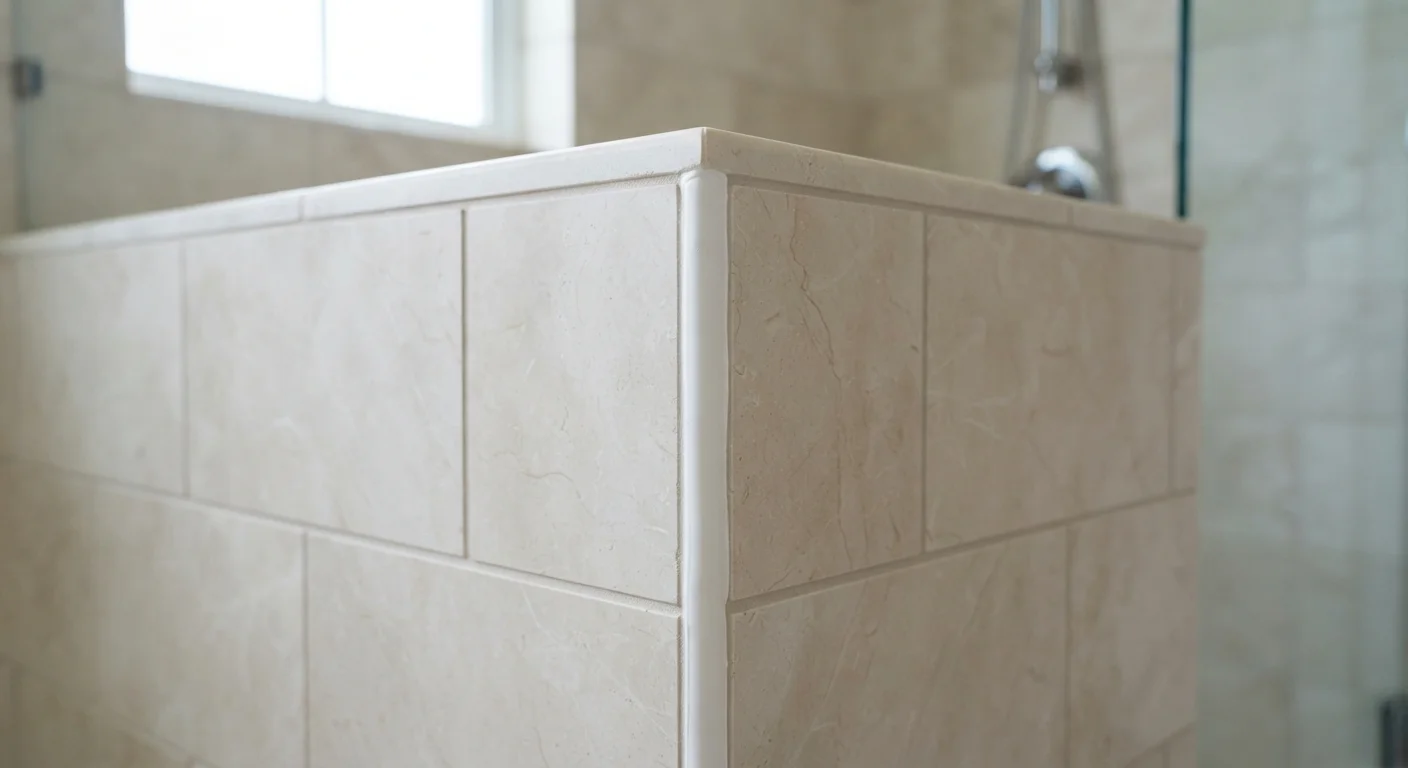
Wherever two surfaces meet at an angle - the corner where a shower wall meets the floor, the seam where a bathtub deck meets tile, or the edge where countertop backsplash meets the wall - caulk is the correct choice. These joints are called change-of-plane joints, and they experience the most movement. Silicone caulk is generally preferred in wet areas because of its superior water resistance and longevity. Latex caulk is easier to apply and tool but is less durable in continuously wet environments.
Match Caulk Color to Your Grout
Most caulk manufacturers offer color-matched formulations designed to coordinate with popular grout shades. Using a closely matched caulk color at corners and transitions creates a clean, consistent appearance while still providing the flexibility those joints require. Look for the grout manufacturer's own caulk line first - they often offer exact color matches.
Sealant: Over Porous Surfaces
Sealant is not a gap-filler. It is a protective coating applied to porous materials to prevent moisture, oils, and staining agents from penetrating. Cement-based grout - once fully cured - should be sealed in any wet or heavily used area. Natural stone tiles such as marble, travertine, and slate are also routinely sealed because they absorb liquids readily. Sealant is typically brushed, rolled, or wiped onto the surface and then buffed clean from the tile face before it dries.
Common Mistakes and How to Avoid Them
The most frequent error is using grout in a corner joint or along the tub-to-tile seam. Grout in these locations will crack within months as the surfaces shift, leaving an open channel for water to travel behind the tile. Once moisture gets behind tile, the damage - to the substrate, the wall structure, and potentially the room below - can be extensive and costly to repair.
A second common mistake is skipping sealant on cement grout in a shower. Unsealed grout in a wet area absorbs water and soap residue, leading to staining and mold growth that becomes increasingly difficult to clean. Sealant does not last indefinitely - most formulations require reapplication every one to three years in high-use showers.
Finally, some homeowners apply sealant over damaged or cracked grout, expecting it to act as a repair. Sealant cannot bridge or fill a crack; it only protects structurally sound material. Damaged grout must be removed - typically with a grout saw or oscillating tool - and replaced before any protective coating is applied. For a full breakdown of when each material shows signs of wear, see our guide to recognizing when grout, caulk, and sealant need replacing.
Epoxy Grout Is a Different Category
Epoxy grout - made from epoxy resins rather than cement - is non-porous, highly stain resistant, and does not require sealing. It is also more difficult to apply and significantly more expensive than cement-based grout. It is commonly used in commercial kitchens and high-demand installations. If you are unsure which type of grout was used in your home, a simple water-drop test can help: a drop of water on sealed or epoxy grout will bead up, while it will absorb quickly into unsealed cement grout.