

| Typical grout cure time before sealing | 48-72 hours (cement grout) |
| Grout sealant reapplication frequency (wet areas) | Every 1-2 years |
| Grout sealant reapplication frequency (dry areas) | Every 3-5 years |
| Caulk type for wet areas | 100% silicone or siliconized latex |
| Tiles that don't need surface sealant | Glazed ceramic, most porcelain |
| Simple sealant test | Sprinkle water - bead = active, absorb = reapply |
What Each Material Actually Does
Grout, caulk, and sealant are often treated as interchangeable, but they serve fundamentally different purposes. Using the wrong one - or skipping one entirely - is a common cause of tile failure, water intrusion, and early material breakdown. Here's what each one is designed to do.
Grout
A rigid filler material - cement-based or epoxy-based - used to fill the joints between tiles. It creates a hard, dense surface but does not flex with building movement.
Caulk
A flexible, waterproof compound applied at joints where two surfaces meet at a change of plane or material. It accommodates movement that would crack rigid materials like grout.
Penetrating sealant
A liquid product applied to porous surfaces such as cement grout or natural stone. It soaks in and creates a moisture barrier within the material without filling gaps or altering appearance significantly.
Sanded vs. unsanded grout
Sanded grout contains fine sand for strength and is used in wider joints (typically over 1/8 inch). Unsanded grout is smoother and used in narrow joints or on delicate tile surfaces that sand could scratch.
Substrate
The surface beneath the tile installation - such as cement board, plywood, or concrete - that the tile is bonded to. A stable, properly prepared substrate is essential for grout and tile to hold long-term.
Grout is a cement- or epoxy-based filler used to fill the joints between tiles. It holds tiles in a rigid relationship to each other, creating a hard, dense surface. It is not flexible, which matters because walls and floors shift slightly with temperature changes and building movement.
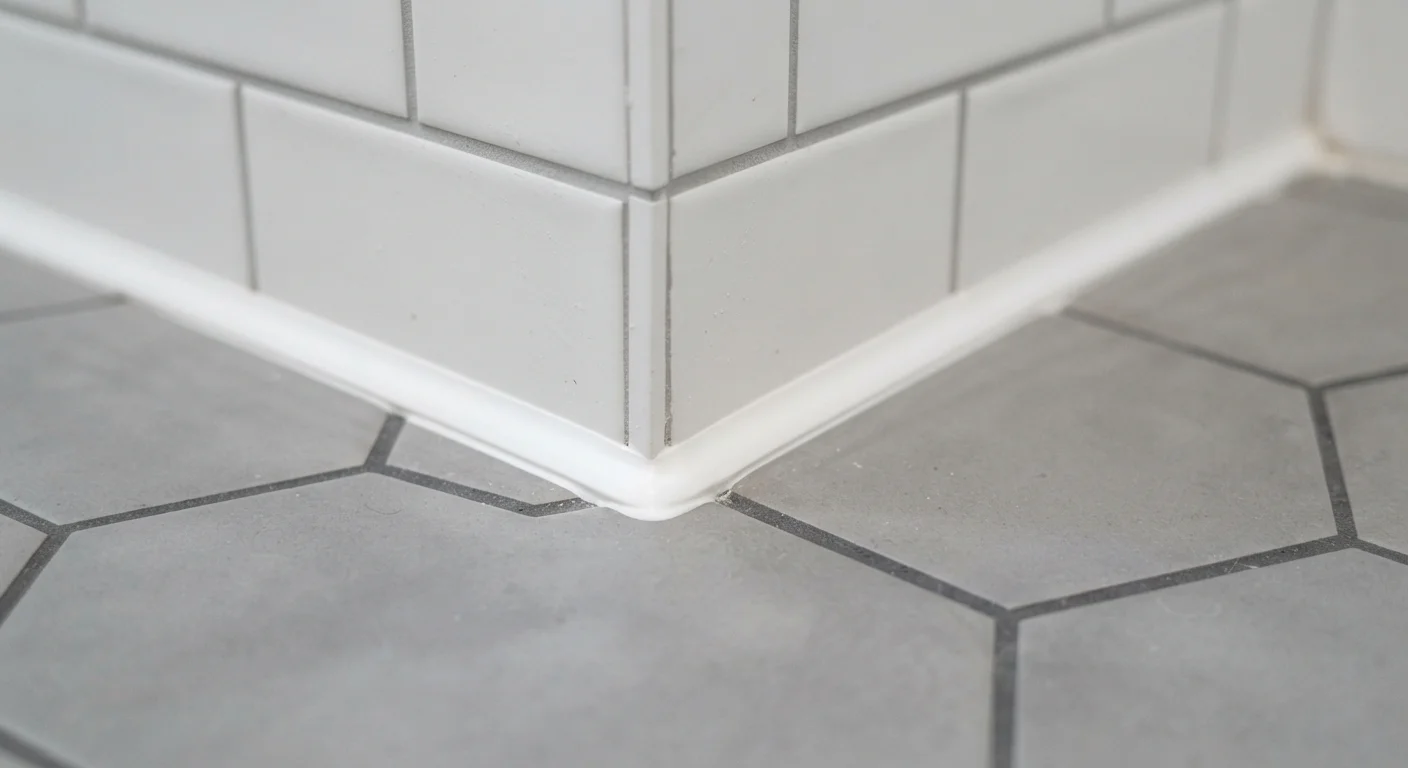
Caulk is a flexible, waterproof compound - typically silicone or latex-based - applied as a sealant at joints where two surfaces meet at a change in plane or material. Think of where a bathtub meets the wall, or where the floor meets the baseboard. These junctions flex, so they need a flexible material.
Sealant in the home improvement context usually refers to a penetrating liquid applied over porous surfaces - most commonly over grout lines or natural stone - to block moisture absorption. It doesn't fill gaps; it protects existing surfaces from within. For a broader look at how these three materials differ in placement, see our detailed placement guide.
Where Each One Belongs
| Typical grout cure time before sealing | 48-72 hours (cement grout) |
| Grout sealant reapplication frequency (wet areas) | Every 1-2 years |
| Grout sealant reapplication frequency (dry areas) | Every 3-5 years |
| Caulk type for wet areas | 100% silicone or siliconized latex |
| Tiles that don't need surface sealant | Glazed ceramic, most porcelain |
| Simple sealant test | Sprinkle water - bead = active, absorb = reapply |
Placement determines performance. Grout belongs in the field joints between tiles on walls, floors, backsplashes, and countertops - any area where tiles are bonded to a stable substrate and the joint won't flex significantly. Epoxy grout is harder and more stain-resistant than sanded or unsanded cement grout, and is worth considering in high-moisture or high-traffic areas.
Caulk replaces grout wherever two planes meet: at inside corners in showers, at the tub-to-wall joint, where the floor meets the wall, and around fixtures like faucets and toilet bases. A common mistake is grouting these corners - when the surfaces flex even slightly, grout cracks and opens a gap that lets water behind the tile. Caulk absorbs that movement without breaking the seal.
Sealant goes over finished grout (after it has cured fully - typically 48-72 hours for cement grout) and over natural stone tiles such as marble, slate, or travertine. Glazed ceramic and most porcelain tiles don't need a surface sealant because they're already non-porous, but the grout lines between them do.
Signs That Each One Needs Replacing
When to Call a Professional
Replacing caulk or reapplying grout sealant are generally manageable DIY tasks for most homeowners. However, if you find cracked or loose tiles, significant grout deterioration across a large area, or any evidence of water damage behind a wall surface (soft drywall, discoloration, odor), stop and consult a licensed tile contractor or water damage professional before proceeding. Attempting repairs over hidden moisture damage typically makes the problem worse and more expensive to fix.
Material condition is more reliable than age alone. Here's what to look for with each.
Grout
- Cracking or crumbling: Hairline cracks in a single spot may be spot-repairable, but widespread cracking suggests substrate movement or a failing bond beneath the tile.
- Staining that won't clean: If sealed grout still absorbs stains after cleaning, the sealant has worn through and the grout itself may be deteriorated.
- Missing sections: Any gap in a grout joint is an open path for water. Re-grout promptly.
Caulk
- Peeling or pulling away from the surface: Caulk that lifts at the edge has lost adhesion and is no longer sealing.
- Visible mold growth: Surface mold can sometimes be cleaned, but mold that has penetrated the caulk body means the material needs full removal and replacement.
- Hardness or brittleness: Flexible caulk that has become rigid will crack with normal movement. Replace it before it opens a gap.
Sealant
The simplest test: sprinkle water on the grout line or stone surface. If the water beads up and rolls off, the sealant is active. If the surface darkens as it absorbs the water, the sealant has worn down and needs reapplication. Most grout sealants require refreshing every one to two years in wet areas like showers, and every three to five years in lower-traffic areas.
Staying on top of these materials is part of the broader work of home upkeep. The seasonal home maintenance tasks that often get overlooked - including bathroom checks - can catch early failure before water damage sets in.