

Key Takeaways
- A capsule wardrobe doesn't mean wearing identical outfits every day - variety is built in.
- Capsule wardrobes are adaptable to any personal style, budget, or body type.
- Trends and capsule thinking can genuinely coexist with the right approach.
- There is no universal 'correct' number of pieces - the concept is flexible by design.
- Starting small and building gradually is more practical than an all-at-once overhaul.
Why Capsule Wardrobe Myths Persist
The term "capsule wardrobe" has been circulating in style conversations for decades, yet misunderstanding around it remains remarkably common. Part of the problem is that the concept gets stretched in many directions - by minimalist bloggers, by fashion editors, and by well-meaning but oversimplified social media posts. The result? A lot of people assume it's not for them before they've truly understood what it involves.
If you've ever dismissed the idea because it sounded too rigid, too boring, or just too far from your life, you're not alone. But those reservations are almost always rooted in misconceptions rather than reality. Understanding the concept from the ground up tends to shift the picture considerably.
Myth
A capsule wardrobe means wearing the same outfit every day.
Fact
A capsule is a coordinated collection designed to create many outfits from fewer pieces - not a uniform.
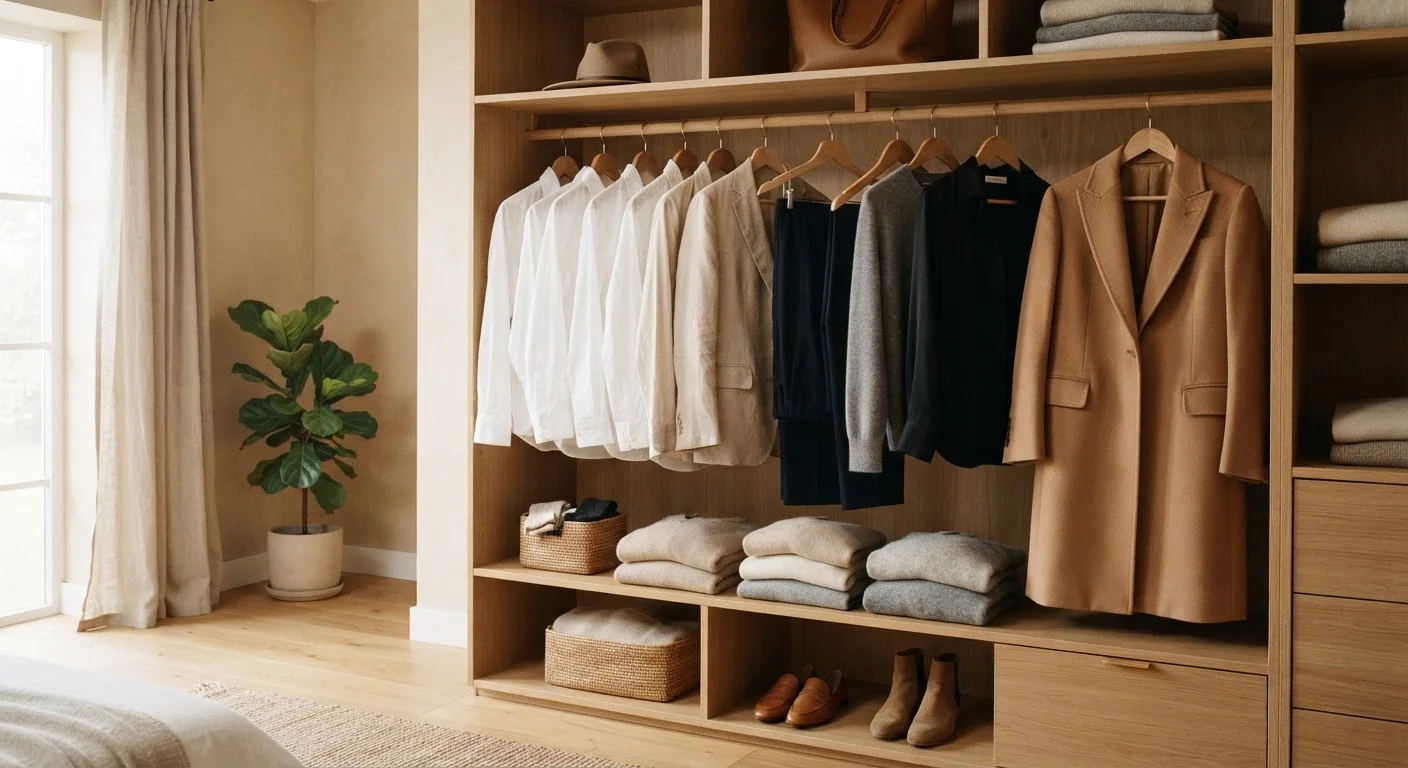
This is perhaps the most persistent myth, and it often comes from images of tech founders wearing identical gray T-shirts. A true capsule wardrobe is built on versatility: pieces that mix and match intentionally, multiplying the number of distinct looks available. A collection of 30 well-chosen items can realistically generate well over 100 outfit combinations when colors and silhouettes work together cohesively.
Myth
Capsule wardrobes are only for minimalists or people who hate fashion.
Fact
The capsule concept is a framework, not an aesthetic - it works for maximalists, trendsetters, and everyone in between.
Loving fashion and loving a streamlined closet aren't mutually exclusive. The capsule approach is simply a method for making intentional choices rather than accumulating pieces without purpose. Someone with a vibrant, expressive style can build a capsule just as effectively as someone who prefers quiet neutrals - the pieces look different, but the underlying logic is the same.
Myth
You need to throw everything out and start from scratch.
Fact
Most people already own several capsule-worthy pieces; the process is about identifying and building on them.
A complete closet overhaul is neither required nor advisable for most people. The practical starting point is an honest audit of what you already wear regularly and what earns its space. Many wardrobes contain reliable staples buried beneath impulse purchases. Surfacing those pieces and filling specific gaps is far more sustainable - financially and psychologically - than starting over entirely.
Myth
There's a specific number of items every capsule wardrobe must have.
Fact
Popular counts like '33 pieces' are guidelines from specific challenges, not universal rules.
Various style frameworks have popularized specific numbers, and those targets can be useful for people who want a defined goal. But the number that works for a parent of three young children, a person who travels frequently for work, or someone living in a climate with four distinct seasons will naturally differ. The guiding principle is sufficiency without excess - whatever that means for your actual life.
Myth
Capsule wardrobes are expensive because you have to buy high-end basics.
Fact
The concept prioritizes cost-per-wear and longevity - quality is relevant, but there's no price floor required.
The emphasis on quality in capsule conversations often gets misread as a mandate to spend a lot. In practice, cost-per-wear is the more useful lens: a well-constructed piece worn 200 times often represents better value than a cheap one replaced every season. That calculation is compatible with a wide range of budgets. Building gradually - replacing lower-quality items as they wear out rather than all at once - is a perfectly sound strategy.
Building a Capsule That Actually Works for You
Once the myths are out of the way, the practical question becomes: where do you actually start? The honest answer is that it depends entirely on your lifestyle, your existing wardrobe, and what you genuinely reach for each week. There's no mandatory list of thirty-three pieces or particular color palette required.
Avoid the 'All-or-Nothing' Trap
One of the most common stumbling blocks is feeling that you have to perfect your capsule wardrobe immediately. Discarding large quantities of clothing at once - especially before you've worn alternatives - can lead to regret and unnecessary re-spending. Take a phased approach: identify what's working, retire what genuinely isn't, and fill gaps deliberately over time.
What tends to anchor a functional wardrobe is a core of versatile staples - pieces that work across multiple occasions and pair easily with one another. The clothing pieces that anchor a functional wardrobe look different for a remote worker in Minnesota than for someone commuting to an office in Atlanta, and that's exactly as it should be.
Personal style and body type shape which classics actually serve you best. Adapting timeless pieces to your proportions and aesthetic is just as important as selecting them. And if you enjoy following seasonal trends, know that a capsule approach and trend-dressing genuinely can coexist - the foundation just makes trend pieces easier to incorporate thoughtfully rather than impulsively.
~30%
Of wardrobe items typically worn regularly
Wardrobe utilization studies consistently suggest most people actively wear only a fraction of the clothes they own, pointing to the practical upside of a more curated approach.
100+
Outfit combinations from ~30 coordinated pieces
Style educators commonly demonstrate that a tightly coordinated 30-piece wardrobe - with complementary colors and versatile silhouettes - can yield well over 100 distinct outfit combinations.
The clearest path forward is to audit what you already own, identify the gaps that cause daily friction, and fill them gradually with pieces chosen for longevity and versatility. Progress over perfection is the spirit of the whole endeavor.