

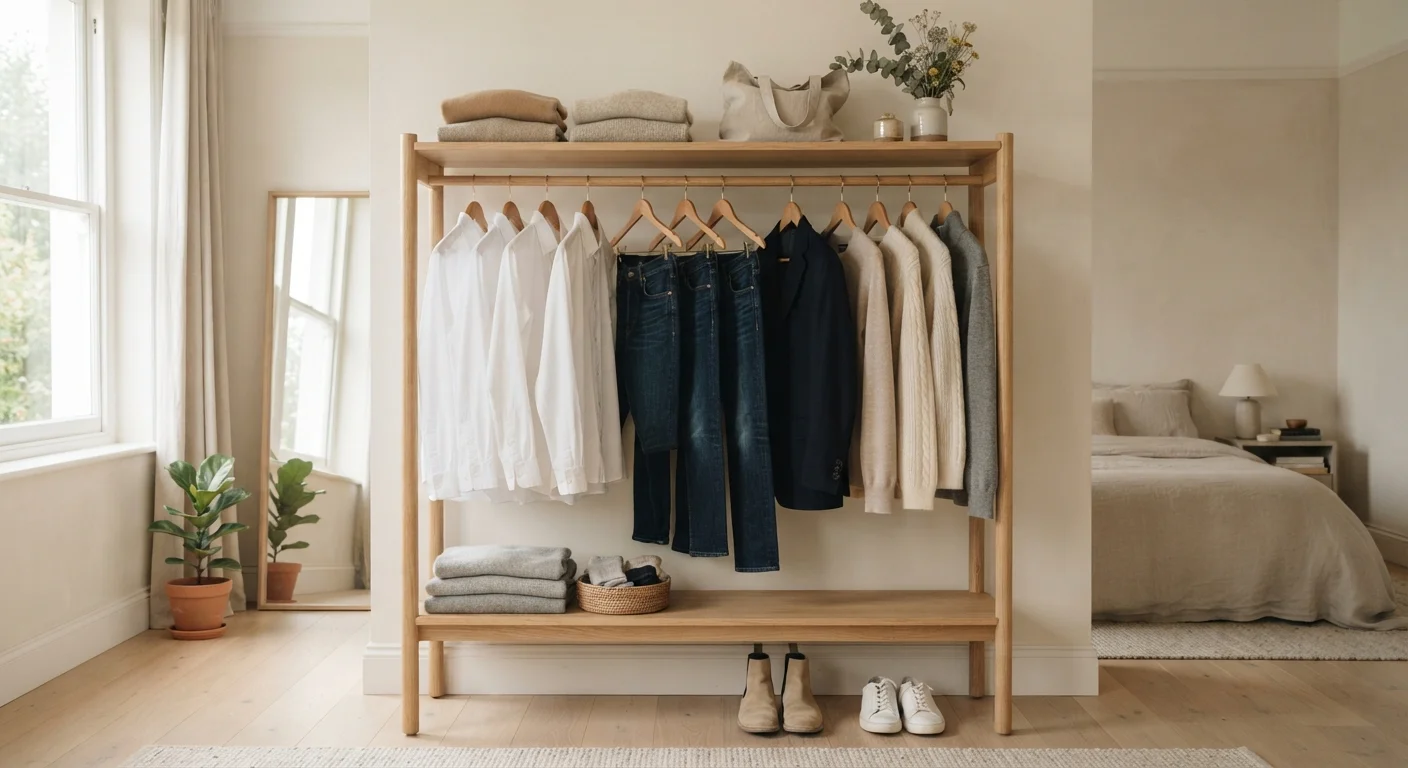
Key Takeaways
- A small collection of versatile, classic pieces can outperform a packed closet of rarely worn items.
- Wardrobe staples are defined by their ability to mix, layer, and transition across occasions and seasons.
- Fit matters more than quantity - well-fitting basics consistently look more polished than trend-driven pieces.
- Investing thoughtfully in durable fabrics extends the life of core pieces and reduces long-term clothing costs.
- Staples work best when chosen to reflect your actual lifestyle, not an idealized version of it.
Why Staples Are the Foundation, Not a Limitation
There's a common misconception that building a wardrobe around staples means dressing boringly. In reality, classic pieces are what give your entire closet its flexibility. They're the neutral canvas that makes everything else you own work harder.
Whether you're assembling a wardrobe from scratch or simply trying to make more use of what you already have, identifying your core pieces is the smartest place to start. A handful of well-chosen, well-fitting basics can carry you through workdays, weekends, and everything in between - reducing the daily stress of getting dressed while helping you look consistently put-together.
If you're unsure what's worth keeping versus what's quietly cluttering your space, our wardrobe audit guide walks you through evaluating every item in your closet. And if you want the bigger picture on how staples fit into a curated, intentional collection, the anatomy of a capsule wardrobe lays out the core principles clearly.
Below are the staples that consistently earn their place - regardless of age, gender expression, or personal style direction.
A well-fitted white or light-coloured shirt
Few garments earn as much mileage as a clean, well-fitting button-front shirt in white or a pale neutral. It layers under sweaters, anchors smart-casual outfits, and works equally well tucked into tailored trousers or worn loosely over denim. Look for a fabric weight that holds its structure without feeling stiff - a cotton-poplin or cotton-blend is a reliable starting point. Fit through the shoulders and chest matters most; everything else can be adjusted by a tailor.
A well-fitting button shirt may be the single most versatile piece in any adult wardrobe.
Dark, straight-leg denim jeans
A pair of dark-wash, straight-leg jeans occupies a unique position in the wardrobe - dressed up with a blazer and leather shoes, or dressed down with a t-shirt and sneakers. Dark rinse denim reads as inherently more polished than light or distressed washes, making it more adaptable across settings. Stretch-denim blends have improved significantly in durability and comfort without sacrificing their appearance, making them worth considering alongside traditional rigid denim.
Dark denim is one of the few pieces that genuinely transitions from casual to semi-formal with ease.
A neutral-coloured crewneck or V-neck sweater
A medium-weight knit sweater in a neutral - charcoal, navy, camel, grey, or off-white - is a layering workhorse. It adds warmth without bulk, elevates simple outfits, and bridges seasons effectively. Merino wool is widely regarded for its temperature-regulating properties and softness; cotton knits perform well in milder climates. Either way, the investment in a well-constructed knit tends to pay off in longevity far more than cheaper, loosely knit alternatives that pill quickly.
A quality neutral sweater might be the easiest single piece to add polish to an everyday outfit.
A tailored or structured blazer
A blazer instantly shifts the formality level of whatever you're wearing beneath it. In a neutral like navy, charcoal, or camel, a well-cut blazer can move from a professional meeting to a dinner out without skipping a beat. It doesn't need to be part of a matching suit - a standalone blazer worn with jeans or chinos is a reliable smart-casual formula that works across a wide range of occasions. For a deeper look at how staples cover specific dress codes, see our dress codes decoded guide.
A structured blazer can elevate an outfit's formality significantly without requiring a full suit.
Versatile trousers or chinos in a neutral tone
Beyond denim, a pair of well-cut trousers or chinos in a neutral like khaki, olive, stone, or charcoal provides a cleaner, slightly more elevated alternative for days when jeans feel too casual. These work particularly well in professional environments that lean smart-casual, and they pair naturally with both knitwear and button-front shirts. A flat-front cut in a mid-weight fabric tends to hold its shape and remain comfortable across longer days.
Neutral chinos or trousers give you a step up from denim without requiring a formal wardrobe shift.
A quality plain t-shirt in white, grey, or black
A well-fitted, plain t-shirt is arguably the most-worn item most people own - yet it's often the most overlooked in terms of quality. The difference between a t-shirt that looks intentional and one that looks like an afterthought usually comes down to fabric weight, collar construction, and how it fits through the torso. A slightly heavier-weight cotton holds its shape through washing better than lightweight options. Keep a few in rotation in core neutrals so they stay looking fresh.
A heavier-weight plain tee in a good fit reads far more polished than most people expect.
Comfortable, versatile footwear in a neutral tone
Shoes shape how an entire outfit is perceived. A clean, neutral-toned shoe - whether that's a white leather sneaker, a leather loafer, a simple Chelsea boot, or a classic oxford - can shift the reading of the same outfit dramatically depending on which you choose. Owning two to three versatile pairs that span the casual-to-formal spectrum gives you enough coverage for most situations without needing an extensive collection. Keeping them clean and in good repair matters as much as the style itself.
Clean, well-maintained footwear in a neutral tone will always carry an outfit further than a neglected statement shoe.
Making Staples Work for Your Life
The pieces above aren't meant to be a rigid prescription - they're a framework. The goal is to own items that reliably show up for the moments your life actually includes, not items you aspire to need someday.
Start with your actual lifestyle
Before adding any new piece to your wardrobe, consider how many times per week it would realistically get worn. A wardrobe built around your genuine daily life - not a projected or idealized version of it - will always serve you better. If you work from home most days, a second blazer matters far less than a great pair of comfortable, polished trousers.
Fit, fabric, and care are the variables that most determine whether a staple stays in rotation or drifts to the back of the closet. Prioritize garments that feel comfortable and look intentional when you put them on. For guidance on keeping these pieces in top shape over the long haul, our article on caring for wardrobe essentials covers proper washing, storing, and maintenance in practical detail.
Staples also aren't one-size-fits-all in terms of cut and silhouette. If you've ever found that "classic" shapes don't quite work for your proportions, adapting wardrobe essentials across body types and personal style offers useful guidance on selecting and modifying timeless pieces to suit you specifically.
Building a strong foundation takes time and intention - but it's one of the most practical things you can do for your daily routine and your long-term relationship with getting dressed.