

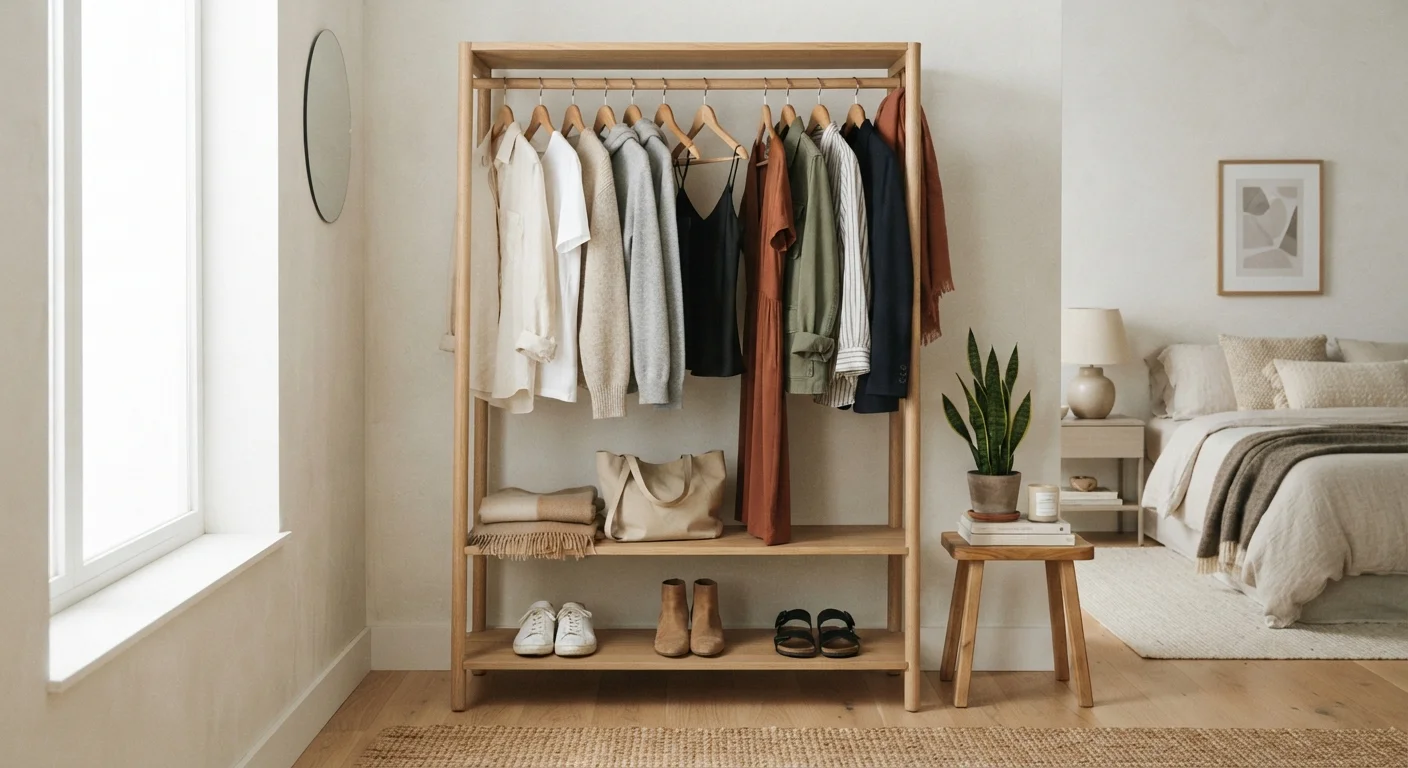
Key Takeaways
- A capsule wardrobe is defined by intentionality and versatility, not a specific item count.
- Trend pieces can coexist with a capsule approach when chosen thoughtfully.
- The concept is flexible enough to suit any lifestyle, budget, or personal aesthetic.
- Capsule dressing is about wearing more of what you own, not owning less overall.
The Origin of the Concept - and Where It Got Distorted
The term "capsule wardrobe" was coined by London boutique owner Susie Faux in the 1970s to describe a small core of high-quality, seasonless clothing that could be built upon with trendier pieces. The idea was practical from the start: invest in versatile staples so that getting dressed feels effortless rather than exhausting.
Somewhere along the way, the concept picked up a lot of extra baggage. It became associated with extreme minimalism, all-neutral aesthetics, and strict item counts - none of which were part of the original idea. Today, readers searching for wardrobe guidance encounter wildly different definitions, which is exactly why the myths need clearing up.
For a broader look at how the full concept works in practice, see what a capsule wardrobe is and why it works.
Myth
A capsule wardrobe must contain exactly 10 (or 30, or 37) pieces.
Fact
There is no universally correct item count - the number that works depends entirely on your lifestyle, climate, and how often you do laundry.
Rigid item counts circulate endlessly on social media, but they have no authoritative basis. The original concept never specified a number. What matters is that every item earns consistent wear and pairs well with other pieces. Someone with an active social schedule may need more variety than someone who works from home - and both can build a functional capsule.
Myth
Capsule wardrobes are only for minimalists who want a monochrome closet.
Fact
Color, pattern, and personal flair are fully compatible with the capsule approach - the core principle is versatility, not visual sameness.
The all-neutral, aesthetically quiet wardrobe you see on certain style accounts is one interpretation, not the definition. A person whose style leans toward jewel tones or bold prints can still build a capsule - they just choose pieces that coordinate within their own color palette and aesthetic. The goal is internal coherence, not conformity to a particular look.
Myth
Following trends is incompatible with having a capsule wardrobe.
Fact
Trend pieces work well within a capsule when they integrate with existing items rather than requiring a whole new outfit to function.
Capsule thinking doesn't ban new purchases - it filters them. Before adding a trend-driven item, the practical question is whether it connects to your existing wardrobe. A trendy silhouette in a color that already appears elsewhere in your closet is likely to get real wear. A statement piece that only works as one specific look will probably sit unworn after a few outings.
Myth
Building a capsule wardrobe requires a big upfront investment in expensive basics.
Fact
Capsule wardrobes can be built gradually and on any budget - price point is not a defining feature of the concept.
The association with high price tags comes partly from the original boutique context and partly from aspirational marketing. In practice, a thrifted linen shirt or an affordable cotton tee can serve the same functional role as a designer equivalent. What determines whether something belongs in a capsule is how often it gets worn and how well it combines with other pieces - not its cost.
Myth
Once you build a capsule wardrobe, you should never shop again.
Fact
A capsule wardrobe is a living system that evolves with your life - regular, intentional updates are expected and healthy.
Bodies change, lifestyles shift, and yes, things wear out. The capsule concept encourages mindful acquisition rather than zero acquisition. Replacing a worn-out pair of trousers, adding a piece suited to a new job or climate, or incorporating a trend item you'll genuinely reach for repeatedly - all of these are consistent with the approach. The point is purposeful shopping, not a permanent shopping ban.
Where Trends Actually Fit In
The most persistent tension in capsule wardrobe conversations is the idea that following trends and building a capsule are mutually exclusive. They aren't. The capsule framework is really about the ratio of your wardrobe - a strong foundation of versatile pieces that mix and match freely, with room for seasonal or trend-driven additions that excite you.
Think of trend pieces as a seasoning rather than the main ingredient. A bold printed blazer or a statement shoe in this season's color can refresh a core of simple basics without destabilizing your whole closet. The key question isn't "Is this trendy?" but rather "Does this work with at least three other things I already own?"
~20%
Of clothing actually worn regularly
Research cited by wardrobe psychology studies suggests most people regularly wear only about 20% of the clothes they own, with the rest sitting unworn.
3+
Outfit combinations per new piece
Style educators commonly recommend that any new addition - trendy or classic - should combine with at least three existing items to justify its place in a functional wardrobe.
When you're weighing whether a new piece - trendy or otherwise - deserves closet space, the decision framework explored in how to decide what actually belongs in your wardrobe can help you stay intentional without feeling restricted.
For even more nuance on balancing enduring staples with trend-forward items, knowing when each earns a place in your closet breaks it down by clothing category. And if you're still untangling persistent misconceptions, misconceptions about capsule wardrobes that hold people back is worth a read alongside this one.
Ultimately, the capsule approach is a mindset - one that prioritizes wearing what you own rather than constantly acquiring more. Trends become an opportunity to refresh intentionally rather than an obligation to overhaul entirely. That shift in perspective is what makes the concept genuinely useful for everyday dressing, whatever your personal style happens to be. Explore more practical guidance in the Everyday Style Tips and Wardrobe Essentials hubs.