

Key Takeaways
- Classic pieces earn their place through versatility and longevity, not just timelessness.
- Trendy items can be worthwhile if they fit your existing wardrobe and reflect your actual lifestyle.
- A roughly 70/30 split between classics and trends is a widely used starting framework.
- Cost-per-wear is a more useful measure than sticker price when evaluating any clothing purchase.
- Impulse-driven trend buying is one of the leading causes of wardrobe clutter and budget drain.
Our Verdict
Neither classic nor trendy pieces win outright - the smarter question is what role each item will actually play in your daily life. A wardrobe anchored in versatile staples, with intentional trend additions, tends to stay useful longer and feel more authentically yours.
| Best for | Recommended |
|---|---|
| Those who want low-effort, long-lasting outfits | Classic staples |
| Those who enjoy self-expression and seasonal variety | Trend-driven pieces |
| Budget-conscious shoppers prioritizing cost-per-wear | Classic staples |
| Style experimenters building on a solid wardrobe base | Selective trend additions |
What We Mean by Classic vs. Trendy
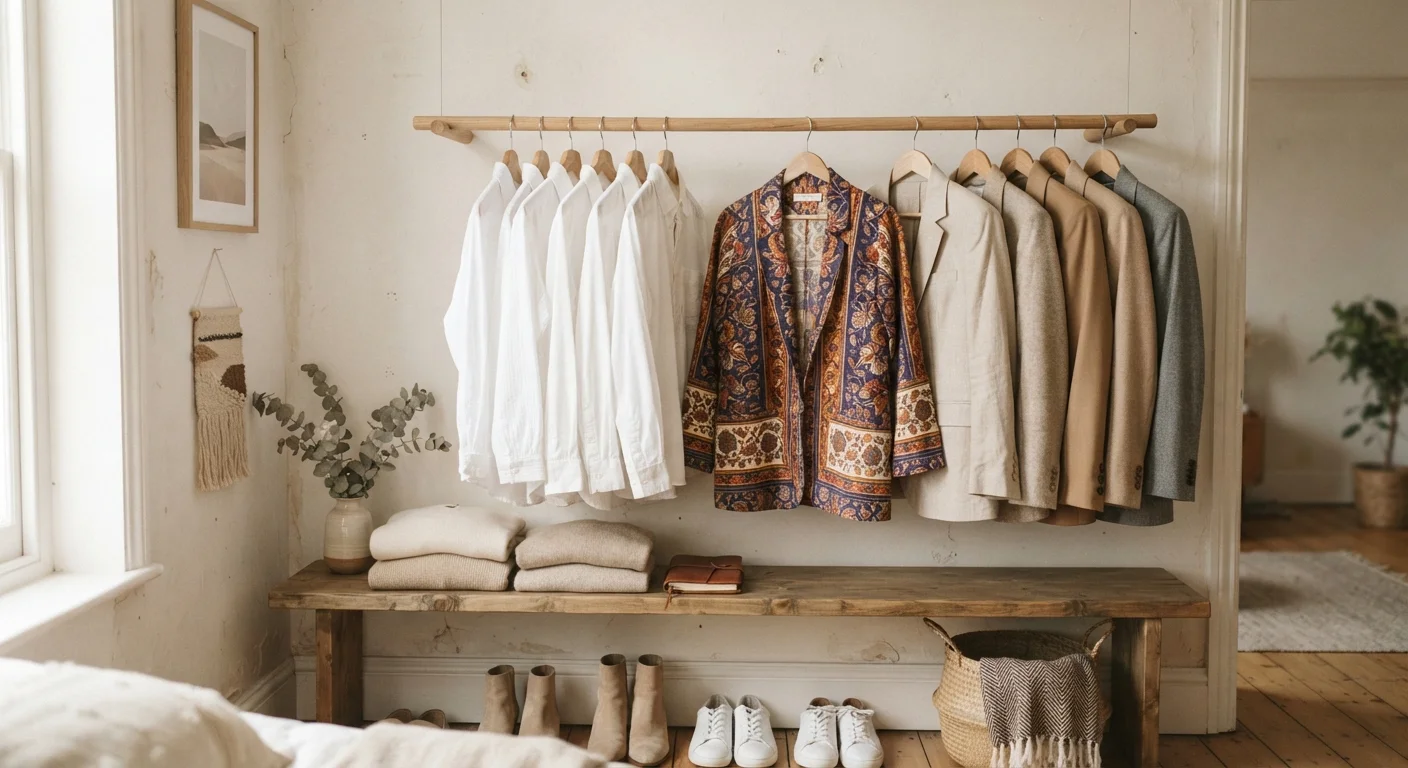
A classic piece is defined by its staying power: it works across multiple seasons, doesn't read as obviously dated, and tends to complement a wide range of other items. Think well-cut trousers, a tailored blazer, a crisp white shirt, or a simple crewneck sweater in a neutral tone. These items don't demand attention - they provide a reliable foundation.
A trend-driven piece, by contrast, is closely tied to a specific cultural or seasonal moment. It might be a particular silhouette, color, or print that's everywhere one season and conspicuously absent the next. That's not inherently bad - trends can bring energy and personality to an outfit - but they carry a shorter usable window.
The real challenge isn't choosing one over the other. It's understanding what each type of item actually offers so you can make deliberate decisions instead of reactive ones. For more on how to read whether a look has real staying power, learn to distinguish a runway moment from a lasting shift.
How They Compare Across Key Wardrobe Factors
Laying out the differences side by side makes the trade-offs much clearer - and shows why neither category automatically wins.
| Classic Staples | Trend-Driven Pieces | |
|---|---|---|
| Longevity | 3-10+ years with care | 1-3 seasons typically |
| Versatility | Pairs with almost anything | Often limited to specific looks |
| Cost-per-wear | Generally lower over time | Higher if worn infrequently |
| Self-expression | Subtler, understated identity | Immediate, visible statement |
| Risk of regret | Low - designs age gradually | Higher - trends shift quickly |
| Excitement factor | Steady and reliable | High at point of purchase |
The standout insight here is that trendy pieces aren't wasteful by nature; they become wasteful when purchased impulsively or without considering how they'll integrate with what you already own. Cost-per-wear is arguably the most useful lens for any clothing decision, regardless of whether the item skews classic or trend-forward.
Apply the Cost-Per-Wear Test
Before adding any item - classic or trendy - divide its price by the realistic number of times you'll wear it in a year. A $120 blazer worn 40 times costs $3 per wear; a $30 novelty top worn twice costs $15. That single calculation reframes almost every wardrobe decision and helps you spend where it actually counts.
The Case for Building on Classics
A wardrobe anchored in classics gives you a lower daily decision load. When pieces mix and match easily, getting dressed is faster and less stressful - which matters more than most people admit when they're running late on a Tuesday morning.
Classics also tend to perform better on cost-per-wear over time, particularly when made from durable materials. Fabric choice plays a meaningful role in how long a staple actually holds up - a well-constructed wool or cotton piece will outlast a cheaper synthetic equivalent by years in many cases.
The wardrobe essentials framework is useful here: identify the items you reach for most across different contexts - work, weekends, social occasions - and build around those. That's your classic core.
~$1,700
Average annual US clothing spend per person
According to the U.S. Bureau of Labor Statistics Consumer Expenditure Survey, American households spend a significant share of discretionary income on apparel each year.
50%
Clothes worn rarely or never after purchase
Research from various wardrobe audit studies suggests roughly half of owned clothing is seldom or never worn, pointing to a widespread mismatch between buying impulse and actual use.
When Trend Pieces Actually Make Sense
Dismissing all trend-driven items as frivolous misses the point of personal style. Trends can reflect genuine cultural shifts, and wearing something that feels current and expressive is a legitimate part of how many people relate to fashion.
The key is intention. A trend piece earns its place in your wardrobe when it connects with something you'd wear anyway - not just because it's everywhere right now. Not every viral look becomes a lasting style move, so it's worth pausing before committing.
Trend items also work well as accent pieces rather than full-outfit anchors. A statement bag, a boldly colored layer, or a single printed item can refresh a classic outfit without overhauling your whole approach. Understanding how neutrals and statement items interact helps you place trend pieces without losing cohesion.
Trend Fatigue Is Real
Chasing every viral look can leave you with a cluttered closet, a depleted budget, and outfits that feel dated within months. Before buying a trend piece, ask honestly whether you'd still want to wear it in 18 months - and whether it works with at least three things you already own. If the answers are no, it's worth skipping. See wardrobe decisions that quietly drain your budget for more on this pattern.
A Practical Framework for Deciding
Rather than approaching your wardrobe as all-or-nothing, a rough 70/30 split is a commonly cited starting point: roughly 70% classic, versatile pieces and 30% trend-influenced or more expressive items. This ratio isn't a rule - it's a way to check whether your wardrobe has a stable foundation before adding excitement on top of it.
Before adding any item, ask three questions:
- Does it work with at least three things I already own?
- Will I realistically wear it in 12 months?
- Am I buying this because I want it, or because I feel like I should want it?
That last question matters more than it sounds. Social media and fast trend cycles create pressure to keep up - but a wardrobe built on external pressure rarely feels satisfying. For a fuller look at how these decisions interact with long-term budget outcomes, see common wardrobe choices that quietly cost more over time. And if you want to understand what role classic pieces should actually play in a functional wardrobe, this side-by-side look at when each type earns its place covers the balance in more depth.