

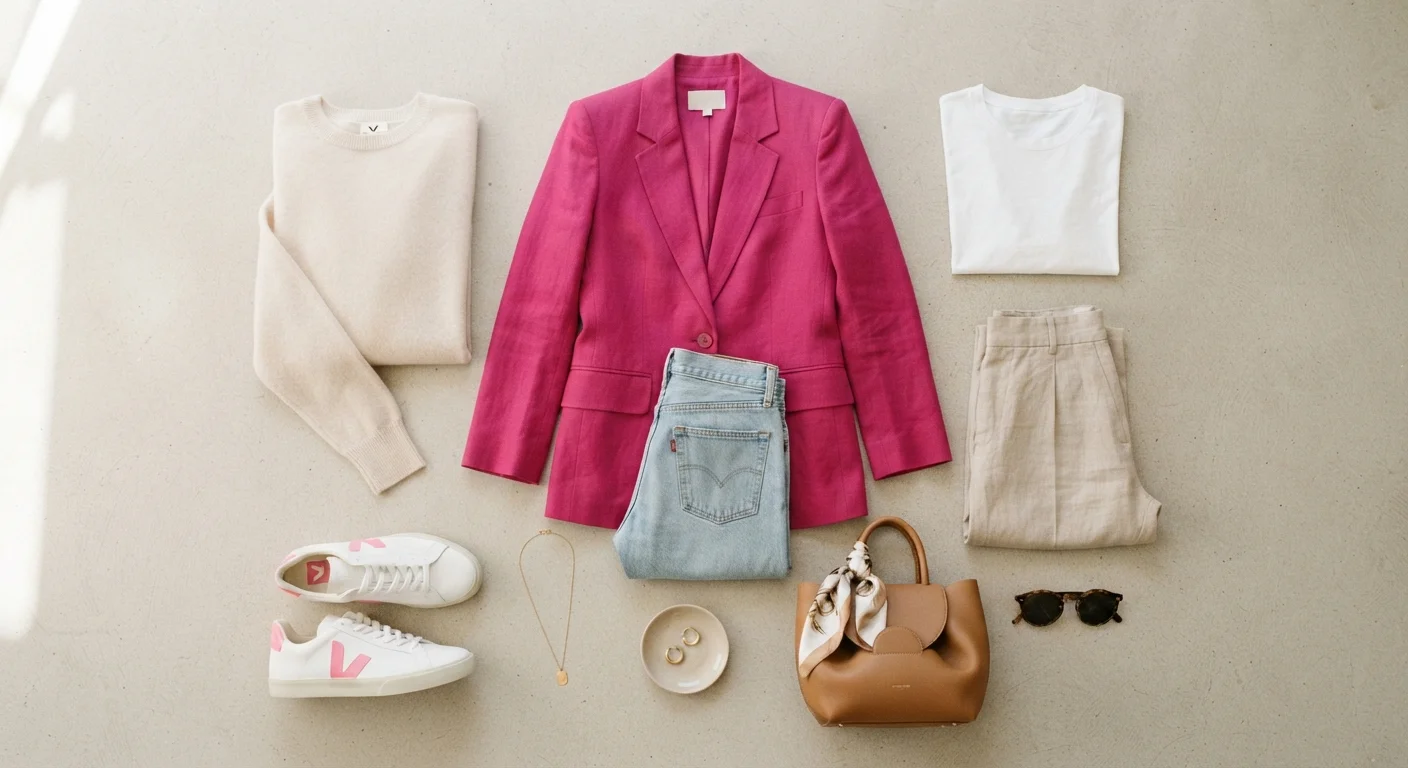
Key Takeaways
- Neutral pieces create a versatile wardrobe foundation that works across multiple outfit combinations.
- Statement pieces add personality and visual interest but work best when given room to breathe.
- A reliable rule of thumb is anchoring one statement item with two or three neutral pieces.
- Color, pattern, texture, and silhouette can each function as a statement element - not just bold hues.
- The right balance depends on the occasion, your personal comfort level, and the look you want to project.
Option A
Neutral Pieces
The quiet foundation that makes everything else work.
Best for: Building a flexible wardrobe base that mixes and matches across seasons and occasions without much effort.
Option B
Statement Pieces
The energizing focal point that gives an outfit personality.
Best for: Expressing individuality and making a memorable impression with minimal additional effort.
If you want maximum outfit flexibility with minimal morning effort
Neutral Pieces
A wardrobe anchored in neutrals gives you more combination options without overthinking. Pieces integrate easily regardless of what else you own.
If you want your outfit to convey confidence and individuality
Statement Pieces
A single standout item - whether a bold color, interesting print, or unexpected texture - communicates personal style more immediately than a head-to-toe neutral look.
If you're dressing for most everyday occasions
Neutral Pieces
Neutrals transition smoothly from casual to professional settings, requiring less thought about whether an outfit reads appropriately for the context.
If you want to refresh your look without overhauling your wardrobe
Statement Pieces
One new statement item can feel like a wardrobe transformation when layered over existing neutrals, giving familiar outfits an entirely different energy.
What We Mean by Neutrals and Statement Pieces
In fashion terms, neutrals are colors that pair easily with almost anything - think white, black, navy, grey, beige, and camel. Neutral pieces tend to be simple in cut and relatively understated in detail. They function as the background layer of an outfit, creating cohesion without competing for attention.
Statement pieces are the opposite: they're designed to be noticed. That could mean a vivid color, a bold pattern like large-scale florals or graphic prints, an unusual silhouette, or a distinctive texture. Importantly, a statement doesn't have to mean loud - a beautifully tailored blazer in a muted olive can still function as the focal point of an outfit.
Understanding what role each piece plays is the first step toward building outfits that feel intentional rather than random. For a broader look at how to weigh timeless pieces against trend-driven ones, see our guide on classic vs. trendy wardrobe choices.
How Neutrals and Statement Pieces Work Together
The most effective outfits treat these two categories as a team, not a competition. A common and practical approach: choose one statement element per outfit and let neutrals support it. This keeps the look intentional without tipping into visual chaos.
| Criterion | Neutral Pieces | Statement Pieces |
|---|---|---|
| Primary role | Foundation and cohesion | Focal point and personality |
| Versatility | Pairs with nearly anything | Requires careful pairing |
| Visual impact | Understated, background | Immediate, attention-drawing |
| Longevity of style | Tends to stay relevant longer | May feel trend-linked |
| Occasion range | Broad - casual to formal | Narrower - context-dependent |
| How many per outfit | Two to three typical | Usually one works best |
That said, balance isn't a single formula. Someone with a high comfort level for color might wear a bold printed top with equally vivid trousers and still look cohesive - because the intentionality reads clearly. The principle isn't about playing it safe; it's about giving every element in your outfit a clear role.
Texture is often an underused lever here. A chunky-knit cardigan in cream is technically neutral in color, but its visual weight can serve as a statement element against simpler pieces. Similarly, accessories can shift the balance - see our piece on when accessories add value and when they compete for more on that dynamic.
When to Lead with Neutrals
Neutrals earn their keep in situations where versatility matters most. If you're building a core wardrobe from scratch, starting with strong neutral pieces gives you more combinations per item - a practical advantage when working with a limited closet.
~70%
Of wardrobe stylists recommend neutrals as the foundation
Style educators and personal shoppers frequently cite a neutral-heavy base - roughly 70% of a functional wardrobe - as the most practical starting framework for mix-and-match dressing.
1-in-3
Outfit elements as the practical statement ratio
Many wardrobe consultants suggest the one-in-three rule: roughly one statement element for every two or three neutral pieces in a single outfit to maintain visual balance.
Neutral-forward outfits also tend to feel appropriate across a wider range of settings. A well-fitted pair of trousers in charcoal grey and a clean white shirt can move from a work meeting to a casual dinner with minimal adjustment. That context-flexibility is something louder pieces struggle to offer.
Finally, neutrals age better in a styling sense. While a statement piece might feel fresh one season and dated the next, a quality neutral tends to remain useful across multiple years of wear. For more on that trade-off, our article on fast trends versus classic pieces breaks it down clearly.
When to Let a Statement Piece Take Center Stage
Statement pieces shine when you want your outfit to communicate something specific - enthusiasm, creativity, occasion-readiness, or simply a good mood. They're also a practical tool for making familiar outfits feel new without adding many items to your wardrobe.
The most common mistake people make with statement pieces isn't wearing them - it's overcrowding them. If your top is boldly patterned, your outfit generally benefits from simpler bottoms and understated accessories. Give the focal point room to breathe, and it does its job effectively.
Occasion matters, too. Creative workplaces, social events, and casual settings are natural environments for statement pieces. More conservative professional contexts might call for subtler expression - a statement accessory rather than a head-to-toe bold look. The trends and seasons hub is a useful resource for reading what's feeling current each season.
Statement Doesn't Always Mean Bold Color
It's easy to assume a statement piece needs to be brightly colored or loudly patterned - but that's only one version. An oversized silhouette, an intricate texture like brocade or velvet, or even a striking structural detail can function as a statement just as effectively. Expanding your definition of 'statement' gives you more creative options, especially if you prefer a muted personal palette.
For complementary thinking on balancing statement and classic choices in your closet over time, see our piece on when classic and trendy pieces earn a place in your closet.