

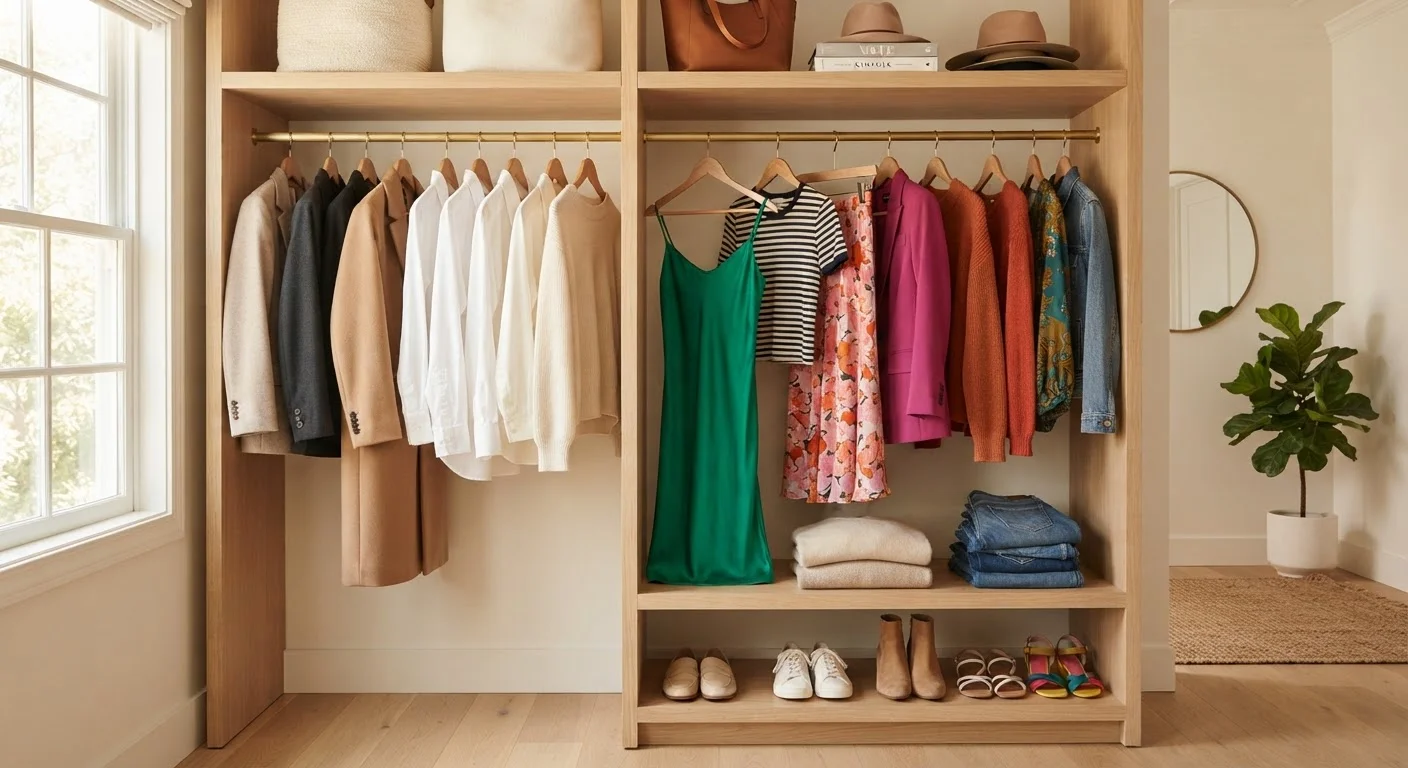
Key Takeaways
- Classic pieces form the functional backbone of a wardrobe and tend to deliver the most consistent cost-per-wear value.
- Trendy pieces work best in deliberate, limited doses rather than as the dominant force in a closet.
- A rough 80/20 split - classics to trends - is a practical guideline many stylists suggest as a starting point.
- Not every trend is fleeting; some signal a genuine, lasting shift worth investing in more fully.
- Your lifestyle, occasion needs, and personal comfort should ultimately drive the ratio that works for you.
Option A
Classic Pieces
The enduring foundation every wardrobe is built on.
Best for: Anyone who wants a reliable, mix-and-match wardrobe that stays relevant across seasons and occasions.
Option B
Trendy Pieces
The energy-adding, moment-specific layer of your wardrobe.
Best for: Readers who enjoy engaging with current style conversations and want their outfits to feel fresh and culturally aware.
If you want a wardrobe that works effortlessly across multiple years and contexts
Classic Pieces
Timeless staples like a well-cut trouser or a structured blazer remain versatile and relevant without needing seasonal replacement.
If you enjoy fashion as a form of self-expression and love engaging with what's current
Trendy Pieces
Intentional trend buys let you participate in style conversations without overhauling your entire closet.
If you're building a wardrobe from scratch on a limited budget
Classic Pieces
Staples offer maximum outfit combinations and longer wearable lifespans, making them the smarter starting point for most people.
If you want to refresh a wardrobe that already has solid basics in place
Trendy Pieces
Once you have a reliable classic foundation, a few well-chosen trend items can update the whole feel of your outfits with minimal spend.
What We Actually Mean by 'Classic' and 'Trendy'
Before stacking one against the other, it helps to be precise about what each term means in practice. A classic piece is a garment whose silhouette, color, and styling have demonstrated staying power across multiple decades - think a tailored white button-down, a well-fitted dark-wash jean, or a simple trench coat. These items don't depend on any particular cultural moment to look appropriate. For a deeper look at why some of these pieces endure, the white button-down shirt's lasting versatility is worth exploring.
A trendy piece, by contrast, is tied to a specific moment - a silhouette, color palette, or styling detail that's having a heightened cultural presence right now. That doesn't automatically make it low quality or a bad decision. Some trends represent genuine, longer-lasting style shifts rather than fleeting micro-moments. The skill lies in telling the two apart - something covered in depth when reading a trend as a runway moment or a lasting shift.
| Criterion | Classic Pieces | Trendy Pieces |
|---|---|---|
| Longevity | Multi-year, often decade-long relevance | Tied to a season or cultural moment |
| Versatility | Works across many occasions and pairings | Often narrower styling range |
| Cost-per-wear | Typically lower over time | Can be high if worn infrequently |
| Style energy | Understated and reliable | Fresh and culturally current |
| Risk level | Low - rarely feels dated quickly | Higher - depends on trend duration |
| Best wardrobe role | Foundation and base layer | Accent and conversation piece |
The Case for Building on Classics First
Classic pieces earn their place through consistency. A structured blazer works for a job interview, a casual dinner, or a weekend errand run depending on how you style it. That versatility is what drives strong cost-per-wear value - the fewer occasions a garment can serve, the higher its real price becomes over time.
Stylists often suggest that classics should make up the majority of a working wardrobe - many point to something close to an 80/20 ratio as a practical starting benchmark. This doesn't mean a wardrobe full of beige and navy with nothing interesting happening. Classics can include a well-cut printed blouse or a beautifully structured leather bag; the defining feature is that they don't depend on this season's approval to look good. For a fuller framework on how classics and trend pieces can coexist proportionally, what a capsule wardrobe really means offers useful context.
80/20
Suggested classics-to-trends wardrobe ratio
Many professional stylists suggest keeping roughly 80% of a wardrobe in timeless staples and reserving about 20% for trend-driven pieces as a practical starting point.
~30%
Average wardrobe items rarely worn
Research from closet-audit studies and wardrobe consultants consistently suggests a significant portion of most people's clothes go largely unworn - often linked to impulsive trend purchases.
When Trendy Pieces Are Worth It
Dismissing trend-driven pieces entirely misses what they offer: energy, personality, and a sense of being connected to the broader cultural conversation around style. The problem isn't buying trendy pieces - it's buying them reactively, in volume, without a plan for how they'll actually get worn.
A trendy piece earns its place when it genuinely excites you, can be worn at least several times before the trend passes, and layers onto a classic foundation rather than replacing it. A statement-color bag, an interesting textured cardigan, or a bold-print skirt can all do this well. The balance between neutral and statement pieces is a related concept worth thinking through - it applies equally to trend-adjacent choices.
It's also worth acknowledging that trend exhaustion is real. The relentless pace of social-media-driven style cycles leaves many people feeling like they're always behind. If that resonates, understanding what drives trend fatigue can help reframe how you engage with fashion on your own terms.
When a Trend Becomes a Classic
Some pieces that entered wardrobes as trends have since crossed into classic territory - slim-cut trousers and the leather moto jacket are often cited as examples. The distinction isn't always fixed. If a trend has persisted across three or more seasonal cycles and continues appearing in varied contexts, it may be edging toward enduring relevance rather than fleeting momentum. Seasonal trend cycles explores the cultural forces behind this recycling pattern.
Finding Your Personal Ratio
No single ratio works for every person. Someone whose job requires a wardrobe that signals authority and consistency will lean heavily on classics. Someone in a creative field who enjoys fashion as daily self-expression might lean slightly further toward trend pieces - and that's a completely legitimate choice.
The most useful question isn't "classic or trendy?" but rather: does this piece solve a real gap in what I already own, or does it duplicate something I'll reach for less? That framing shifts the decision from trend pressure to practical usefulness. For a side-by-side look at the trade-offs before committing to either direction, deciding what actually belongs in your wardrobe walks through the key considerations.
Accessories are one area where trend-forward choices carry less risk - they can update an entire outfit without requiring a significant commitment. Accessorising thoughtfully can help you understand where that line sits before it becomes too much.