

Key Takeaways
- Trend buys can be genuinely fun but tend to have a short style lifespan of one to three seasons.
- Classic pieces typically offer more cost-per-wear value when maintained and fitted properly.
- The right choice depends on how often you'll realistically wear the item and your current closet gaps.
- Fit is a critical factor for both categories - a poorly fitting classic is no bargain.
- A balanced wardrobe usually holds mostly classics with a handful of well-chosen trend additions.
Option A
Fast Trend Buy
The exciting, moment-driven purchase.
Best for: Style-curious shoppers who want to experiment with current looks without deep commitment.
Option B
Classic Wardrobe Piece
The reliable, season-spanning foundation.
Best for: Anyone building a versatile, cost-efficient wardrobe that works across years and occasions.
If you're building a wardrobe largely from scratch
Classic Wardrobe Piece
Foundational staples create a versatile base that supports any trend items you add later. Start with what you'll wear most often.
If you want to experiment with a new aesthetic before committing
Fast Trend Buy
A lower-stakes, inexpensive trend piece is a reasonable way to test whether a look actually suits your lifestyle before investing more.
If you already have strong closet foundations and enjoy seasonal refresh
Fast Trend Buy
When staples are solid, adding one or two trend pieces each season keeps your wardrobe feeling current without displacing what already works.
If you're trying to reduce wardrobe clutter and decision fatigue
Classic Wardrobe Piece
Timeless pieces mix and match more easily, which means fewer items can actually produce more outfit combinations day to day.
If you have a specific event or short-term occasion in mind
Fast Trend Buy
For a one-time moment, a trend item may be entirely appropriate - and borrowing or renting is also worth considering for single-use occasions.
What Actually Separates a Trend from a Classic?
The language around fashion can get slippery fast. "Timeless" gets applied to almost anything, and "trendy" is sometimes used as a quiet insult. It's worth getting precise about what each actually means before spending a dollar on either.
A fast trend is a silhouette, color, print, or styling detail that emerges quickly - often amplified by social media - and generates immediate cultural momentum. It feels exciting because it's specific to right now. The tradeoff is that specificity also ties it to a particular moment. When that moment passes, the item can look dated rather than stylish.
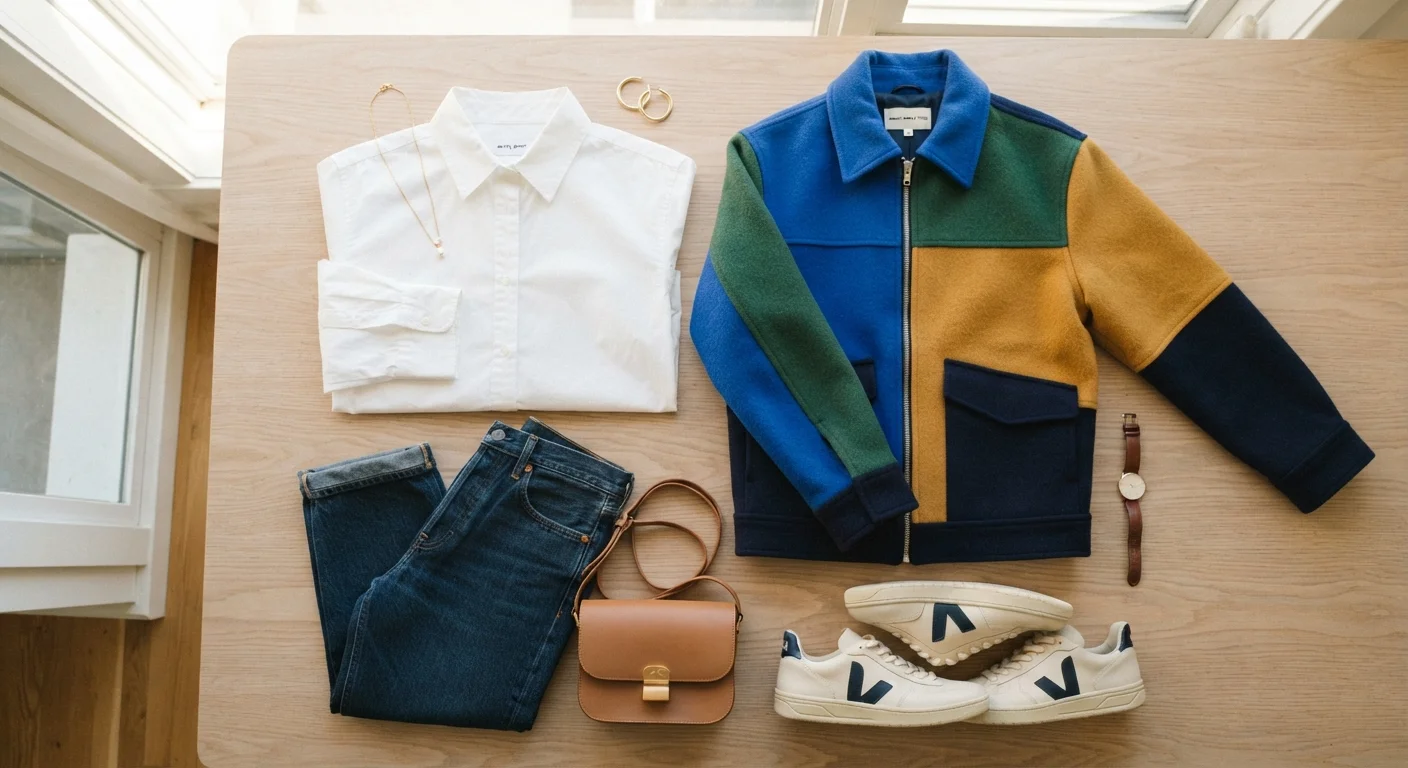
A classic piece, by contrast, is something whose basic design has remained wearable across many seasons without looking obviously tied to one era. Think a well-fitted blazer, a dark-wash straight-leg jean, or a simple crewneck knit. These aren't boring - they're load-bearing. They're what trend items get styled against. For a deeper look at how to evaluate whether a trend has genuine staying power, see Reading a Trend: Runway Moment or Lasting Shift?.
| Criterion | Fast Trend Buy | Classic Wardrobe Piece |
|---|---|---|
| Style lifespan | 1-3 seasons typically | Many years with care |
| Cost-per-wear potential | Lower (fewer uses) | Higher (consistent use) |
| Outfit versatility | Limited - often specific to a look | High - mixes across many outfits |
| Risk level | Higher - tastes shift quickly | Lower - design is proven over time |
| Wardrobe role | Accent or statement layer | Foundation and daily workhorse |
| Ideal budget approach | Spend less; expect shorter life | Spend more if quality justifies wear |
| Best buying mindset | "I'll enjoy this now" | "I'll still wear this in five years" |
The Real Cost Calculation
Price tags don't tell the whole story. Fashion editors and stylists often use the concept of cost-per-wear - dividing what you paid by how many times you actually use the item. A $40 top worn twice costs $20 per wear. A $120 blazer worn 60 times costs $2 per wear. The math tends to favor classics, but only when the item genuinely fits your life.
~$1,700
Average US household annual apparel spend
According to the U.S. Bureau of Labor Statistics Consumer Expenditure Survey, American households spend roughly this amount on clothing and footwear annually.
3×
Typical cost difference between fast fashion and quality garments
Industry analyses of garment pricing generally find that comparable styles in quality-focused lines cost two to four times more than their fast-fashion counterparts at point of purchase.
That said, trends don't have to be expensive to be worth buying. The question isn't whether it's cheap or costly - it's whether you'll reach for it consistently during the window it's relevant. If the answer is yes and the price reflects that limited window, it can be a perfectly rational choice.
What tends to go wrong is applying trend-item logic to classic-item prices, or vice versa. Overpaying for something you'll wear twice, or expecting a $15 piece to last a decade, are both common mismatches of expectation and reality. Investing in Fewer, Better Pieces: The Trade-Offs Explained walks through that balance in useful detail.
Questions Worth Asking Before You Buy
Whether you're eyeing a sculptural-hem jacket from this season's editorials or a well-made camel coat, the same set of questions applies - only the answers might differ.
- Does it fit well right now? Not "could it fit" or "will fit after alterations" - does it work on your body today? As Why Fit Matters More Than Brand or Price explains, fit is the single variable that determines whether any piece reads polished or sloppy.
- Where does it go in your existing wardrobe? Can you name three specific things it works with? If the answer requires buying more things to support it, factor that in.
- Is this a gap or a duplicate? If you already own five navy tops and this is a sixth navy top, the marginal value is low regardless of how appealing it is in the moment.
- How does it hold up to the occasion question? Is this for everyday use, a specific season, or one event? The more specific and narrow the use case, the harder it is for a piece to earn its keep.
For trend pieces specifically, one more question matters: does this trend reflect something I already like, or am I buying the trend hoping to like it? The former is usually a reasonable purchase. The latter rarely works out. See Classic vs. Trendy: How to Decide What Actually Belongs in Your Wardrobe for a more structured decision framework.
Borrowing and Renting as a Middle Path
For one-time occasions or highly specific trend moments, buying isn't the only option. Clothing rental services and borrowing from friends can satisfy the desire to wear something current without adding a piece to your permanent wardrobe. This can be especially practical for event-specific silhouettes or statement items you're uncertain about committing to long-term.
Building a Wardrobe That Uses Both Well
The most functional wardrobes aren't made up exclusively of either category. They tend to follow a rough structure: a solid base of versatile classics that cover daily needs, with a rotating selection of trend pieces that add personality and freshness without overwhelming the foundation.
How many trend items make sense depends entirely on your lifestyle, how much you enjoy styling, and how often you actually get dressed for varied occasions. Someone who works from home and rarely goes out needs a different ratio than someone who changes outfits three times a day for work, social, and active contexts.
What typically doesn't work is a wardrobe of nothing but trend pieces - it tends to produce a lot of items that don't mix well and a constant sense that nothing to wear exists. On the other end, a wardrobe of pure classics can feel uninspiring if personal style and joy in dressing matter to you. For practical guidance on adapting those staples to your specific shape and aesthetic, Adapting Wardrobe Essentials Across Body Types and Personal Style is a helpful follow-up read. You can also explore the broader Everyday Style Tips hub for outfit-building guidance across both categories.