

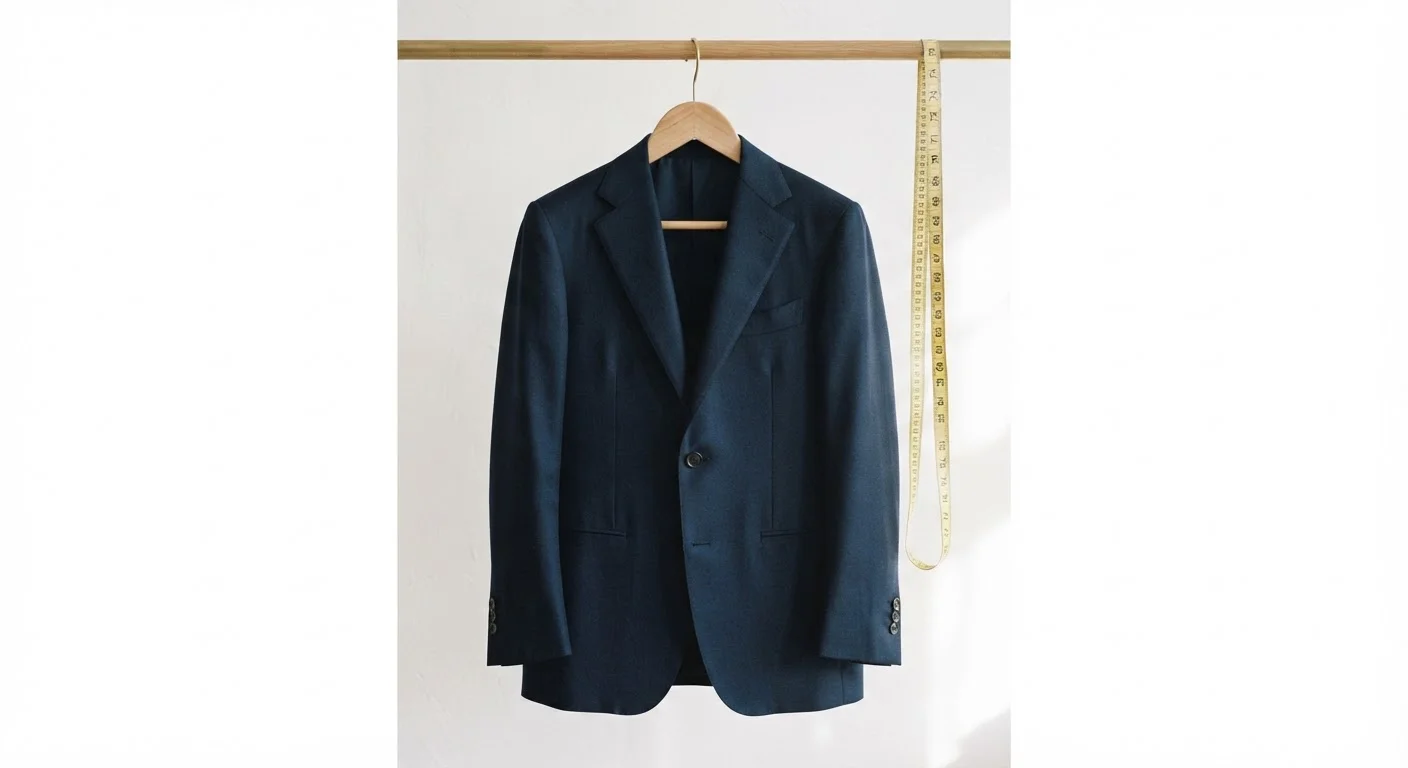
Key Takeaways
- Proper fit consistently makes clothing look more polished, regardless of its price point.
- A garment that fits well lasts longer because fabric experiences less strain during wear.
- Sizing numbers vary significantly across brands and regions - fit is a more reliable guide than the tag.
- Minor alterations can transform an average garment into one that looks custom-made.
- Shoulder seam placement is the hardest fit issue to correct and should always be evaluated first.
Clothing Fit
Clothing fit refers to how closely a garment's shape, proportions, and dimensions align with your body. A well-fitted piece follows your silhouette without pulling, bunching, or hanging awkwardly. It allows comfortable movement and flatters your natural frame - regardless of what size the label reads.
Tailors evaluate fit across multiple reference points: shoulder seam placement, chest or bust ease, waist suppression, and hem length - each of which can be adjusted independently.
The Single Variable That Changes Everything
Most people assume that spending more money is the surest path to looking put-together. In practice, however, the variable that most reliably elevates an outfit is far simpler: fit. A moderately priced shirt that skims your frame cleanly will consistently read as more refined than an expensive one that pulls across the shoulders or billows at the waist.
This isn't a style opinion - it's a principle of visual perception. When fabric falls as it was designed to, the eye reads the garment as intentional. When it doesn't, the eye registers something off, even if the viewer can't immediately name what it is. For practical guidance on building that visual harmony from the ground up, the Everyday Style Tips hub is a useful starting point.
~60%
Of clothing alterations fix shoulder or torso fit
Industry tailoring surveys consistently identify shoulder, chest, and waist adjustments as the most requested alterations across menswear and womenswear.
2-3×
Longer lifespan for well-fitted garments
Fashion sustainability researchers note that reduced seam stress in properly fitted clothing is a key factor in extending a garment's wearable life.
Why Fit Outlasts Trends and Price Tags
Trend cycles move quickly, and a garment bought purely for its moment in the spotlight often feels dated within a season. A piece that fits you well, on the other hand, remains wearable for years - and typically holds up physically, too. Properly fitting clothing places less mechanical stress on seams and fabric, which means less pilling, fewer tears, and a longer lifespan overall.
Price, similarly, is a poor standalone proxy for quality or appearance. Fabric composition and construction matter, but neither compensates for a silhouette that doesn't suit your frame. As the companion piece Fit vs. Size: Why the Number on the Label Doesn't Define How Clothes Look explores, sizing numbers are inconsistent across brands - making the label an unreliable guide compared to how the garment actually sits on your body.
Where to Focus When Evaluating Fit
Not all fit problems are equal. Some are easy to correct; others require significant reconstruction. Understanding the difference helps you make smarter decisions in the fitting room.
- Shoulders first: The seam connecting the sleeve to the body should sit precisely at the edge of your shoulder - not droop onto the upper arm, not creep toward the neck. This is the hardest alteration to execute well, so if the shoulders don't fit, move on.
- Chest and torso ease: You should be able to move freely without buttons pulling or fabric stretching across the back. "Ease" refers to the intentional extra room built in for movement - too little and the garment restricts, too much and it looks shapeless.
- Length and hem: Sleeve length, jacket hem, and trouser break all contribute to visual proportion. These are among the simplest and most affordable alterations a tailor can make.
For a deeper look at how silhouette interacts with individual body shapes, Dressing for Your Body Shape: A Practical Starting Point walks through practical considerations without prescriptive rules.
Try This in the Fitting Room
Before deciding on a garment, sit down, raise both arms overhead, and take a full stride forward. These three movements will immediately reveal whether the shoulders restrict, the back rides up, or the waist pulls. If the garment passes all three, it's a strong fit candidate - even if a minor alteration is still needed.
Alterations: The Underused Tool in Most Wardrobes
Ready-to-wear clothing is produced for a statistical average, not for any specific individual. That means almost everyone is working with garments that are close - but not exact. Basic tailoring can close that gap significantly. Common alterations include hemming trousers, taking in a waist, shortening sleeves, or tapering a shirt's side seams.
The economics often make sense: a modest alteration fee applied to a garment you'll wear consistently can dramatically improve both appearance and longevity. Why Your Outfits Feel Off - and the Proportion Principle That Fixes It offers complementary insight into how proportion and fit interact across a full look, which can help you identify which pieces in your existing wardrobe are worth the investment.
“Clothes that fit properly don't just look better - they make you carry yourself differently. That shift in posture and confidence is something no label or price tag can manufacture.”
— Tim Gunn, Fashion educator and author on style principles