

Key Takeaways
- Natural fabrics like cotton, wool, and linen tend to breathe better and age gracefully with proper care.
- Synthetic blends offer durability, stretch, and wrinkle resistance that some natural fibers can't match alone.
- Blended fabrics often combine the strengths of both worlds, making them practical for everyday staples.
- Fabric choice affects not just comfort but also how long a garment holds its shape and color.
- Understanding fiber properties helps you invest more wisely in long-term wardrobe pieces.
Our Verdict
Neither natural fabrics nor synthetic blends universally win - the best choice depends on how a garment will be worn and cared for. Natural fibers shine for breathability, longevity, and timeless appeal, while synthetics and blends bring practicality and performance. A thoughtfully mixed wardrobe draws from both categories strategically.
| Best for | Recommended |
|---|---|
| Those prioritizing comfort and breathability in everyday basics | Natural fabrics (cotton, linen, wool) |
| Active or high-use items that need to hold their shape | Synthetic blends (polyester, spandex blends) |
| Readers building a versatile, low-maintenance wardrobe | Natural-synthetic blends (e.g., cotton-poly, wool-nylon) |
| Those seeking investment pieces that age and repair well | Natural fabrics (wool, linen) |
Why Fabric Choice Matters for Wardrobe Staples
When building a functional wardrobe, most people focus on silhouette, color, or price - but fabric composition quietly determines how well a piece performs over time. A well-cut shirt in the wrong material pills after a season; a simply styled trouser in the right fabric can last a decade. Understanding the basics of fiber types gives you a real advantage when evaluating any clothing purchase.
For a deeper grounding in how fabric characteristics affect the way clothes look and move on the body, the plain-language guide to fabric weight, drape, and texture is a great starting point. This article focuses specifically on the trade-offs between natural fibers and synthetic or blended alternatives for the pieces you reach for most.
Natural Fabrics: Strengths and Limitations
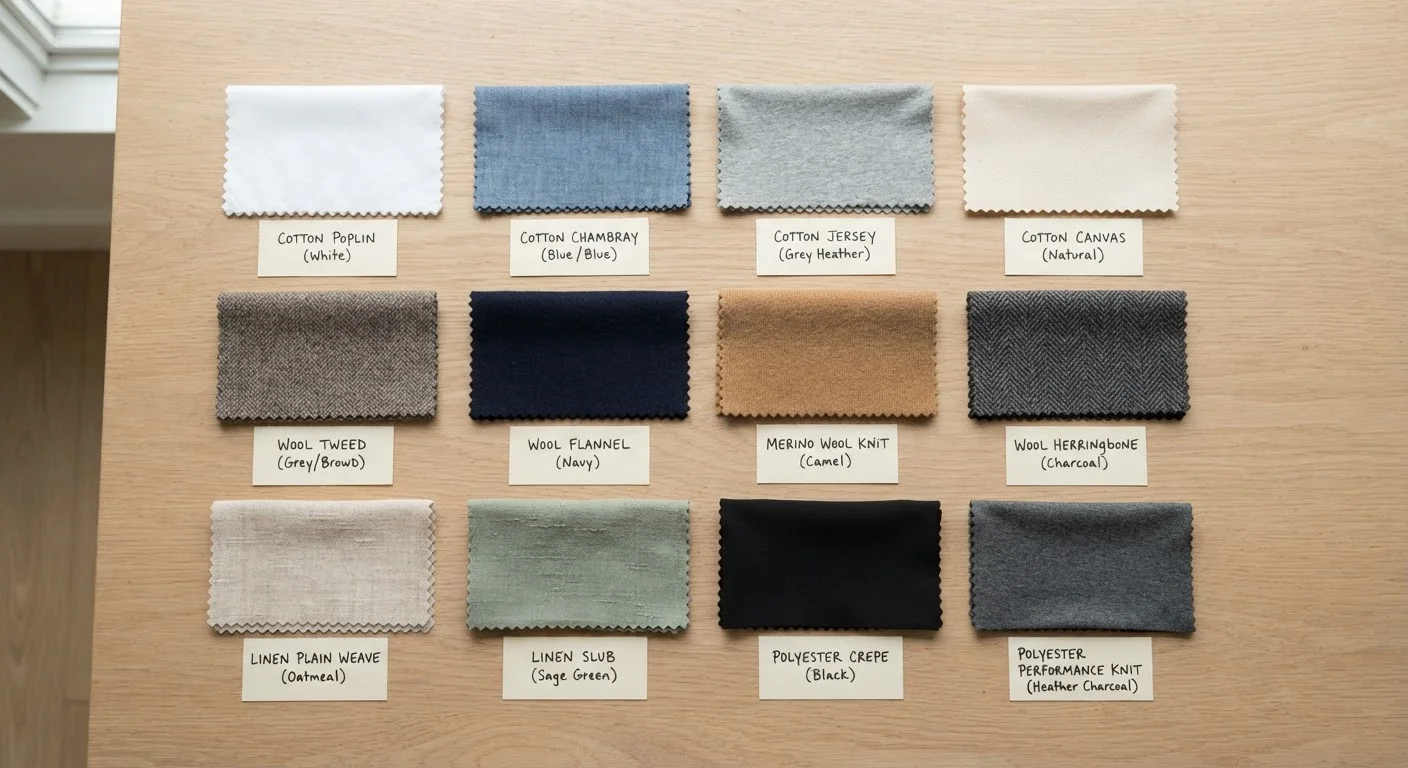
Natural fibers - primarily cotton, wool, and linen - come from plant or animal sources and have been used in clothing for thousands of years. Their longevity in fashion isn't nostalgia; it reflects genuine performance advantages.
- Cotton is soft, breathable, and widely available. It absorbs moisture well and is generally comfortable against sensitive skin. The trade-off: it wrinkles easily and can shrink if laundered incorrectly.
- Wool is a standout for temperature regulation - it insulates in the cold and breathes in mild weather. High-quality wool garments can last decades with proper care, making them a strong investment for outerwear and knitwear staples.
- Linen excels in warm weather due to its exceptional breathability and moisture-wicking ability. It wrinkles significantly, which some readers embrace as part of its relaxed aesthetic.
The main challenges with natural fabrics are care requirements and cost. They can require more careful laundering, may be susceptible to moths (wool) or fading (linen), and tend to carry a higher price tag than synthetics at equivalent quality levels.
Extend Natural Fabric Lifespan Easily
Washing natural fibers in cold water and air-drying them significantly reduces shrinkage and fiber breakdown. For wool specifically, hand-washing or using a gentle machine cycle with a wool-safe detergent helps maintain structure and softness. Small habits like these can meaningfully extend the life of quality natural-fiber pieces.
Synthetic and Blended Fabrics: Where They Excel
Synthetic fibers - most commonly polyester, nylon, acrylic, and spandex - are engineered materials designed to solve specific performance challenges. They're generally less expensive to produce, highly durable, and resistant to shrinking and wrinkling.
- Polyester holds color well, resists moisture absorption (useful for activewear), and is machine-washable with minimal fuss. Its downside is breathability - it can trap heat and feel less comfortable in warm conditions.
- Nylon is exceptionally strong for its weight, making it ideal for bags, outerwear linings, and hosiery. It can feel smooth and luxurious in blends but may feel clingy on its own.
- Spandex (elastane) is rarely used alone but transforms the stretch and recovery of any fabric it's blended with - think fitted trousers that keep their shape or tops that move with you.
Blended fabrics - such as a cotton-polyester mix or a wool-nylon combination - are often engineered to capture the best of both: the breathability of cotton with the wrinkle-resistance of polyester, or the warmth of wool with the durability of nylon. These blends frequently appear in workhorse wardrobe pieces like structured trousers, everyday shirts, and casual knitwear.
| Cotton | Wool | Linen | Polyester | Blends | |
|---|---|---|---|---|---|
| Breathability | High | Moderate-High | Very High | Low | Moderate |
| Durability | Moderate | High (with care) | Moderate | Very High | High |
| Wrinkle Resistance | Low | Moderate | Very Low | Very High | Moderate-High |
| Care Ease | Easy | Delicate | Moderate | Very Easy | Easy-Moderate |
| Comfort on Skin | High | Varies by grade | High | Moderate | Moderate-High |
| Typical Cost | Moderate | Higher | Moderate-High | Lower | Moderate |
| Best Suited For | Everyday basics | Outerwear, knitwear | Warm-weather staples | Activewear, linings | Versatile daily wear |
Making Smarter Choices for Long-Term Wardrobe Pieces
The fabric question connects directly to how you prioritize your wardrobe overall. If you're building pieces meant to serve you for years - not just seasons - fabric quality becomes part of the value calculation. As outlined in our guide to wardrobe staples every adult should own, the most versatile foundational pieces tend to justify more careful material choices.
It's also worth noting that certain fabric decisions carry longer-term cost implications. Choosing a cheap synthetic basic that deteriorates after a few washes may cost more over time than a natural-fiber alternative that holds up. The article on wardrobe decisions that cost more in the long run explores this pattern in practical terms.
A few general guidelines worth keeping in mind:
- Match fiber to function - breathable naturals for everyday wear, performance synthetics for active or high-maintenance use.
- Read care labels before purchasing, not after. A dry-clean-only garment is only a good investment if you'll actually dry clean it.
- Look for blend ratios on the label. A fabric that's 60% cotton and 40% polyester behaves quite differently from one that's 95% cotton.
Don't Overlook the Care Label
A garment's fabric composition only tells part of the story - care requirements can vary even within the same fiber type depending on weave, finish, or blend ratio. Ignoring care instructions is one of the most common reasons quality garments deteriorate prematurely. Always check the label before the first wash, especially for wool, linen, or structured woven pieces.
For readers interested in how fabric trends shift seasonally, texture as a trend signal offers a useful perspective on fabric as a fashion indicator beyond mere function.