
Fabric Weight, Drape, and Texture: What These Terms Actually Mean for Getting Dressed

| Lightweight fabric GSM range | Under 150 GSM (General textile industry convention) |
| Midweight fabric GSM range | 150-250 GSM (General textile industry convention) |
| Heavyweight fabric GSM range | 250+ GSM (General textile industry convention) |
| Best drape for fluid silhouettes | Silk, viscose, cupro, charmeuse |
| Best structure for sharp tailoring | Wool twill, denim, canvas, ponte |
| Texture effect on color perception | Matte textures absorb light; shiny textures reflect and amplify color |
Why Fabric Terms Matter for Getting Dressed
Fashion editors and garment tags throw around words like drape, hand, and weight as though everyone learned them in school. Most of us didn't. But these concepts have real, practical impact on whether a piece of clothing flatters you, feels comfortable, and works for the occasion. Once you understand them, shopping and getting dressed become noticeably easier.
The three core properties - weight, drape, and texture - determine how fabric behaves on a body in motion, not just on a hanger. They shape silhouette, affect layering success, and signal formality or casualness far more reliably than color alone. See how they also play into layering without bulk for a fuller picture.
Fabric weight
A measure of how heavy or light a fabric is, often expressed in grams per square meter (GSM). Weight influences warmth, structure, and how a garment hangs on the body.
Drape
The way a fabric flows and falls when worn. High-drape fabrics (like silk or viscose) move fluidly against the body, while low-drape fabrics (like denim or canvas) hold their shape more rigidly.
Texture
The surface quality of a fabric - how it looks and feels to the touch. Texture can be smooth, nubby, ribbed, fuzzy, or anything in between, and it affects how light interacts with an outfit.
GSM (grams per square meter)
The standard unit used to measure fabric weight. Lower GSM fabrics (under 150) feel light and airy; higher GSM fabrics (200+) feel denser and more substantial.
Hand feel
An informal term describing the tactile sensation of a fabric - its softness, smoothness, stiffness, or warmth when touched.
Woven vs. knit
Woven fabrics are made by interlacing threads at right angles and tend to hold structure well. Knit fabrics are made from interlocking loops and typically stretch more, offering greater comfort and flexibility.
Fabric Weight: The Foundation of How a Garment Behaves
Weight is exactly what it sounds like - how heavy a fabric is per unit of area. The industry standard measurement is GSM. A lightweight cotton T-shirt might be around 120-140 GSM; a structured wool coat can exceed 400 GSM.
| Lightweight fabric GSM range | Under 150 GSM (General textile industry convention) |
| Midweight fabric GSM range | 150-250 GSM (General textile industry convention) |
| Heavyweight fabric GSM range | 250+ GSM (General textile industry convention) |
| Best drape for fluid silhouettes | Silk, viscose, cupro, charmeuse |
| Best structure for sharp tailoring | Wool twill, denim, canvas, ponte |
| Texture effect on color perception | Matte textures absorb light; shiny textures reflect and amplify color |
Weight affects warmth, durability, and structure. Heavier fabrics resist wrinkling, hold their shape through a long day, and feel more substantial against the skin. Lighter fabrics breathe better and move more freely, making them ideal for warm weather or underlayers. Understanding weight helps you build a wardrobe that actually suits the climate and occasions you dress for - a key principle in transitional dressing.
Drape and Texture: The Visual and Tactile Experience
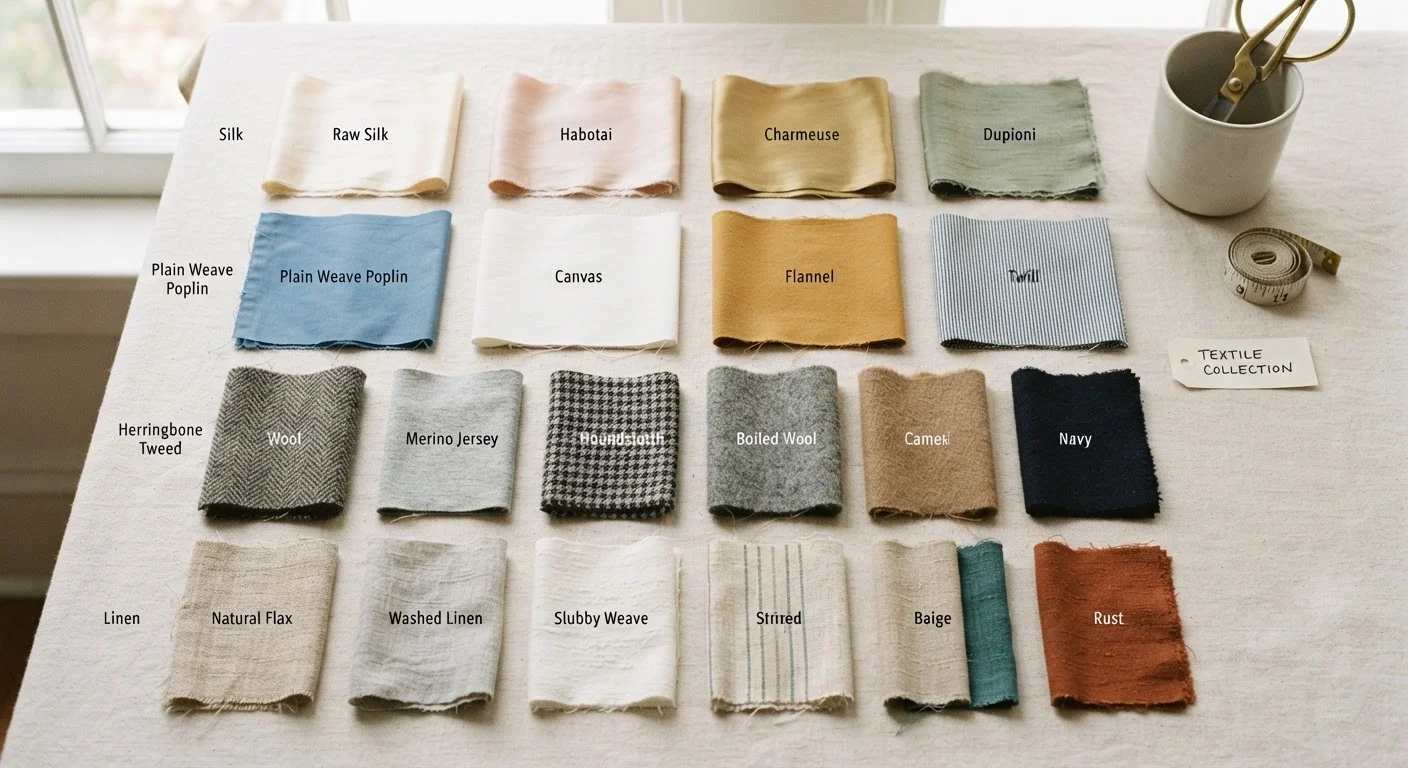
If weight is the foundation, drape and texture are the personality of a fabric. Drape describes how fabric flows when worn. A high-drape fabric like silk charmeuse or viscose crepe follows the body's curves fluidly. A low-drape fabric like stiff denim or structured canvas maintains its own shape away from the body. Neither is better - they serve different goals. If you want a relaxed, flowing silhouette, reach for high-drape fabrics. For structured, precise looks, low-drape fabrics do the work.
Texture adds visual and tactile depth. Matte textures - think brushed cotton, matte jersey, or ribbed knit - absorb light and create a quieter look. Glossy or shiny textures - satin, patent, or metallic weaves - reflect light and draw attention. Rough or nubby textures like bouclé or tweed add visual interest even in neutral colors. Mixing textures within a single outfit is one of the most accessible styling moves available, and it's explored further in our article on texture as a seasonal trend signal.
~150
GSM threshold for lightweight fabrics
Fabrics below 150 GSM - like lightweight linen or cotton voile - are commonly classified as lightweight by the textile industry.
3 factors
Properties that determine how a garment looks on the body
Weight, drape, and texture work together to shape silhouette, movement, and visual impact regardless of cut or color.
One practical note: fit matters more than size, and so does fabric. The same silhouette cut in a stiff canvas versus a fluid viscose will look and feel like two entirely different garments. Knowing this helps you decode why something looks great on a mannequin or model but falls differently on your frame - it's often the fabric, not you.
Care Labels Tell You More Than You Think
Most garment care labels list the fabric composition (e.g., '100% cotton' or '80% wool, 20% nylon'), which is a direct clue to its weight, drape, and texture behavior. Checking this label before purchase is one of the simplest ways to predict how a piece will perform and feel in real wear. Blended fabrics often combine the best properties of two or more fibers.