

Key Takeaways
- Fabric texture often signals a seasonal trend shift earlier and more durably than silhouette or color alone.
- Transitional seasons - spring and fall - tend to produce the most dramatic texture pivots in collections.
- Recognizing texture cues lets you shop intentionally without chasing every micro-trend.
- The same garment silhouette in two different textures can send entirely different seasonal signals.
- Mixing textures thoughtfully extends a wardrobe's versatility across multiple seasons.
Texture as a Trend Signal
In fashion, texture refers to the surface quality of a fabric - whether it's smooth, nubby, shiny, or brushed. When designers consistently reach for particular textures across collections, those fabric choices act as early indicators of the broader seasonal mood before silhouettes or colors fully land on mainstream racks. Paying attention to texture shifts helps style-curious consumers spot genuine trend movements rather than one-off statement pieces.
Trend forecasting agencies typically track fabric-hand preferences (how a textile feels to the touch) as a leading indicator, often 12-18 months ahead of retail delivery.
Why Texture Speaks Before Anything Else
Scroll past the seasonal runway recaps and you'll notice that color palettes and silhouette breakdowns claim most of the editorial real estate. But designers, buyers, and trend forecasters routinely agree: the fabric hand - the tactile and visual surface quality of a textile - is often the first creative decision locked in during the design process. That makes texture a leading signal, not a lagging one.
Think of it this way. A slouchy trouser cut in a crisp cotton twill reads very differently from the same trouser in fluid crepe. The silhouette is identical; the seasonal message is entirely separate. When you learn to read texture, you gain an extra layer of fluency in understanding why a season feels the way it does. For a deeper look at how to evaluate whether any trend - including a texture direction - is a genuine shift or a momentary splash, learn to tell a fleeting micro-trend from a lasting style movement.
12-18 months
Lead time for fabric trend forecasting before retail
Industry trend forecasting agencies typically track fabric and material directions well over a year before garments reach retail floors.
~60%
Of a garment's visual impression determined by fabric surface
Fashion educators often note that fabric choice - its drape, sheen, and hand - accounts for the majority of a finished garment's perceived quality and mood.
The Seasonal Texture Calendar
Each broad fashion season tends to favor particular fabric families, though the specific textures that rise to prominence shift from year to year based on broader cultural and design conversations.
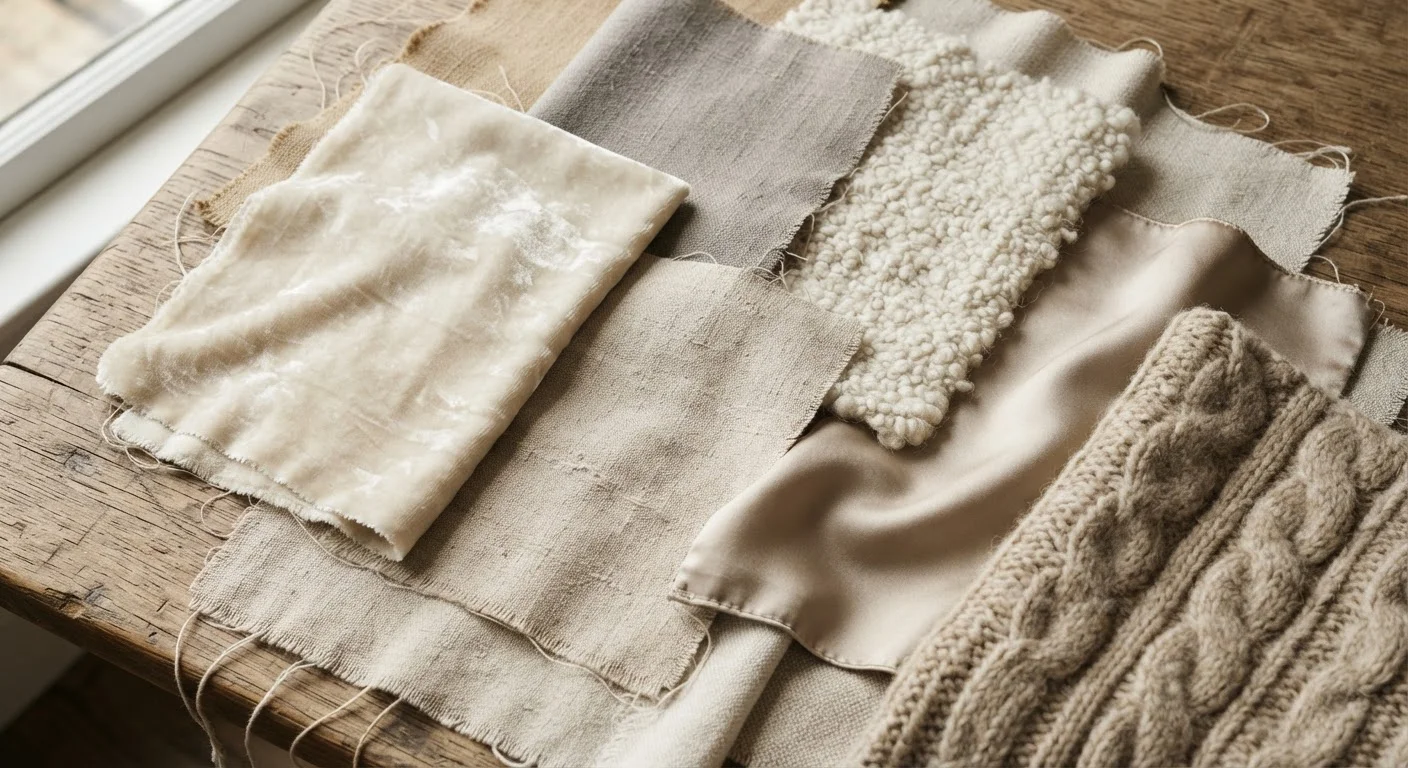
- Spring/Summer: Lightweight weaves dominate - open linen, eyelet cotton, organza, and slubbed textures that suggest airiness and ease. When a season leans into warmth and optimism, expect more sheen: polished cottons, satin-finish silks, and liquid jerseys.
- Fall/Winter: Surfaces grow richer and more tactile. Boucle, brushed flannel, velvet, and cable-knit textures carry a visual warmth that reinforces the cocooning instinct of colder months. Corduroy and tweed cycles tend to resurface during seasons when a nostalgic or grounded mood is culturally resonant.
- Transitional seasons produce the most interesting texture pivots - the early adoption of heavier weaves in late summer, or the appearance of sheer organza layered over winter-weight knits as spring approaches.
Understanding these patterns helps you shop with intention rather than impulse. It's also worth exploring how texture intersects with fabric composition - natural fabrics and synthetic blends each carry distinct texture trade-offs that affect both look and longevity.
One Texture Swap, Big Seasonal Impact
You don't need to overhaul your closet to feel seasonally relevant. Swapping one recurring basic - a smooth cotton crewneck, say, for a textured boucle or ribbed knit version - can shift your whole outfit's seasonal register. Focus on pieces you wear often for the greatest return on a single purchase.
Reading Texture in Your Own Wardrobe
You don't need runway access to apply texture awareness practically. Start by auditing what you already own. If most of your wardrobe skews smooth and flat - poplin, jersey, plain-weave denim - you're well positioned to add depth and seasonal relevance through a single textured layer or accessory.
Mixing textures is also a skill worth building. A matte nubby knit paired with a smooth leather or faux-leather piece creates visual contrast without requiring you to buy into a full trend. This kind of thoughtful combination is the backbone of practical everyday style advice that holds up across multiple seasons. For a structured approach to which core pieces anchor that mixing-and-matching best, wardrobe essentials worth building around offer a durable starting point.
Finally, remember that texture works alongside color, not in isolation. The way a seasonal color story travels from concept to closet often depends heavily on the surface quality of the fabrics carrying those colors - a dusty sage reads entirely differently in matte linen versus high-sheen satin.
“Fabric is the first language of a collection. Before the customer sees a silhouette or a color, they feel the texture - and that feeling tells them what season they're in.”
— A senior knitwear designer interviewed by a fashion trade publication, Knitwear and textile specialist with over two decades of industry experience