

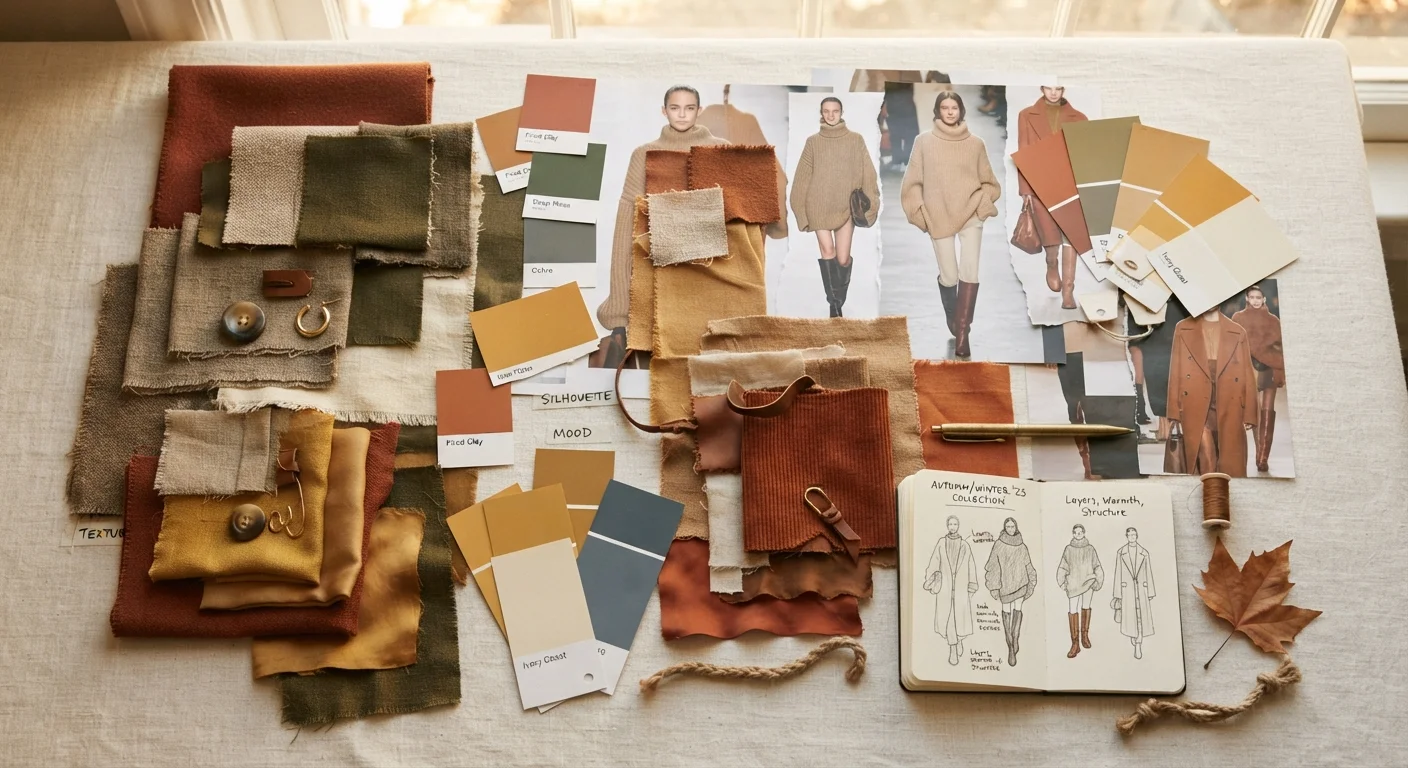
Key Takeaways
- Color trends originate with professional forecasting agencies, not designers or retailers.
- The pipeline from concept to store shelf typically spans 18-24 months.
- Macro cultural signals - art, politics, environment - shape which hues forecasters champion.
- Not every trending color will suit every wardrobe; neutrals remain a reliable anchor.
- Knowing the pipeline helps you shop intentionally rather than reactively.
Color Palette Trend
A color palette trend is a curated set of hues that industry forecasters, designers, and retailers collectively agree will dominate fashion in a given season. These color stories don't emerge randomly - they travel through a defined pipeline, from research agencies to runways to retail floors, before reaching everyday shoppers. Understanding how that pipeline works helps you spot trends early and decide whether they suit your wardrobe.
Forecasting agencies typically publish directional color reports 18-24 months ahead of a retail season, giving designers and manufacturers enough lead time to source materials and produce at scale.
Where Color Trends Are Born
Before a shade appears on a rack or a social feed, it lives inside a forecasting report. Professional color forecasting organizations analyze macro signals - shifts in art, architecture, political mood, environmental concerns, and consumer psychology - to project which hues will resonate with shoppers 18 to 24 months into the future. These reports are sold to manufacturers, fabric mills, and design teams who need that lead time to source materials and plan production.
The process is less mystical than it sounds. Forecasters are essentially cultural researchers. They ask: what emotional state is society moving toward, and which colors historically mirror that state? After a period of collective anxiety, softer, earthy palettes often gain traction. After cultural optimism spikes, saturated brights tend to follow. The palette emerges from pattern recognition, not guesswork.
18-24 months
Lead time from color forecast to retail floor
Standard timeline cited by professional color forecasting organizations and textile industry sources.
4-6 weeks
Fast-fashion trend-to-shelf speed
Industry analysts have consistently reported this compressed timeline for leading fast-fashion retailers responding to runway signals.
10+
Major forecasting agencies publishing seasonal palettes
Organizations such as the Color Association of the United States (CAUS) and Intercolor are among the most widely cited in the fashion and textile industries.
How the Pipeline Moves from Concept to Closet
Once a directional palette is published, it filters through several distinct layers. Luxury designers interpret the color story first, adapting it to their aesthetic and presenting it on the runway. Trade publications and trend aggregators then synthesize runway data, identifying which hues appeared most frequently across collections - a signal of genuine consensus rather than one designer's preference.
Mid-market brands receive or observe these signals and begin developing their own interpretations. Fast-fashion retailers, positioned at the final stage of the pipeline, often condense this timeline significantly, moving from runway observation to product in a matter of weeks. By the time a color lands on a mainstream retail floor, it has passed through multiple layers of validation. For a deeper look at how to distinguish a fleeting moment from a genuine shift, see our piece on reading a trend.
Spot a Trend Early With This Simple Check
When a color appears across three or more unrelated designer collections in a single season - not just one brand - that's a reliable signal of genuine directional consensus rather than a single designer's signature. Cross-reference with street style coverage from the same fashion week for an even clearer read.
What Makes a Color Story Stick
Not every color a forecasting agency champions becomes a cultural phenomenon. A palette gains momentum when multiple factors converge: prominent runway presence, early adoption by influential stylists, organic appearance in street photography, and social media amplification. When all four align, a color stops being a forecast and starts being a movement.
Color trends also tend to travel in families rather than solo. A headline hue - the one that gets the most editorial coverage - is typically anchored by supporting tones that make it easier to wear. A vivid primary shade might be paired with muted dusty versions of itself, plus complementary neutrals. This is why neutrals as a wardrobe strategy matter so much: they are the connective tissue that makes trending accent colors wearable across multiple outfits. The same principles of palette-building also show up in interiors - the reasoning behind warm versus cool neutral palettes for walls mirrors how fashion stylists think about base tones.
“Color is the first thing people register when they walk into a room or meet someone on the street. It communicates before words do - which is exactly why industries spend so much energy trying to anticipate which colors will feel right at a given moment in time.”
— Margaret Walch, Former Director, Color Association of the United States
Using Trend Awareness Practically
Understanding the anatomy of a color trend changes how you engage with it. Rather than feeling pressured to overhaul your wardrobe each season, you can make deliberate, small-scale additions - a scarf, a bag, a single layering piece - that incorporate a trending hue without displacing what already works. This approach respects both your budget and your existing style.
Pair trend awareness with an understanding of color coordination basics, and you have a practical toolkit for dressing with intention. For broader context on how seasonal cycles drive fashion's recurring patterns, seasonal trend cycles offers useful grounding. The goal is always informed choice - not trend compliance.
Trend Awareness Is a Tool, Not a Rule
Seasonal color forecasts are commercial tools designed to drive turnover in the fashion industry. They offer useful inspiration but carry no obligation. Dressing in colors that genuinely suit your skin tone and existing wardrobe will always serve you better than chasing a palette purely because it's being promoted this season.