

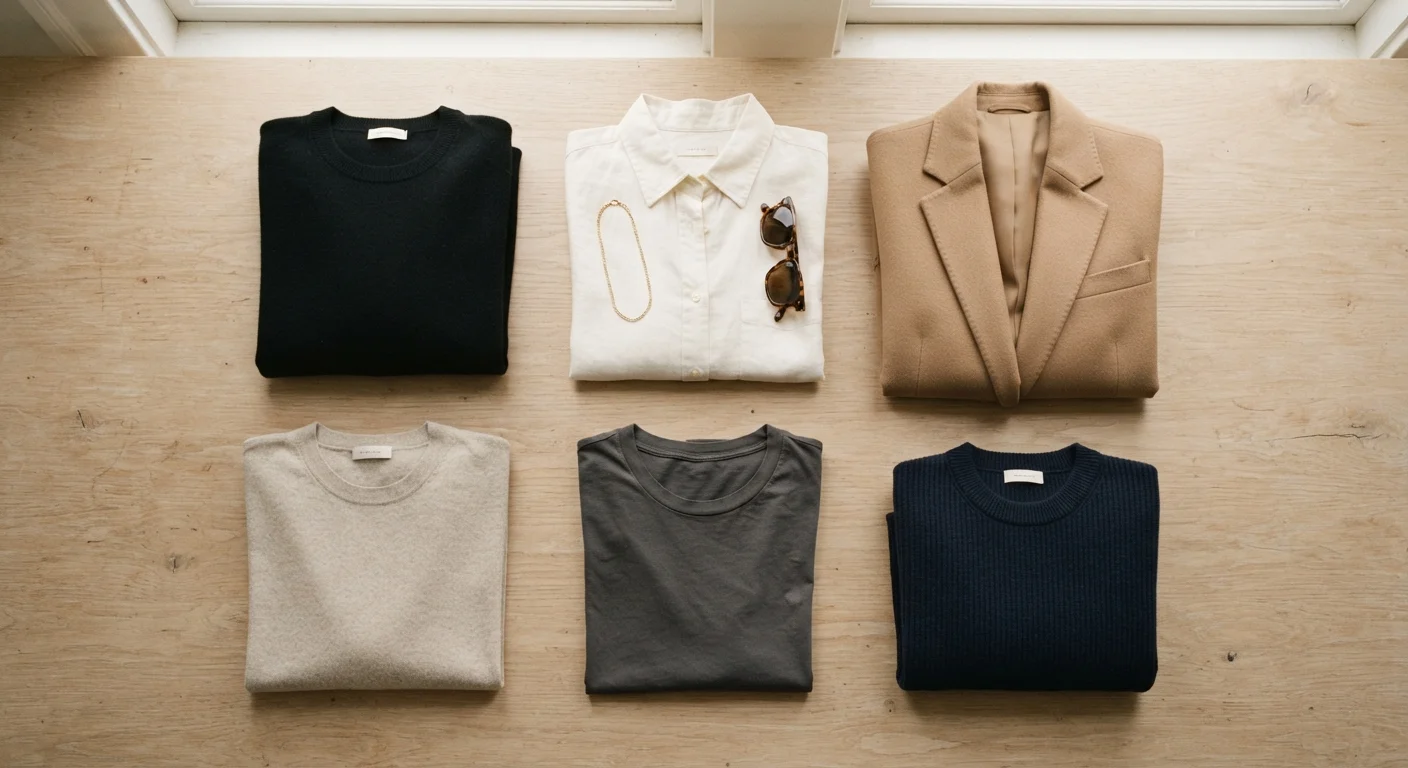
Key Takeaways
- Neutrals - black, white, navy, grey, camel - are the most universally flattering and versatile clothing colors.
- A neutral-anchored wardrobe dramatically reduces the number of items that fail to coordinate.
- Neutrals remain relevant across seasons and years, making them a cost-effective long-term choice.
- Texture, fit, and proportion add visual interest within an all-neutral outfit.
- Neutral foundations make it easier to incorporate statement pieces without clashing.
Neutral Color Wardrobe Strategy
A neutral color wardrobe strategy means deliberately building your closet around a core set of understated, non-saturated hues - typically black, white, grey, navy, beige, and camel - that coordinate effortlessly with one another. The idea is that when most of your pieces share a common color language, getting dressed becomes faster, easier, and more consistent. You end up with fewer items that feel unwearable because nearly everything pairs with everything else.
In color theory, neutrals are broadly defined as hues with low chroma (saturation). In fashion, the category is more loosely applied and typically includes classic achromatic shades as well as low-saturation earth tones.
Why Neutrals Are the Real Workhorses of Your Closet
Most wardrobe frustration - staring at a full closet and feeling like there's nothing to wear - comes down to compatibility. Bright or highly saturated pieces often anchor an outfit so strongly that they limit what can work alongside them. Neutrals, by contrast, play well with virtually everything in their category and with most colors outside it.
That's the functional core of the neutral strategy: it's about maximizing outfit combinations relative to the number of items you own. A camel blazer can go over a white tee, a grey sweater, or a navy dress. A pair of well-cut black trousers works morning to evening, casual to polished. The math compounds quickly - each neutral item you own increases the wearability of the items already in your closet.
This is why stylists and wardrobe consultants frequently recommend building a neutral foundation first, then layering in color and pattern thoughtfully. It's not about dressing without personality - it's about creating a system that works before adding complexity. See our everyday style tips hub for practical advice on building that system from the ground up.
~30%
Wardrobe items rarely or never worn
Research from multiple closet-audit studies consistently finds that a significant portion of owned clothing goes unworn, often due to poor outfit coordination.
3-5
Core neutral shades for a functional base
Wardrobe consultants commonly recommend anchoring a closet in three to five complementary neutral tones to maximize outfit combinations.
10x+
Potential outfit combinations per neutral piece
A single versatile neutral item - such as well-fitting trousers - can theoretically generate dozens of outfit combinations when paired across a coordinated wardrobe.
The Core Neutral Palette - and How Each One Functions
Not all neutrals behave the same way in a wardrobe. Understanding each one's personality helps you choose wisely:
- Black: The most versatile anchor. Works in almost every context, visually slims silhouettes, and transitions effortlessly between casual and formal.
- White and off-white: Creates freshness and contrast. Off-white (cream, ivory) tends to be more flattering and forgiving than bright white for everyday wear.
- Grey: Softer than black, it works particularly well in knits, tailoring, and outerwear. Cool and warm greys behave differently - it's worth knowing which you own.
- Navy: Functions like a softer black with a more relaxed, approachable quality. Pairs especially well with white, camel, and grey.
- Camel and tan: Warm-toned and grounding, these shades layer beautifully over cooler neutrals and add richness without demanding attention.
- Beige and greige: Quiet but sophisticated. Works well as a base layer or for monochromatic tonal outfits.
Knowing which of these you already own - and which gaps exist - helps you shop with purpose rather than impulse. For a deeper look at how neutrals interact with color theory, simple colour coordination principles can help bridge the gap between instinct and intention.
Start With What You Already Own
Before buying anything new, lay out what you already have in neutral tones. You may find you own more of a foundation than you realized - or you'll spot a clear gap (say, you have plenty of black but no clean white or off-white). Shopping from a clear picture of your existing neutrals prevents duplication and fills actual holes.
Adding Texture and Interest Without Adding Color
One of the most common concerns about building a neutral wardrobe is that it will feel flat or monotonous. The answer to that is texture. When color isn't doing the visual work, fabric and construction step in.
A grey outfit built from a chunky knit sweater, slim tailored trousers, and a leather belt reads as deliberately styled - not understated out of necessity. The same logic applies to mixing a linen shirt with a matte cotton trouser, or pairing a silk blouse with a woven blazer. The textural contrast creates depth that color would otherwise provide.
Proportion is the second lever. Wide-leg trousers with a fitted top, or an oversized jacket over slim pants - these structural contrasts keep a look interesting without requiring pattern or color to carry the weight.
Once your neutral foundation is solid, you can thoughtfully introduce statement pieces - a printed scarf, a cobalt bag, a bold earring - and they'll land with far more impact against a quiet backdrop. Finding the right balance between neutrals and statement pieces is a skill worth developing, and it starts with knowing your neutral base cold.
Neutrals Over Time: A Long-Term Wardrobe Investment
Fashion cycles through color trends seasonally - one year it's sage green, the next terracotta or cobalt. Neutrals largely sit outside this churn. While there are occasional directional shifts in which neutrals feel current (and how seasonal color trends travel from concept to closet is worth understanding), the core palette of black, white, navy, camel, and grey has remained a reliable wardrobe foundation for decades.
That durability has a practical financial implication: quality neutral pieces - a well-made coat, a structured bag, tailored trousers - tend to offer better cost-per-wear than trend-driven equivalents because they don't feel dated after a single season. Investing more intentionally in your neutrals, and supplementing with lower-cost statement items when a trend appeals to you, is a reasonable way to balance freshness with longevity.
The neutral wardrobe strategy isn't about minimalism for its own sake, or any particular aesthetic. It's a practical framework for getting more use, more satisfaction, and more confidence out of whatever you already own - and whatever you add next.
“A wardrobe that works is one where almost everything goes with almost everything else. Neutrals are the grammar of that system - they don't make noise, but without them, nothing makes sense.”
— Tim Gunn, Fashion educator and author on personal style