

Key Takeaways
- A capsule wardrobe prioritizes quality and versatility over sheer volume of clothing.
- Every item in a capsule wardrobe should mix and match easily with multiple other pieces.
- Neutral color palettes are common because they maximize outfit combinations.
- A capsule approach reduces decision fatigue and simplifies the morning routine.
- Capsule wardrobes can work at any budget - the principle, not the price tag, matters.
Capsule Wardrobe
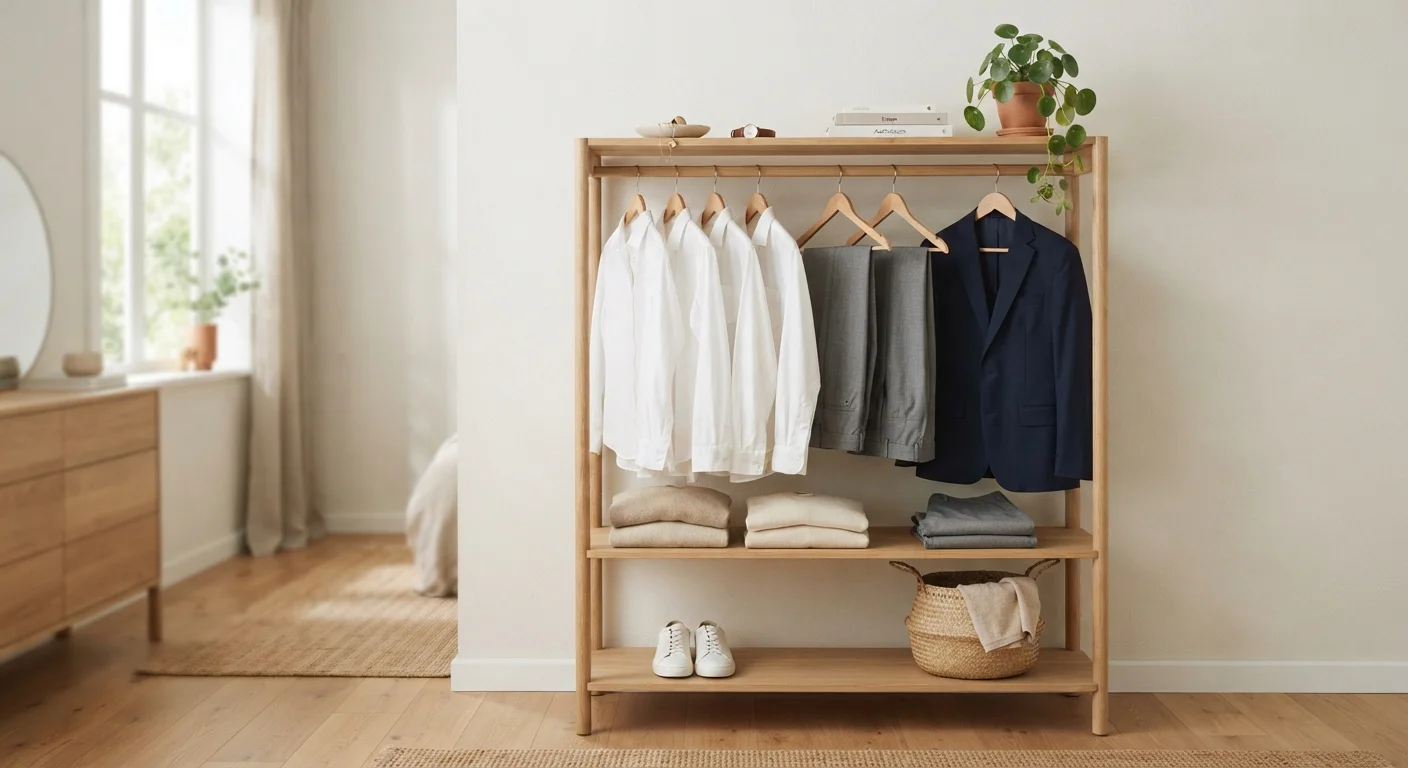
A capsule wardrobe is a small, carefully chosen collection of clothing where every piece works well with the others. The goal is a closet full of versatile, timeless items that cover your daily needs without excess. Instead of chasing every trend, you build around a core set of clothes that consistently make you look and feel put-together.
The term was popularized by London boutique owner Susie Faux in the 1970s and later broadened by designer Donna Karan's influential 1985 collection. Traditional counts range from roughly 30 to 50 items including shoes and outerwear, though no universal rule exists.
The Core Idea Behind a Capsule Wardrobe
At its simplest, a capsule wardrobe is a curated collection where nothing is wasted. Each piece earns its place by being versatile, well-fitting, and genuinely useful to your daily life. Think of it less as a rigid system and more as a philosophy: own less, wear more of what you own.
The concept flips the usual approach to getting dressed. Rather than scanning a packed closet and feeling like you have nothing to wear, a capsule gives you a smaller, smarter set of options where almost everything coordinates. That ease isn't accidental - it's the result of deliberate choices made upfront.
Understanding the anatomy of a capsule wardrobe goes deeper into how the pieces interact, but the foundation is simple: neutral basics as anchors, a handful of complementary items, and just enough personality pieces to keep things interesting.
~80%
Clothes worn regularly vs. owned
A commonly cited wardrobe behavior observation suggests most people regularly wear only about 20% of what they own - the rest goes largely unworn.
30-50
Typical capsule wardrobe item count
Most capsule wardrobe frameworks recommend keeping total clothing and footwear items in the 30-50 range as a practical, manageable target.
Why It Actually Works
The practical appeal of a capsule wardrobe comes down to one underrated concept: decision fatigue. When every item in your closet goes with everything else, choosing an outfit stops being a problem to solve and becomes genuinely effortless. Research in behavioral psychology consistently shows that reducing low-stakes daily decisions preserves mental energy for higher-priority tasks.
There's also a fit-and-quality payoff. Because a capsule demands fewer pieces, it naturally shifts attention toward items that fit well and hold up over time. Clothes that fit properly and are made to last simply look better - and that confidence boost is real.
“A capsule wardrobe is about liberating yourself from the tyranny of too much choice, so you can focus your energy on living rather than managing your closet.”
— Susie Faux, London boutique owner credited with coining the term 'capsule wardrobe' in the 1970s
For anyone who's felt overwhelmed by a stuffed closet, the capsule approach offers a structured way out. It's not about deprivation - it's about making every item count. Explore the wardrobe staples every adult should own to see which foundational pieces typically anchor a functional collection.
Getting Started Without Starting Over
One of the biggest myths about capsule wardrobes is that you have to scrap everything and start fresh. You don't. Most people already own several capsule-worthy pieces - they're just buried under items that don't earn their place.
The smartest move is to begin with a wardrobe audit - a methodical look at what you actually wear, what fits well, and what's been sitting untouched for a year. What survives that process becomes the seed of your capsule.
Start With What You Already Love
Before buying a single new item, pull out the five to ten pieces you reach for most often. These are your capsule anchors. Everything else you consider adding should coordinate naturally with this existing core - if it doesn't, it probably won't earn its place in the long run.
From there, identify genuine gaps rather than shopping recreationally. If your keepers include five tops but only one versatile bottom, that's a real gap worth filling. If you have ten nearly identical items, that's a sign of a pattern worth rethinking. A capsule wardrobe is built from honest self-assessment, not a shopping list.
It's also worth remembering that capsule dressing doesn't mean ignoring trends entirely. Trends and capsule dressing can coexist - the difference is being selective rather than reactive when something catches your eye.
The wardrobe essentials hub is a great ongoing resource as you refine your collection over time.