

Key Takeaways
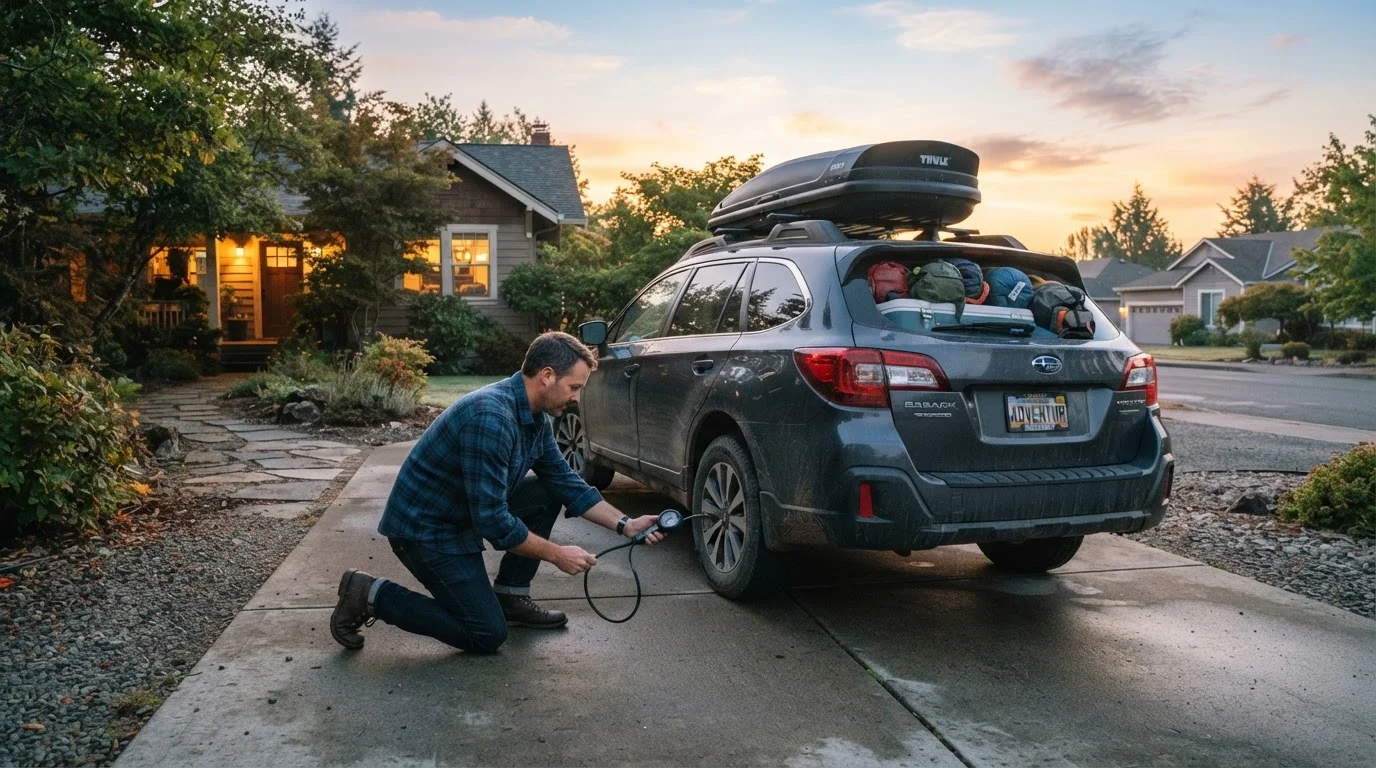
- Tire pressure and tread depth should be checked before every long trip, not just annually.
- Fluid levels - oil, coolant, brake, and washer fluid - are quick checks that prevent serious breakdowns.
- A basic emergency kit in your vehicle can be essential when help is far away.
- Route planning and weather awareness belong on your pre-trip checklist alongside mechanical checks.
- Driver readiness - rest, medications, and focus - is just as important as vehicle readiness.
Summary
22 items · 30-60 minutes
Why a Pre-Trip Checklist Matters
Long drives put sustained stress on your vehicle in ways that everyday commuting rarely does. Higher sustained speeds, extended engine loads, and unfamiliar roads can turn a minor issue - a slow tire leak, low coolant, worn wipers - into a real problem when you're two hundred miles from the nearest exit. A structured checklist turns guesswork into a deliberate process, and it takes far less time than most drivers expect.
This checklist is designed to be used the day before departure, giving you enough time to address anything that needs attention without scrambling. For ongoing vehicle health between trips, see our guide on maintaining your car between mechanic visits and our seasonal car maintenance guide.
Tire Condition
Fluid Levels
Lights and Visibility
Emergency Kit
Route and Documents
Driver Readiness
Tools and Supplies You'll Need
Most of these checks require only a few basic items you may already own. Having them on hand lets you complete the full checklist without interruption.
Tire pressure gauge
Accurately measures inflation in each tire so you can correct pressure to the manufacturer's recommended PSI.
Penny (for tread check)
A simple, no-cost tool for performing a quick tread depth test on each tire.
Flashlight or work light
Lets you inspect tires, under the hood, and underneath the vehicle even in low-light conditions.
Jumper cables or portable jump starter
Enables you to restart a dead battery on the road without needing another vehicle.
Basic first-aid kit
Provides supplies to manage minor injuries until professional medical help is available.
Portable phone charger or power bank
Keeps your phone powered for navigation and emergency calls during extended drives.
Reflective warning triangles or road flares
Alerts oncoming traffic if you need to stop on the roadside in an emergency.
Important Safety Notes Before You Start
Brake and Steering Issues: Do Not Defer
If you notice spongy or soft brake pedal feel, grinding or squealing brakes, pulling to one side, or unusual steering vibration, do not begin a long trip until a qualified mechanic has inspected the vehicle. These symptoms can indicate safety-critical failures in systems that have no reliable workaround on the road. No destination is worth the risk of driving with compromised braking or steering.
If any check reveals a problem you are not confident addressing yourself - brake issues, unusual tire wear, warning lights - have a qualified mechanic inspect the vehicle before departing. Some repairs should not be deferred. For a deeper look at what a thorough inspection covers, the pre-road trip vehicle inspection guide walks through each system in detail.
Don't Ignore Dashboard Warning Lights
A check engine light, tire pressure warning, or temperature gauge spike should never be dismissed before a long drive. These alerts are your vehicle's way of flagging a condition that may worsen under highway load. Look up the warning in your owner's manual and, when in doubt, consult a mechanic before departing.
Avoid Checking Fluids on a Hot Engine
Opening the coolant reservoir cap or handling other fluid checks on a recently run engine can result in burns from pressurized hot fluid. Allow the engine to cool for at least 30 minutes before performing underhood checks.
On the Road: Staying Alert and Prepared
Completing this checklist before you leave is only half the equation. Once you're on the highway, situational awareness behind the wheel becomes your primary safety tool - scanning ahead, anticipating lane changes, and managing your following distance. If your route passes through areas with variable weather, review driving in bad weather before you go so you know how to adjust your technique when conditions change.
Despite all preparation, incidents can happen. Knowing what to do immediately after a car accident - securing the scene, documenting damage, and notifying the right parties - is knowledge worth having before you need it. For a broader view of year-round ownership responsibilities, the annual car ownership checklist covers registration, insurance review, and scheduled service milestones.
This article is for general informational purposes only. If your vehicle has a mechanical issue, consult a qualified automotive technician before driving.