

Key Takeaways
- Wet roads can double or triple your stopping distance compared to dry pavement.
- Hydroplaning occurs at surprisingly low speeds - as low as 35 mph on standing water.
- Black ice is often invisible and most common on bridges, overpasses, and shaded roadways.
- In fog, use low-beam headlights - high beams reflect off moisture and reduce your visibility.
- Your tires, wipers, and brakes are the most critical safety systems in bad weather.
- Knowing when not to drive is itself a core bad-weather driving skill.
Why Bad Weather Demands a Different Approach
Most driving skills transfer across conditions, but adverse weather doesn't just make familiar roads harder - it fundamentally changes how your vehicle behaves. Friction drops, visibility shrinks, and the margin for error narrows considerably. Understanding those shifts is the foundation of staying safe.
According to the Federal Highway Administration, weather-related crashes account for a significant share of annual US traffic fatalities, with wet pavement and rain being the most common adverse conditions involved. Snow, ice, and fog add further complexity.
The core adjustment isn't simply slowing down - it's recalibrating your entire approach: following distance, steering input, braking technique, and situational awareness. If you want to build the broader habits that underpin safe driving in any environment, our guide to defensive driving principles covers the foundational mindset in detail.
21%
US crashes attributed to weather conditions
According to the Federal Highway Administration, approximately 21% of annual vehicle crashes in the US involve adverse weather.
70%
Weather-related crashes occur on wet pavement
The FHWA reports that wet pavement is the single most common weather-related crash surface, accounting for roughly 70% of weather-related incidents.
35 mph
Speed at which hydroplaning can begin
Tire engineers and safety researchers note that hydroplaning can initiate at speeds as low as 35 mph on standing water with worn or underinflated tires.
Driving in Rain: Hydroplaning, Visibility, and Stopping Distance
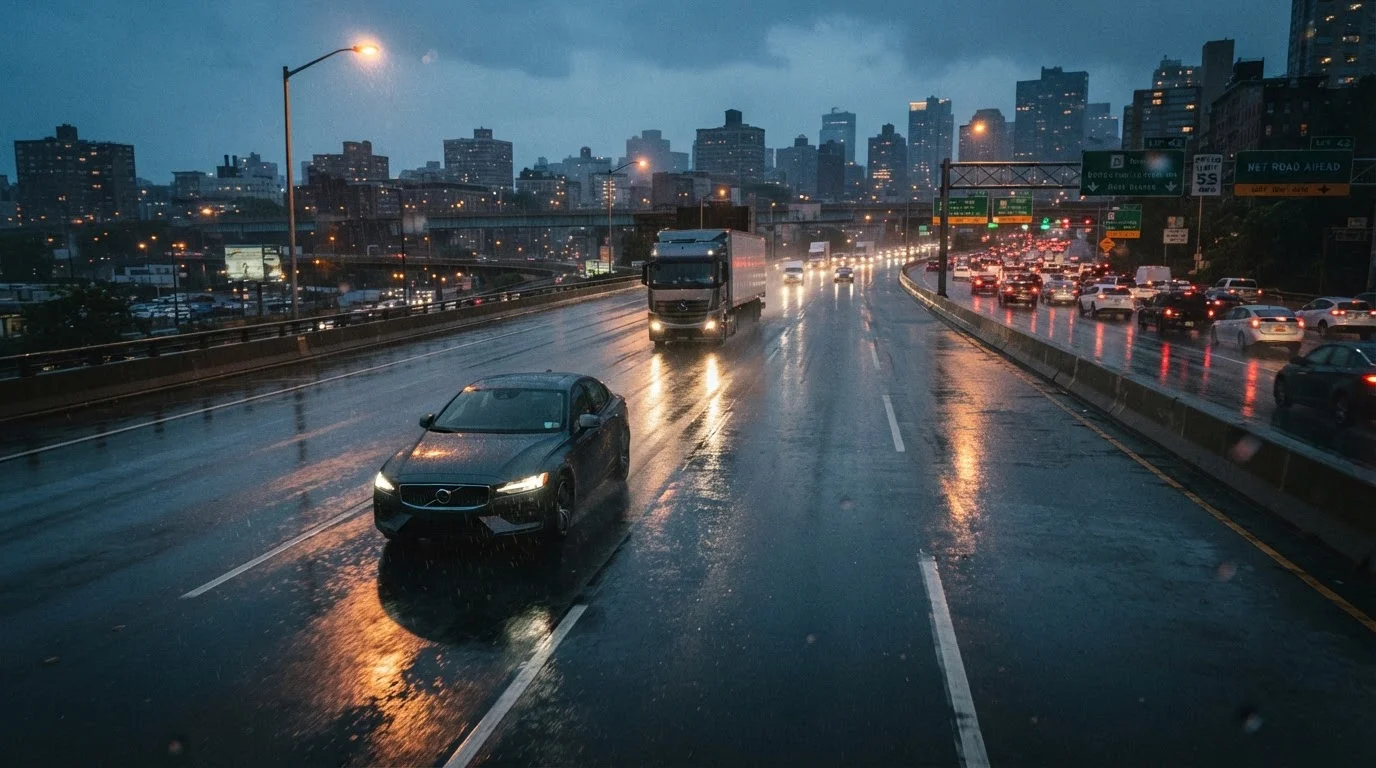
Rain is the most frequently encountered bad-weather condition, and it's one many drivers underestimate precisely because it's so common. Two primary hazards demand attention: reduced traction and reduced visibility.
Traction and Stopping Distance
Water creates a lubricating layer between your tires and the road. Even a thin film measurably reduces friction. A vehicle traveling at highway speeds on wet pavement may need 50-70% more stopping distance than on dry asphalt. Increase your following distance - the standard three-second rule should expand to at least four to five seconds in wet conditions.
Hydroplaning
Hydroplaning occurs when your tires ride up on a layer of water faster than they can displace it, causing a momentary loss of steering and braking control. It can happen at speeds as low as 35 mph on standing water. If you feel your steering go light or hear the engine rpm rise suddenly, ease off the accelerator gently - do not brake hard or jerk the wheel.
Visibility
Turn on your headlights whenever you use your wipers - many states require this by law. Keep wiper blades in good condition; worn blades streak rather than clear. Allow more time to see and respond to hazards ahead.
Check Your Tires Before Rain Hits
Tire tread depth is your first defense against hydroplaning. Use the penny test - insert a penny into a tread groove with Lincoln's head facing down; if you can see the top of his head, tread is below 2/32" and replacement is overdue. For wet-weather driving, 4/32" or more is a meaningful safety margin.
Snow and Ice: Traction, Control, and Recovery
Snow and ice present the most dramatic traction reductions of any common weather condition. Packed snow can reduce tire grip by half; glare ice can drop it further still. Every input - accelerating, braking, steering - must be gradual and deliberate.
Acceleration and Braking
Apply the gas slowly to avoid wheelspin. When braking, steady, firm pressure on modern vehicles equipped with ABS (anti-lock braking systems) is correct - do not pump the pedal. If your vehicle lacks ABS, gentle threshold braking prevents wheel lockup.
Steering and Skid Recovery
Oversteer (rear slides out) is corrected by steering gently into the direction of the skid. Understeer (front washes wide) is addressed by easing off the accelerator and not turning more sharply - that increases the problem. Both require calm, measured inputs.
Following Distance
On snow or packed ice, following distances of eight to ten seconds are appropriate. Intersections, hills, and curves are the highest-risk zones. Approach all three with extra caution and reduced speed well before you reach them.
Before a winter trip, review our seasonal car maintenance guide to confirm your tires, battery, and fluids are winter-ready.
Before driving in snow, gently test your brakes on a clear, low-traffic stretch to get a feel for how quickly your vehicle stops - conditions vary street by street.
Traction changes between cleared roads and packed-snow sections can be dramatic. A brief braking test builds an accurate mental model before it matters in a hazard situation.
When descending a slippery hill, engage a lower gear before you start - engine braking reduces your reliance on friction brakes and gives you more control throughout the descent.
Brakes generate heat and can fade on repeated downhill application; engine braking distributes the load and preserves brake effectiveness for emergencies.
Fog: The Visibility Trap Most Drivers Get Wrong
Fog is uniquely dangerous because it creates a false sense of security - the road surface feels normal while your ability to see and be seen drops sharply. The most common mistake is using high-beam headlights, which reflect off fog droplets and actually reduce your forward visibility.
Lighting in Fog
Use low-beam headlights. If your vehicle has dedicated rear fog lights, use them. Hazard lights are generally not recommended while moving, as they can confuse other drivers about your speed and direction - check your state's rules, which vary.
Speed and Distance
Drive at a speed where you can stop within the distance you can see clearly - called driving within your sight distance. This is often far slower than you might assume. Heavy fog can cut visibility to 100 feet or less; at 40 mph, stopping distance on dry pavement alone exceeds that.
Fog shares characteristics with the low-visibility challenges covered in our piece on night driving hazards - the adaptation principle is similar: slow down, increase space, and stay alert.
Never Stop on a Foggy Highway
Pulling onto the shoulder of a highway in dense fog is extremely dangerous - rear-end collisions from drivers following the taillights of vehicles ahead are a documented fog-related crash pattern. If you must stop, exit at the nearest ramp and move well off the roadway before stopping.
Black Ice: The Hidden Road Hazard
Black ice is a thin, nearly transparent layer of ice that forms on road surfaces, taking on the color of the pavement beneath it. It's often invisible until you're already on it, making it one of the most dangerous winter road conditions.
Where and When It Forms
Black ice is most likely to appear on bridges and overpasses (which cool faster than ground-level roads), shaded stretches of road, and areas near bodies of water. It typically forms when temperatures hover around or just below freezing, often early morning or after sunset.
Detection Clues
If the road ahead appears darker and shinier than surrounding pavement, treat it as a warning sign. If other drivers are swerving unexpectedly, that's another cue. Check your car's outside temperature display - readings between 32°F and 38°F are prime black ice territory.
If You Encounter It
Stay calm. Avoid sudden braking or steering inputs. Keep the wheel steady, ease off the throttle, and let the vehicle pass over the ice. If you must brake, do so gently with ABS-equipped vehicles or with careful threshold pressure on older models.
Black Ice Gives Almost No Warning
Unlike snow or visible ice, black ice provides no visual or tactile warning before you're on it. By the time most drivers recognize the loss of traction, they are already sliding. The only reliable countermeasure is anticipation: slow down proactively in conditions where black ice is likely, especially on bridges, shaded sections, and roads near water, even if the pavement looks clear.
Vehicle Preparation for Adverse Conditions
Your technique is only as effective as your vehicle allows. Four systems are especially critical in bad weather:
- Tires: Adequate tread depth (at least 2/32", though 4/32" or more is significantly safer in wet or snowy conditions) and proper inflation are non-negotiable. In areas with consistent winter snow, dedicated winter tires offer a substantial advantage over all-season tires.
- Wipers and washer fluid: Replace wiper blades annually or whenever streaking occurs. Use winter-rated washer fluid that won't freeze in the reservoir lines.
- Headlights: Cloudy or yellowed headlight lenses reduce output dramatically. Clean or restore them if visibility looks dim.
- Brakes: Worn brake pads and rotors extend stopping distances at any time - in wet or icy conditions, the effect is amplified.
For a complete pre-trip check before heading into uncertain weather, the long road trip safety checklist covers these systems and more in a structured walkthrough.
All-Season vs. Winter Tires: An Important Distinction
All-season tires are designed for a broad range of conditions but are not optimized for sustained cold, packed snow, or ice. Dedicated winter tires use a different rubber compound that stays pliable below 45°F and a tread pattern specifically designed to bite into snow and channel slush. If you live in an area with regular winter road conditions, the difference in stopping performance is significant.
When to Pull Over or Postpone the Trip
One of the highest-value decisions a driver can make in severe weather is recognizing when not to drive. Visibility below a quarter mile in dense fog or a blizzard, rapidly freezing rain (freezing drizzle that coats roads in minutes), or roads officially closed by authorities are all clear signals to pause.
If conditions deteriorate while you're already driving, pull off at a safe location - a rest area, parking lot, or well-lit area away from traffic - and wait for conditions to improve. Remain in your vehicle with your seatbelt on if you're stopped on a highway shoulder; it is safer than standing outside near traffic.
Building strong situational awareness habits helps you read changing conditions earlier, giving you more time to make safe choices before the situation becomes critical.
This article provides general driver education information. Road and weather conditions vary significantly by region and situation. Always follow local emergency management guidance and posted road closures. Consult a qualified driving instructor or your state's DMV resources for personalized driver training.
FHWA Road Weather Management Program
The Federal Highway Administration's resource hub on how weather affects road safety, including regional data and driver guidance for various adverse conditions.
State DMV Winter Driving Resources
Most state Departments of Motor Vehicles publish region-specific winter driving guides covering local road laws, chain requirements, and emergency contacts.
National Weather Service Road Conditions
The NWS provides real-time weather alerts and travel advisories that help drivers make informed go/no-go decisions before departing in uncertain conditions.