

Key Takeaways
- Move to safety immediately and activate your hazard lights before doing anything else.
- Call 911 if there are injuries, blocked traffic, or significant vehicle damage.
- Never admit fault at the scene - stick to factual exchanges of information.
- Document everything: photos, contact details, and the officer's report number.
- Notify your insurance company promptly, even if you believe you were not at fault.
What you will need
Why Your First Moves Matter Most
In the moments after a collision, stress and shock can make clear thinking difficult. Having a mental framework ready - even a general one - significantly reduces the chance of a costly mistake. The steps you take in the first 10 to 30 minutes directly affect your physical safety, legal standing, and the outcome of your insurance claim.
Good situational awareness behind the wheel can help prevent many accidents, but no driver is entirely immune to collisions. Understanding what to do after one is just as important as knowing how to avoid one. For drivers who want to approach every trip prepared, our road trip safety checklist covers emergency supplies and pre-drive preparation that extend well beyond longer journeys.
What you will need
Step-by-Step: What to Do at the Scene
Follow these steps in order. Safety always comes before documentation, and documentation always comes before leaving the scene.
Move to Safety and Activate Hazard Lights
If the vehicles are drivable and it is safe to do so, pull off the road - onto a shoulder, parking lot, or side street - away from active traffic lanes. Turn on your hazard lights immediately. If you cannot move the car, exit from the passenger side away from traffic and move behind a barrier if one is available.
Check for Injuries
Check yourself and any passengers for injuries before doing anything else. Then assess the other vehicle's occupants if it is safe to approach. Do not attempt to move an injured person unless they face an immediate life-threatening danger such as fire - moving someone with a spinal injury can worsen it significantly.
Call 911
Contact law enforcement whenever there are injuries, a vehicle cannot be moved safely, or there is significant property damage. In many states, you are legally required to report an accident that meets certain damage or injury thresholds. A police report creates an official record that is valuable for insurance claims and any potential legal proceedings.
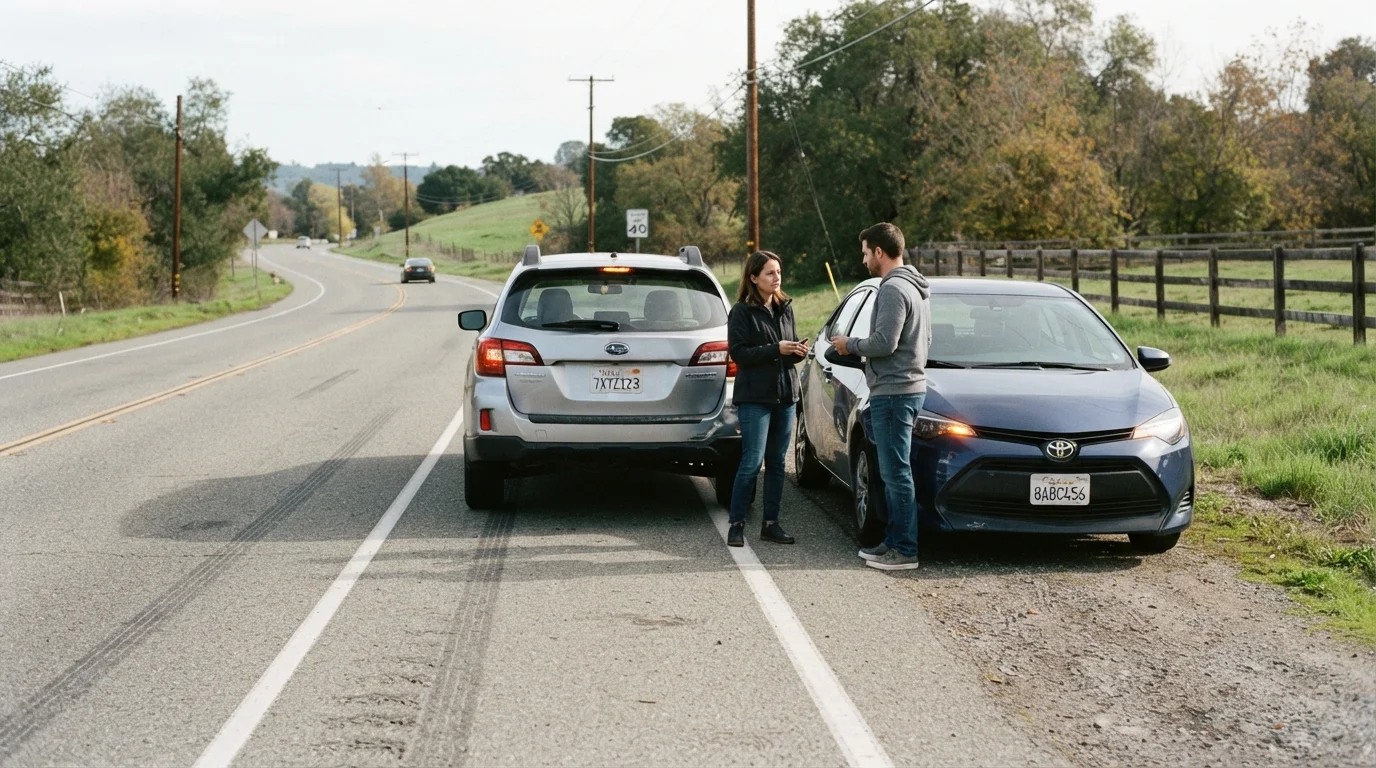
Exchange Information With the Other Driver
Collect and share the following with every driver involved:
- Full name and contact information
- Driver's license number and state of issue
- License plate number and state
- Insurance company name and policy number
- Vehicle make, model, year, and color
If there are witnesses, collect their names and phone numbers as well.
Document the Scene
Photograph everything before vehicles are moved, if possible: all vehicle damage from multiple angles, the overall scene and road conditions, any traffic signs or signals nearby, skid marks, and the positions of all vehicles. Also photograph the other driver's license, registration, and insurance card rather than transcribing details by hand - it's faster and reduces errors.
Cooperate With Law Enforcement
When officers arrive, provide accurate factual information about what happened. Answer questions honestly but keep your account to the facts you directly observed - avoid speculation about speed or fault. Ask the responding officer for their name, badge number, and the report number so you can obtain a copy of the official report later.
Notify Your Insurance Company
Contact your insurer as soon as possible - ideally the same day. Most policies require prompt notification, and delays can complicate your claim. Provide your documentation and let your insurer guide the next steps. Even if you were not at fault, your own insurer can help coordinate the process and protect your interests.
Avoid Admitting Fault at the Scene
In the immediate aftermath, adrenaline and incomplete information make it easy to say things that could be used against you later. Do not apologize, speculate about what caused the crash, or accept blame verbally. Fault is determined by insurers and, when necessary, courts - not by roadside conversation.
Store Key Info Before You Need It
Keep your insurance card, vehicle registration, and a basic accident information card in your glove box. Many insurers also offer mobile apps that walk you through documentation steps. Being prepared in advance makes it far easier to stay calm and thorough in a stressful moment.
After You Leave the Scene
Once you have left the accident location, your focus shifts to health monitoring and claims management. Even if you felt fine at the scene, some injuries - particularly soft-tissue injuries like whiplash - may not be apparent for hours or days. If any pain, stiffness, or neurological symptoms develop, seek medical evaluation promptly.
Keep all accident-related documents in one place: the police report number, photos, the other driver's information, and any communications with your insurer. For a broader look at the full claims and follow-up process, see our detailed guide on what to do after a car accident, which covers insurance filing and vehicle repair steps.
Never Leave the Scene Early
Leaving the scene of an accident before completing required steps is a criminal offense in every US state - even in minor collisions. Stay until law enforcement clears you to go, or until you have fulfilled your legal duty to exchange information with the other driver. Fleeing the scene can result in serious criminal charges regardless of who caused the accident.
Understanding the rules around merging and right-of-way can help you recognize common collision scenarios and reduce your exposure going forward. Responsible car ownership also means keeping your registration, insurance, and vehicle in good standing so you are never caught unprepared.
This article provides general educational information for US drivers and does not constitute legal or insurance advice. Requirements for reporting accidents vary by state. Consult a licensed attorney or insurance professional for guidance specific to your situation.