

Key Takeaways
- Tires in poor condition are among the most common causes of preventable road trip breakdowns.
- Checking fluid levels before a long drive takes under ten minutes and costs nothing.
- A working spare tire and basic emergency kit are essential safety items, not optional extras.
- Lights and wipers are easy to overlook but critical for visibility and signaling other drivers.
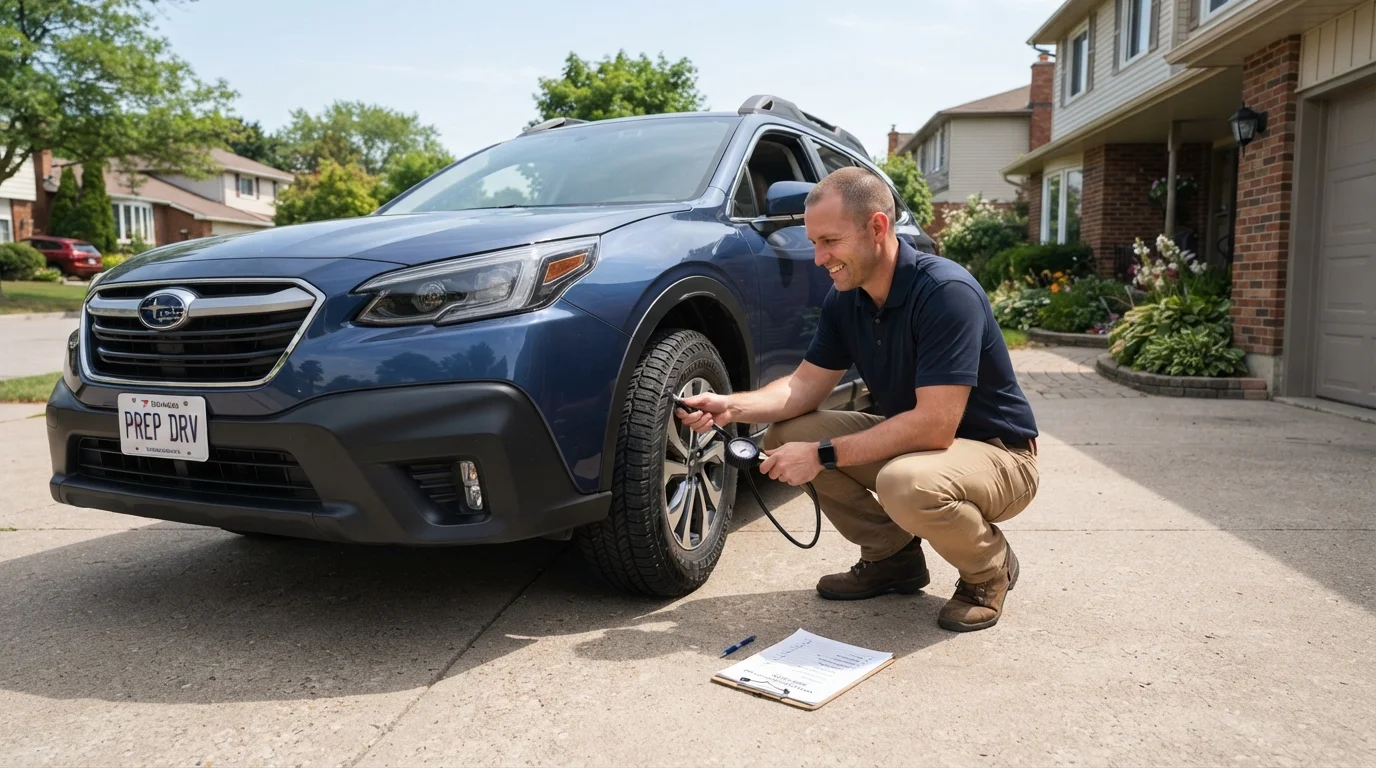
- Many inspection steps can be completed in your driveway with no special tools.
Summary
22 items · 20-45 minutes
Why a Pre-Trip Inspection Matters
A road trip puts your vehicle under sustained stress - extended highway speeds, heavy loads, and varying weather conditions that daily commuting rarely demands. Problems that are minor irritations in town can become genuine safety hazards at 70 mph on an unfamiliar stretch of highway.
This checklist is designed for everyday drivers, not mechanics. Most items require nothing more than your eyes, your owner's manual, and about half an hour of time. Work through it the day before departure when possible, so any issues you discover can be addressed before you're packed and ready to leave.
For broader maintenance context, see our guide for first-time vehicle owners, which covers the foundational upkeep tasks every driver should understand.
Tires
Fluids
Lights and Visibility
Under the Hood and Belts
Brakes and Steering
Emergency Kit and Documents
Tools and Supplies You'll Want on Hand
You don't need a full garage setup to run through this inspection. The items below cover everything required to check, top off, or verify the systems on this list.
Tire pressure gauge
Used to accurately measure PSI in each tire rather than relying on visual inspection alone.
Owner's manual
Provides the correct fluid specifications, fluid capacities, and tire pressure ratings specific to your vehicle.
Flashlight or work light
Helps you see clearly under the hood, around tires, and into the trunk when natural light is limited.
Nitrile gloves
Keeps your hands clean when handling dipsticks and fluid reservoirs under the hood.
Tread depth gauge
Provides a more precise tread measurement than the coin test, especially useful for tires near the replacement threshold.
If your vehicle has been serviced recently, some checks - particularly fluids - may be quick confirmations rather than active tasks. Either way, it only takes a few minutes to look.
Never Check Coolant on a Hot Engine
Opening the coolant reservoir or radiator cap while the engine is hot can cause scalding coolant to spray under pressure. Always wait until the engine has cooled completely - at least 30 minutes after driving - before inspecting or adding coolant.
Low Brake Fluid Needs Professional Attention
If your brake fluid reservoir is significantly low, don't simply top it off and drive. Low fluid often indicates worn brake pads or a possible leak in the brake system - both of which require inspection by a qualified mechanic before a long trip.
Packing Your Emergency Essentials
Even a vehicle in perfect mechanical shape can encounter unpredictable situations on the road - a nail in the tire, a dead battery in a parking lot, or an unexpected detour into an area with limited services. A compact emergency kit doesn't take up much space and can be genuinely valuable when things go sideways.
At a minimum, carry a properly inflated spare tire, a jack and lug wrench (confirm they're in your trunk), jumper cables or a portable jump starter, a basic first aid kit, a flashlight with fresh batteries, and a reflective triangle or road flares. Bottled water and a phone charger are worthwhile additions for longer trips.
For a broader view of safe ownership habits between professional service visits, our article on maintaining your car between mechanic visits is a practical follow-up read.
Don't Ignore Dashboard Warning Lights
A check engine light, tire pressure warning, or brake system indicator illuminated before departure is not something to defer. Some warning lights indicate conditions that could worsen significantly under highway driving loads. Consult your owner's manual to identify the light, and have the vehicle inspected by a qualified mechanic if you're uncertain about its meaning or severity.