

Key Takeaways
- Your owner's manual is the single most authoritative source for your vehicle's specific maintenance needs.
- Checking fluid levels, tire pressure, and lights regularly takes minutes and can prevent major problems.
- Most manufacturers recommend an oil change every 5,000-7,500 miles, though intervals vary by vehicle.
- Some basic checks are owner-friendly; tasks involving brakes, electrical systems, or major components require a qualified mechanic.
- Keeping service records helps protect your vehicle's value and warranty standing.
Start here
Why Maintenance Matters from Day One
Next
Essential Fluids Every Owner Should Monitor
Build on it
Tires, Brakes, and Lights: Your Safety Checks
Go deeper
Scheduled Service Intervals Explained
Apply it
When to DIY and When to Call a Mechanic
Why Maintenance Matters from Day One
Owning a car comes with a straightforward responsibility: keep it maintained. Vehicles are mechanical systems, and like any system, they require routine attention to stay reliable and safe. Skipping maintenance doesn't just risk a breakdown - it can accelerate wear on expensive components and, in some cases, create safety hazards.
The good news is that you don't need to be a mechanic to stay on top of the basics. A solid understanding of what needs attention, and when, puts you firmly in control of your ownership experience. Start by locating your owner's manual - it lives in your glove box and contains the manufacturer's specific guidance for your vehicle. As our guide on what your owner's manual is trying to tell you explains, most drivers never open it, but it holds the most accurate maintenance information available for your specific car.
Owner's manual
The booklet provided with your vehicle that contains the manufacturer's specific guidance on maintenance schedules, fluid specifications, and service intervals.
Dipstick
A long, thin metal rod inserted into the engine oil reservoir that lets you check how much oil is present and its general condition without opening the engine.
Tread depth
The measurement of rubber remaining in a tire's grooves. Sufficient tread depth is essential for maintaining grip, especially in wet conditions.
Service interval
The mileage or time-based schedule specifying when a particular maintenance task - like an oil change or tire rotation - should be performed on your vehicle.
Synthetic oil
A man-made motor oil engineered for better performance and longer service life than conventional oil, often allowing extended intervals between oil changes.
Coolant (antifreeze)
A liquid circulated through the engine to regulate temperature, preventing overheating in summer and freezing in winter.
Essential Fluids Every Owner Should Monitor
Your vehicle relies on several fluids to function safely. Letting any of them run low - or deteriorate - can cause real damage. Here are the core ones to know:
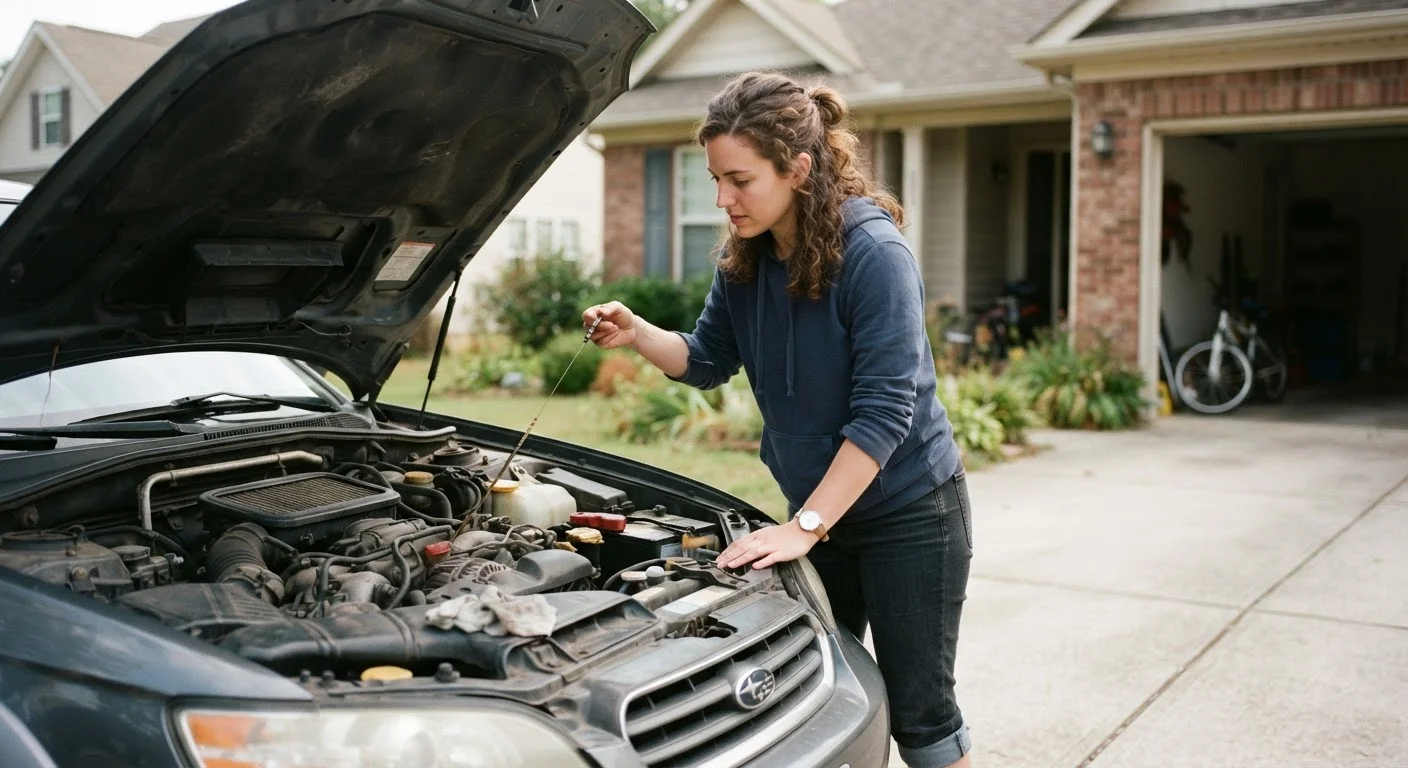
- Engine oil: Lubricates moving engine parts and reduces heat. Check the level monthly using the dipstick under the hood when the engine is cold.
- Coolant (antifreeze): Keeps the engine from overheating or freezing. Check the reservoir level when the engine is cool - never open the radiator cap on a hot engine.
- Brake fluid: Transfers force from your pedal to the brakes. A low or dark level warrants a mechanic's inspection.
- Power steering fluid: Helps you turn the wheel smoothly (if your car has hydraulic steering). Check if steering feels stiff.
- Windshield washer fluid: The one fluid you can safely top off yourself with no mechanical risk.
Check fluid levels regularly and address low levels promptly. If a fluid is consistently low, that may indicate a leak - have it inspected rather than just topping it off repeatedly.
Make Fluid Checks a Monthly Habit
Pick one day each month - the first of the month works well - to do a quick under-hood fluid check. It takes under five minutes and gives you early warning of any issues. Pair it with a tire pressure check and a walk-around light inspection for a complete monthly routine.
Tires, Brakes, and Lights: Your Safety Checks
Three systems are directly tied to your safety on the road: tires, brakes, and lights. First-time owners should get comfortable doing visual and pressure checks on all three.
Tires
Check tire pressure at least once a month and before any long drive. The correct pressure for your vehicle is listed on a sticker inside the driver's door - not on the tire itself. Under-inflated tires wear unevenly, reduce fuel efficiency, and can increase stopping distances. Also inspect tread depth: insert a quarter into a tread groove with Washington's head facing down. If you can see the top of his head, the tread is worn and the tire likely needs replacement.
Brakes
Squealing, grinding, or a vibrating brake pedal are signs that your brakes need attention. Brake inspection and service require a professional - do not attempt brake repairs without proper training and equipment. If you notice any of these symptoms, schedule a mechanic visit promptly.
Lights
Walk around your car periodically to verify all exterior lights work: headlights, taillights, brake lights, and turn signals. A failed bulb is a simple fix, but driving without functioning lights is illegal in all US states and a genuine safety risk. See our pre-road trip inspection checklist for a structured walkthrough of these checks before longer drives.
Scheduled Service Intervals Explained
Beyond fluid checks and visual inspections, your vehicle has a maintenance schedule - a series of service milestones based on mileage or time. Key intervals typically include:
- Oil and filter change: Every 5,000-7,500 miles for conventional oil; up to 10,000 miles for full synthetic, depending on your vehicle.
- Tire rotation: Roughly every 5,000-7,500 miles to promote even tread wear across all four tires.
- Air filter replacement: Typically every 15,000-30,000 miles, though dusty driving conditions accelerate this.
- Cabin air filter: Usually every 15,000-25,000 miles - this affects the air quality inside your car, not engine performance.
- Brake fluid flush: Many manufacturers recommend every two years regardless of mileage.
- Coolant flush: Often every 30,000-50,000 miles, though this varies considerably by vehicle.
These are general benchmarks. Your owner's manual will give you the exact intervals for your model. For a broader seasonal lens on maintenance timing, our seasonal car maintenance guide breaks tasks down by time of year.
Mileage Intervals Are Estimates
Manufacturer service intervals assume average driving conditions. Frequent short trips, extreme temperatures, towing, or driving on unpaved roads can accelerate wear and may call for more frequent service. When in doubt, consult a trusted mechanic about what's appropriate for your driving habits.
When to DIY and When to Call a Mechanic
Not every maintenance task is equally accessible to a first-time owner, and knowing the line between what's safe to handle yourself and what requires professional expertise is important.
Generally owner-friendly tasks include checking and topping off fluids (except brake fluid, which warrants inspection if low), monitoring tire pressure, replacing wiper blades, swapping a cabin air filter, and checking lights. These require minimal tools and carry low risk if done carefully.
Tasks that typically require a mechanic include brake service, suspension and steering repairs, any electrical work beyond replacing a fuse, engine or transmission work, and emissions-related components. Attempting these without proper training can result in injury or vehicle damage. Our article on DIY car maintenance vs. taking it to a shop covers this distinction in detail.
When you do visit a shop, keep records of every service - the date, mileage, and work performed. Good records support your warranty, help future mechanics understand your car's history, and protect you when you eventually sell the vehicle. For a comprehensive year-round ownership framework, the annual car ownership checklist is a practical companion to this guide.