

Key Takeaways
- Your owner's manual contains the exact maintenance intervals engineered for your specific vehicle.
- Using the wrong fluid specification-even a close match-can void warranties and damage components.
- Manufacturer schedules distinguish between normal and severe driving conditions; most drivers qualify for severe.
- The tire placard on the door jamb, not the tire sidewall, gives the correct inflation pressure for your car.
- Dashboard warning lights have different urgency levels-your manual defines which require immediate action.
Why Most Drivers Ignore the Owner's Manual
Studies consistently show that a large share of drivers have never read their vehicle's owner's manual beyond the first few pages-if at all. The document gets tossed in the glove box and forgotten, replaced by word-of-mouth advice, generic mileage stickers from oil-change shops, or whatever the internet says this week.
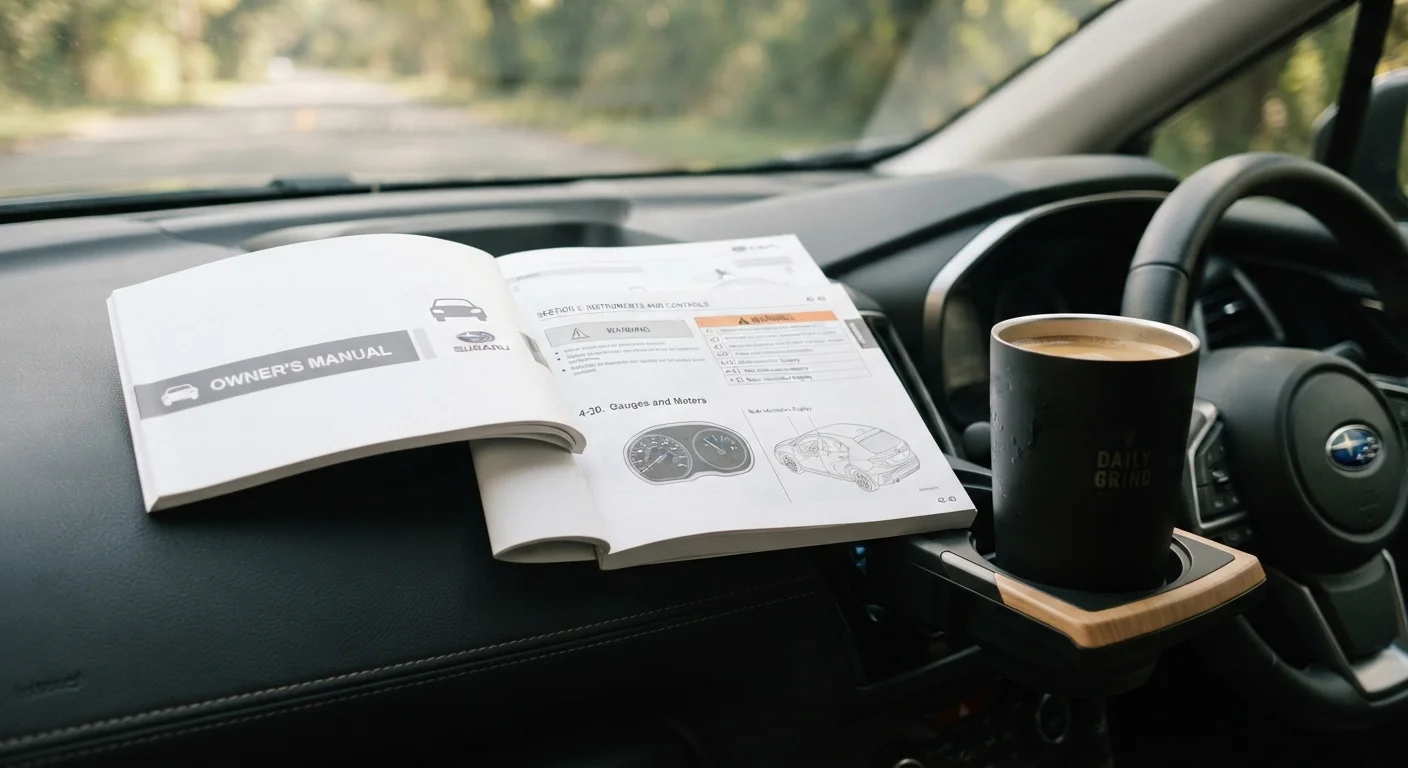
That's a costly habit. The owner's manual isn't generic filler produced by a legal department. It's an engineering document written specifically for your vehicle's make, model, engine, and transmission combination. It tells you exactly what fluids to use, when components need attention, what your warning lights mean, and how much weight your car can safely carry. No other source does all of that for your car specifically.
For a broader foundation on keeping your vehicle in shape, this plain-English introduction to car maintenance is a useful starting point alongside the manual itself.
When you first get a vehicle-new or used-spend 20 minutes reading just the maintenance schedule and fluid spec sections. That single focused read will give you more reliable guidance than years of generic advice.
Most preventable mechanical failures trace back to using wrong fluids or missing manufacturer-specified intervals, both of which the manual addresses directly.
If you've purchased a used vehicle without a physical manual, most manufacturers provide free digital versions on their official websites searchable by model year and VIN.
Driving without access to your vehicle's specifications means relying on approximations that may not match your specific engine or transmission variant.
The Maintenance Schedule: Your Car's Calendar
Almost every owner's manual contains a scheduled maintenance section, usually organized by mileage or time intervals (whichever comes first). This is the most practically important part of the document for most drivers.
What makes manufacturer schedules particularly nuanced is the distinction between normal and severe service conditions. Severe driving is commonly defined as: frequent short trips under five miles, stop-and-go city driving, towing or hauling heavy loads, driving in extreme heat or cold, or operating on dusty or unpaved roads. If any of those sound familiar, your car likely qualifies for the more frequent severe-service intervals-even if you consider your driving routine ordinary.
Key items typically tracked in the maintenance schedule include engine oil and filter, transmission fluid, coolant, spark plugs, timing belts or chains, air filters, and brake fluid. For a deeper look at several of these often-missed components, see this guide to air filters, spark plugs, and belts.
~40%
Drivers who read their owner's manual thoroughly
Industry surveys suggest a significant majority of drivers never consult their manual beyond basic features, leaving maintenance guidance untouched.
2x
Frequency of severe vs. normal service intervals
Severe-service schedules for items like engine oil can require changes twice as often as normal-service schedules for the same vehicle.
Fluid Specifications: More Than Just a Number
One of the most overlooked sections in any owner's manual is the fluid specifications table. It's usually near the back, buried alongside capacity charts-but it's critical.
Engine oil is the most familiar example. Your manual will specify a viscosity grade (such as 5W-30 or 0W-20) and may also require oil meeting a particular industry standard, such as an API (American Petroleum Institute) or ILSAC certification. Using a grade or certification that doesn't match can mean inadequate protection for your engine's tolerances, particularly on cold starts.
The same principle applies to coolant (antifreeze), transmission fluid, brake fluid, and power steering fluid. Manufacturers engineer their systems around specific formulations. Mixing incompatible coolant types, for instance, can cause gel formation that restricts flow. Your manual's fluid spec table removes the guesswork entirely. This fluid-check guide walks through what each fluid does and how to check levels safely.
Never Assume 'Close Enough' on Fluid Specs
Substituting a fluid that is 'similar' to your manual's specification can void manufacturer warranties and, in some systems like automatic transmissions, cause damage that doesn't appear until thousands of miles later. Always match the exact specification listed, including any API service rating or OEM approval code. When in doubt, ask a qualified mechanic before adding any fluid.
Tire Pressures, Load Limits, and the Placard Explained
Many drivers assume the pressure printed on the tire sidewall is the correct inflation target. It isn't. That number is the maximum pressure the tire can safely contain-not the recommended operating pressure for your vehicle.
The correct tire pressure is found on the tire and loading information placard, typically located on the driver's door jamb. Your owner's manual will also reference this placard and explain how to read it. The placard specifies recommended cold inflation pressure for front and rear tires, maximum vehicle load capacity, and the correct tire size for your vehicle.
Maintaining proper inflation matters beyond fuel efficiency. Underinflated tires generate excess heat, wear unevenly, and can fail at highway speeds. Overinflated tires reduce contact patch and braking effectiveness. Neither condition is immediately obvious to the driver, which is why regular checks matter-see safe practices for maintaining your car between mechanic visits for a practical routine.
Warning Lights and What the Manual Says to Do
Modern vehicles can display dozens of warning indicators, and not all of them carry equal urgency. Your owner's manual categorizes them-typically distinguishing between red indicators (stop the vehicle, act immediately) and amber or yellow indicators (service needed soon, but not an emergency).
Generic advice online often treats warning lights as uniform, but your manual is vehicle-specific. A particular symbol may mean something different in your model than in a similar vehicle from the same manufacturer. The manual also explains when a light appearing briefly during startup is normal (a bulb check) versus when the same light staying on indicates a real fault.
For a broader explanation of common warning lights and what triggers them, this decoded guide to dashboard warning lights is a helpful companion resource.
Digital Manuals Are Fully Equivalent
If your vehicle came with a QR code or USB drive instead of a printed booklet, the digital version contains identical information. Many manufacturers also embed interactive maintenance reminders in infotainment systems that reference the same underlying schedule. Either format is equally authoritative.
Putting It All Together: Making the Manual Work for You
The owner's manual is most useful when you treat it as a living reference rather than a one-time read. A few practical habits make it genuinely useful:
- Photograph the key pages. Snap the maintenance schedule, fluid spec table, and tire placard information so you have them on your phone, accessible anywhere.
- Cross-reference service recommendations. When a shop recommends a service, check whether it aligns with your manual's interval. If it's early, ask why.
- Use both time and mileage triggers. If you drive infrequently, time-based intervals (annual brake fluid checks, for example) matter just as much as odometer milestones.
- Revisit the severe-service criteria annually. Your driving patterns may change, shifting you between normal and severe maintenance schedules.
If your vehicle has crossed 100,000 miles, some manual intervals shift-this guide to maintaining high-mileage vehicles covers what changes and why. For seasonal factors your manual doesn't address vehicle-specifically, seasonal car maintenance guidance fills the gap.
Keep a Simple Maintenance Log
Record the date, mileage, and service performed each time you complete a maintenance task. Even a basic notes app entry works. This log helps you track upcoming intervals accurately and provides documentation that can support a vehicle's resale value.