

| Warning light colors | Red = urgent; Amber = attention needed; Green/Blue = system active |
| Flashing check engine light | Indicates active engine misfire - stop driving promptly |
| TPMS activation threshold | Typically 25% below recommended tire pressure (US Federal TPMS Standard (FMVSS 138)) |
| OBD-II standard | Required on all US passenger vehicles since model year 1996 (US EPA OBD regulations) |
| Most commonly triggered light | Check Engine / Malfunction Indicator Lamp (MIL) |
| Recommended action for red lights | Pull over safely and do not continue driving without diagnosis |
What Dashboard Warning Lights Are Actually Telling You
Your dashboard is a live status board. When a warning light appears, your vehicle's onboard diagnostic system has detected a condition worth flagging - ranging from routine reminders to urgent safety alerts. Ignoring these signals is one of the most common ways minor problems escalate into major repairs.
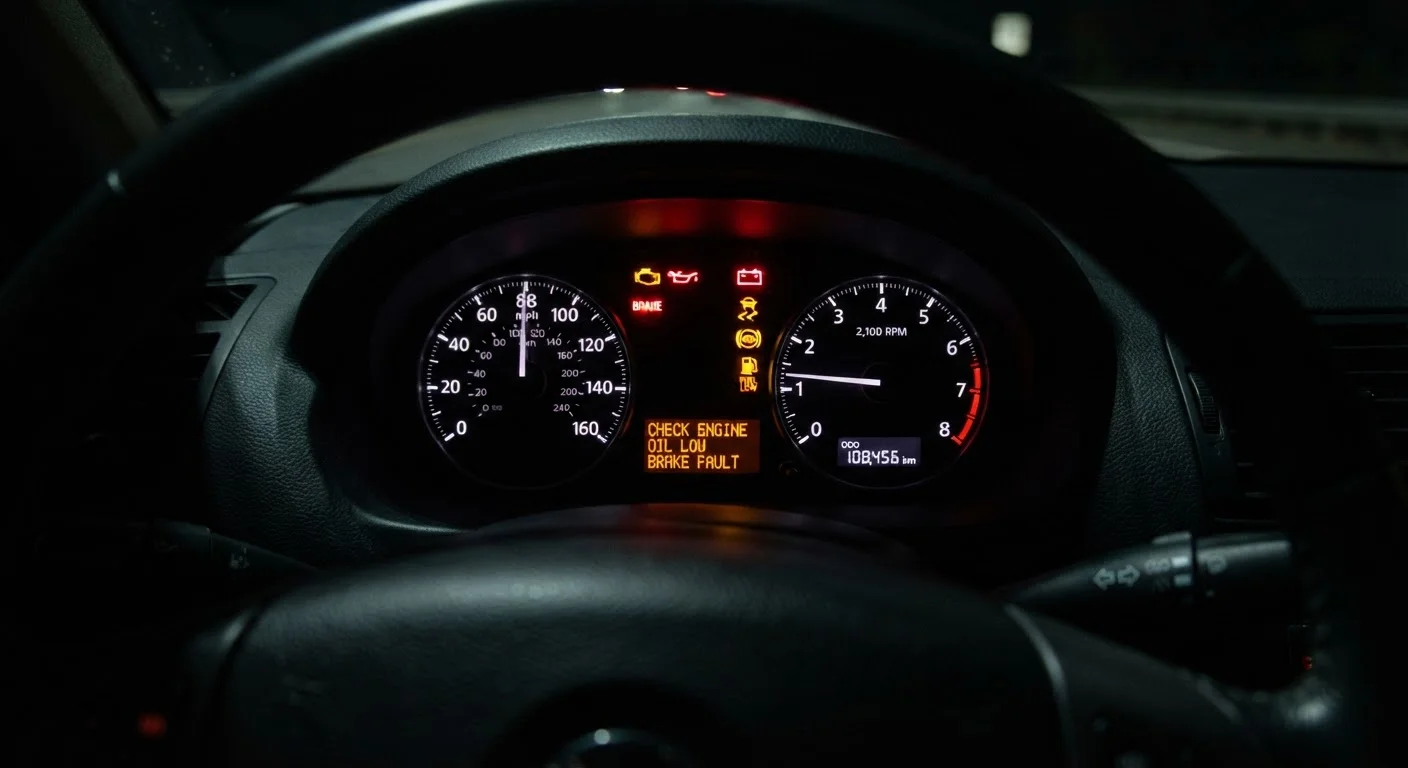
Warning lights fall into two broad color categories: amber (yellow/orange) signals typically mean "attention required soon," while red signals mean "stop or act immediately." A handful of blue or green lights are informational, telling you a system is active - not that something is wrong.
For a deeper dive into your vehicle's built-in guidance, see what your owner's manual says about these lights - it contains the authoritative list for your specific make and model.
| Warning light colors | Red = urgent; Amber = attention needed; Green/Blue = system active |
| Flashing check engine light | Indicates active engine misfire - stop driving promptly |
| TPMS activation threshold | Typically 25% below recommended tire pressure (US Federal TPMS Standard (FMVSS 138)) |
| OBD-II standard | Required on all US passenger vehicles since model year 1996 (US EPA OBD regulations) |
| Most commonly triggered light | Check Engine / Malfunction Indicator Lamp (MIL) |
| Recommended action for red lights | Pull over safely and do not continue driving without diagnosis |
The Most Common Warning Lights, Explained
While exact symbols can vary slightly by manufacturer, the following lights appear across virtually all modern vehicles sold in the US:
Check Engine (MIL)
The MIL, commonly called the "check engine" light, is triggered by the engine's emissions control system detecting an out-of-range reading. A steady light often indicates something like a loose gas cap or a failing sensor. A flashing check engine light, however, signals an active engine misfire that can damage the catalytic converter - pull over safely and have the vehicle towed or inspected promptly.
Oil Pressure Warning
This red oil can symbol means oil pressure has dropped to a critical level. Continuing to drive risks severe, potentially irreversible engine damage. Pull over safely as soon as possible, turn off the engine, and check the oil level. Do not restart without addressing the cause.
Battery / Charging System
A battery-shaped icon in red indicates your vehicle is running on battery power alone - the charging system is not functioning. Electrical systems may fail progressively. Drive directly to a service facility without turning the engine off if you can avoid it.
Tire Pressure (TPMS)
The TPMS light - an exclamation mark inside a flat tire outline - activates when one or more tires falls significantly below the recommended pressure. Check all four tires and inflate to the specification found on the driver's door jamb sticker, not the tire sidewall. For routine pressure habits, see safe practices for maintaining your car between mechanic visits.
Brake System Warning
A red circle with an exclamation mark (or the letter "P" inside a circle) can indicate low brake fluid, a brake system fault, or that the parking brake is still engaged. If releasing the parking brake clears the light, you're likely fine. If it stays on while driving, have the brakes inspected immediately. Learn more about brake warning signs in why your brakes are squealing and what it's telling you.
Engine Temperature Warning
A thermometer submerged in wavy lines means the engine is overheating. Stop driving as soon as it is safe to do so. Do not open the radiator cap while the engine is hot. Allow the vehicle to cool before checking coolant levels.
MIL (Malfunction Indicator Lamp)
The official term for the "check engine" light. It illuminates when the vehicle's onboard computer detects a fault in the emissions or engine management system.
OBD-II
On-Board Diagnostics, second generation. A standardized system required on US vehicles since 1996 that monitors engine and emissions performance and stores fault codes readable by a scanner.
TPMS
Tire Pressure Monitoring System. A sensor-based system that alerts the driver when one or more tires drops significantly below the manufacturer's recommended pressure.
Fault Code (DTC)
A Diagnostic Trouble Code stored by the OBD-II system when a sensor reading falls outside acceptable parameters. A mechanic or scanner tool can retrieve this code to identify the specific issue.
Catalytic Converter
An emissions control device in the exhaust system that converts harmful gases into less harmful substances. Engine misfires can overheat and permanently damage it.
When to Drive On and When to Stop Immediately
Not every warning light demands you pull over on the spot - but knowing which ones do is critical for both safety and vehicle longevity.
- Stop immediately (red lights, active symptoms): Oil pressure warning, engine temperature warning, brake system warning accompanied by soft pedal or pulling, battery light with failing electronics.
- Schedule service promptly (amber lights, no immediate symptoms): Steady check engine light, TPMS alert, low fuel warning, service reminder indicators.
- Monitor and verify (informational): Traction control indicator during slippery conditions, tire pressure after a cold morning - both may self-resolve.
As part of your overall vehicle care, pairing attention to warning lights with scheduled seasonal checks is a sound strategy. See seasonal car maintenance every driver should know for a structured approach to year-round readiness.
When in doubt, consult a qualified mechanic. A professional-grade OBD-II scanner can read the specific fault code behind a check engine light and point toward the likely cause - guesswork costs more in the long run than a diagnostic appointment.
Staying informed about your dashboard keeps you safer on the road and more confident as a vehicle owner. For broader driving safety knowledge, explore the Driving & Safety hub and the Car Ownership hub.