

Key Takeaways
- Six essential fluids keep your vehicle running safely: engine oil, coolant, brake fluid, transmission fluid, power steering fluid, and windshield washer fluid.
- Most fluid checks require only a clean rag and a few minutes with the engine off and the car on level ground.
- Low or discolored fluids are early warning signs that a mechanic should evaluate promptly.
- Your owner's manual specifies the correct fluid types and check intervals for your specific vehicle.
- Topping off fluids is a short-term fix - persistent low levels always warrant a professional inspection.
What you will need
Why Fluid Checks Matter More Than Most Drivers Realize
Your vehicle depends on a network of fluids to function safely. Each one serves a specific job - lubricating, cooling, pressurizing, or cleaning - and when any drops below the required level or degrades in quality, the consequences can range from costly repairs to outright safety failures. The good news is that checking these fluids is straightforward and requires no special mechanical skill.
As part of a broader routine maintenance habit, fluid checks take fewer than 20 minutes and give you a reliable window into your vehicle's health. They also complement seasonal maintenance tasks, since temperature extremes put extra demands on coolant and washer fluid in particular.
Before you begin, make sure you have the right tools on hand and that your car is parked on level ground with the engine off.
What you will need
Clean lint-free rags
Wipe dipsticks and reservoir caps clean before and after checking fluid levels.
Flashlight or work light
Illuminate the engine bay to locate reservoirs and read fluid level markings clearly.
Vehicle owner's manual
Confirm correct fluid specifications, reservoir locations, and manufacturer-recommended check intervals.
Disposable gloves
Protect hands from contact with engine oil, coolant, and brake fluid.
How to Check Each Essential Fluid
Work through each fluid systematically. Your owner's manual is your definitive reference for reservoir locations, fluid specifications, and how often each should be inspected. Manufacturers vary - what applies to one vehicle may not apply to another.
Check engine oil level and condition
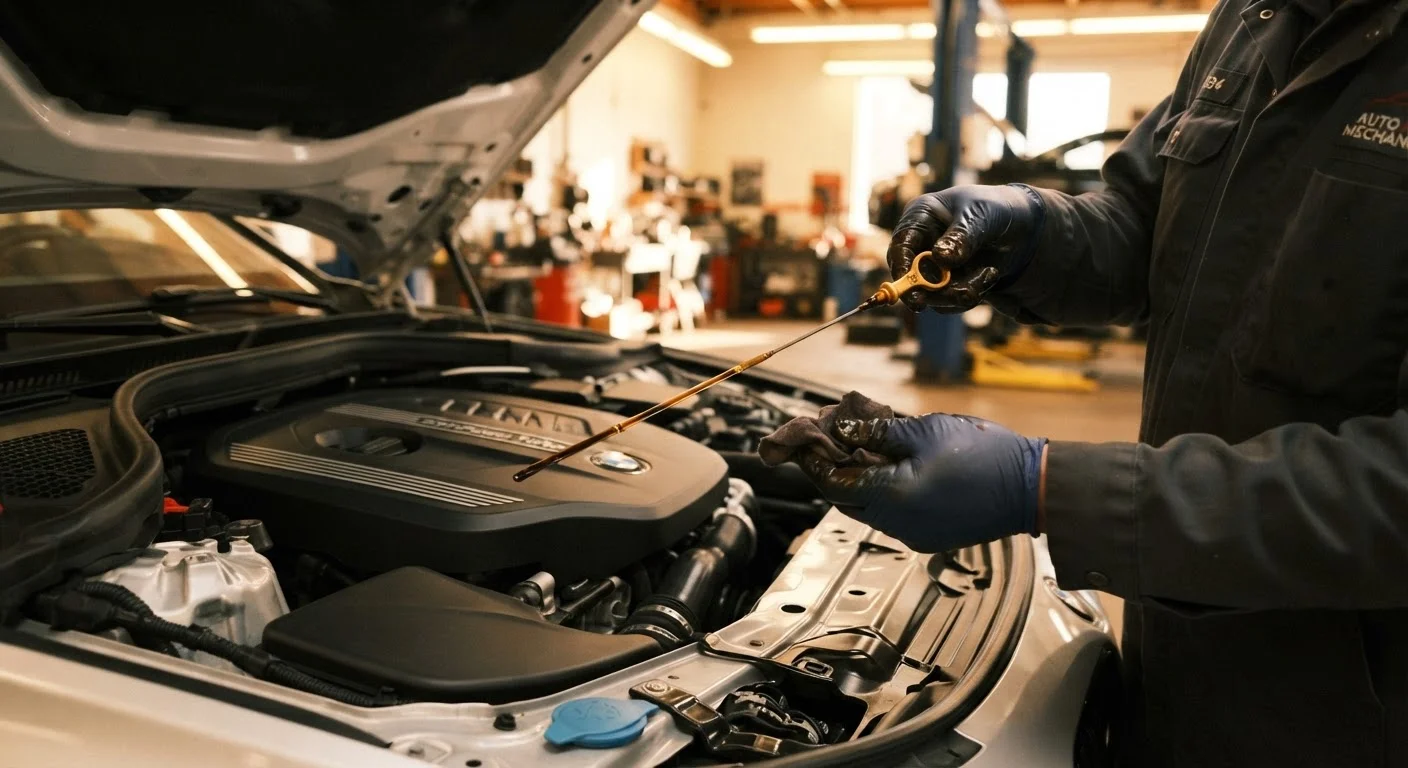
Engine oil lubricates moving metal parts and reduces heat from friction. With the engine off and cool, locate the oil dipstick - typically a brightly colored ring or handle near the front of the engine. Pull it out, wipe it clean with a rag, reinsert it fully, then withdraw it again. The oil level should fall between the two marks on the dipstick. Also examine the oil's color: healthy oil ranges from amber to light brown. Black, gritty, or milky oil signals a problem that requires a mechanic's attention.
Inspect the coolant (antifreeze) reservoir
Coolant - also called antifreeze - regulates engine temperature and prevents freezing or overheating. The coolant reservoir is a translucent plastic tank, usually near the radiator, with MIN and MAX markings on the outside. With the engine cold, simply look at the exterior of the tank; you should not need to open it. The level should sit between the two marks. Coolant should appear bright green, orange, or pink depending on the type - murky or rust-colored coolant indicates contamination.
Check brake fluid level and color
Brake fluid transmits the force of your foot pressing the pedal into hydraulic pressure that stops the vehicle. The brake fluid reservoir is a small translucent container near the back of the engine bay, usually on the driver's side. Check the level against the MIN/MAX lines on the outside without opening the cap. Brake fluid should appear nearly clear or light yellow. A dark brown color means the fluid has absorbed moisture and should be flushed by a professional - this is a safety-critical fluid and low levels can indicate brake wear or a leak.
Inspect transmission fluid (if applicable)
Transmission fluid lubricates the gears and components inside your transmission. Many modern vehicles have a sealed transmission with no dipstick, requiring dealer or shop service - check your owner's manual to determine which type you have. If your vehicle does have a dipstick, the process mirrors checking engine oil: engine warm and running (for most automatic transmissions), pull the dipstick, wipe, reinsert, and check. Healthy fluid is pinkish-red; dark brown or burnt-smelling fluid needs professional attention.
Check power steering fluid
Power steering fluid allows you to turn the steering wheel with minimal effort. The reservoir - a small capped container labeled with a steering wheel icon - has MIN and MAX markings. Check the level when the engine is cold for the most accurate reading. Difficulty steering, a whining noise when turning, or visible fluid under the car are signs that the system needs attention. Note that many newer vehicles use electric power steering and have no fluid reservoir at all.
Top off windshield washer fluid
While not a mechanical fluid, windshield washer fluid directly affects visibility and therefore safety. The reservoir - marked with a windshield and spray symbol - can be checked and filled with the engine on or off. Use a washer fluid rated for your climate; in cold regions, choose a formulation with freeze protection. Never substitute plain water, which can freeze in the lines and harbor bacteria.
Build a Consistent Checking Routine
The easiest way to stay on top of fluid levels is to tie checks to an existing habit - such as every time you fill the gas tank or once a month on the same day. Consistency matters more than frequency. A quick visual inspection of the coolant reservoir and a monthly dipstick check for engine oil covers the most critical bases for most drivers.
Recognizing Warning Signs and Knowing When to Call a Mechanic
Fluid checks do more than confirm levels - they reveal condition. Discolored, contaminated, or burnt-smelling fluids all signal that something needs attention beyond a simple top-off. Similarly, if you find yourself repeatedly refilling the same fluid, that recurring loss almost always means a leak, a worn seal, or a more serious mechanical issue that a qualified mechanic should diagnose.
Dashboard warning lights for oil pressure, engine temperature, or brake systems should never be ignored. If a light comes on while driving, find a safe place to stop and consult your owner's manual before continuing. Some warning conditions - particularly low oil pressure or an overheating engine - can cause severe damage within minutes if ignored.
Low Brake Fluid Is a Safety Issue
Brake fluid that is consistently low - not just slightly down - can indicate a leak in the brake lines, a failing master cylinder, or severely worn brake pads. This is not a fluid you should simply top off and forget. If the level is notably low or drops again after refilling, stop driving the vehicle until a qualified mechanic has inspected the brake system.
For a complete picture of year-round vehicle care, including items beyond fluids, see the annual car ownership checklist and our guide on overlooked maintenance items that are just as easy to miss.