

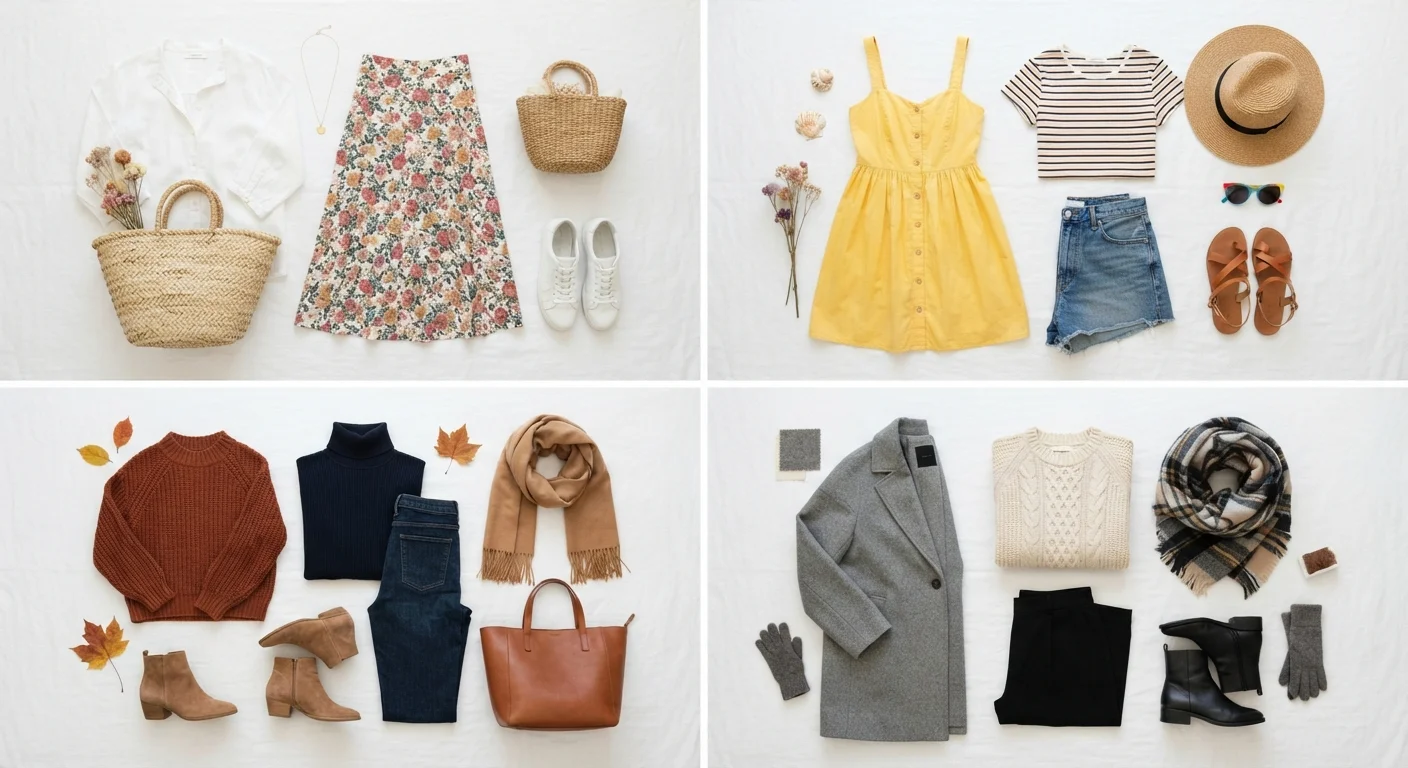
Key Takeaways
- The fashion industry runs roughly six months ahead of real-world weather.
- Four core seasons exist, but retailers often break these into six or more delivery drops.
- Pre-Fall and Resort collections bridge the gaps between the main seasonal drops.
- Trend timelines vary - runway looks can take over a year to reach everyday stores.
- Understanding the calendar helps you shop intentionally rather than reactively.
Fashion Seasons
Fashion seasons are the scheduled periods during which the clothing industry designs, presents, and delivers new collections. The traditional industry calendar recognizes four main seasons - Spring/Summer and Fall/Winter - each split into two delivery phases. These cycles govern when trends appear in stores, often months before the actual weather arrives.
The industry further divides collections into 'main' and 'pre-season' drops (Pre-Fall and Resort/Cruise), creating up to six distinct commercial delivery windows per year.
The Industry Calendar vs. Your Closet
If you've ever walked into a store in August only to find racks of chunky knit sweaters, you've experienced the fashion calendar firsthand - and possibly found it baffling. The industry doesn't dress you for today's weather; it dresses you for weather that's coming in two to three months. That deliberate lead time is baked into every step of how clothing gets designed, produced, and shipped.
The traditional fashion year runs on two primary seasons: Spring/Summer (SS) and Fall/Winter (FW). Designers show their Spring/Summer collections the previous September, and Fall/Winter collections debut the following February or March. By the time a look walks a runway, production is already underway, and retail delivery is months away.
For everyday consumers, practical style guidance often skips over this timing gap entirely - which is exactly why shopping can feel out of sync with the calendar on your wall.
~6 months
Lead time between runway show and retail arrival
Industry analysts broadly cite a six-month lag between when a collection is shown and when it reaches stores - though timelines vary by brand tier.
4-6
Distinct delivery windows per year at most brands
The addition of Pre-Fall and Resort collections means many retailers now operate on four to six seasonal drops rather than the traditional two.
12-18 months
Time for a runway trend to reach mass retail
Fashion industry observers generally estimate that high-fashion silhouettes take one to one-and-a-half years to filter into widely accessible mid-market styles.
Pre-Fall and Resort: The In-Between Seasons
Because the gap between major collections leaves a long retail silence, the industry created two bridge seasons: Pre-Fall and Resort (sometimes called Cruise). These aren't minor footnotes - for many brands, Pre-Fall and Resort represent some of their highest-selling periods commercially.
- Resort/Cruise: Delivered to stores roughly November through January, bridging Fall/Winter and Spring/Summer. Originally tailored to warm-weather travelers, today it fills store floors with transitional, wearable pieces.
- Pre-Fall: Delivered July through September, it eases shoppers into autumn before the main Fall/Winter drop lands. Think lighter layers, early-season prints, and transitional textures.
These collections tend to be more wearable and less experimental than runway-focused main-season drops, which is part of why they sell well. If you want to understand how to shift your wardrobe between these periods, our guide to seasonal wardrobe transitions walks through the practical side.
Work the Bridge Seasons to Your Advantage
Pre-Fall and Resort collections tend to be more versatile and wear-now than the dramatic main-season runway pieces. If you're looking for pieces that work across multiple months and contexts, these mid-season drops are often the most practical place to start. They're designed with real wearability in mind.
From Runway to Real Life: How Long Does It Actually Take?
A look shown on a runway in February won't reach a mid-market retailer until late summer at the earliest - and the trend it represents might not become widely visible until the following year. This lag exists because manufacturing, shipping logistics, and retailer buying cycles all stack on top of the original design timeline.
High-fashion runway pieces often trickle down into more accessible interpretations over 12 to 18 months. By the time a silhouette feels ubiquitous on the street, designers may already be showing its successor. This is the engine behind fashion's well-known recycling habit - for a deeper look at why styles keep circling back, see our piece on seasonal trend cycles.
“Fashion is a language that creates itself in clothes to interpret reality. The calendar is just the grammar - the message is always about the moment you're living in.”
— Franca Sozzani, Late Editor-in-Chief, Vogue Italia
Understanding this timeline matters for shoppers. It means a trend you spot on a runway livestream today isn't something you need to chase immediately. There's usually time - and often, waiting a season or two means more options and more thoughtful choices.
What This Means for How You Shop
Once you understand how the fashion calendar works, the pressure of trend-chasing softens considerably. The key insight: the calendar is a tool for the industry, not a deadline for you.
A few grounding principles worth keeping in mind:
- Shop slightly ahead, not reactively. Buying a rain jacket when rain hits means slim pickings. Watching for transitional pieces a few weeks before the weather shifts gives you more options.
- Seasonal rules are looser than they appear. Many long-held guidelines about what's appropriate by season don't hold up in practice - our article on misunderstood seasonal dressing rules breaks down which ones you can safely ignore.
- Geography shapes your season. The industry's calendar assumes a broadly temperate climate. If you live somewhere with extreme heat, persistent humidity, or mild winters, the standard seasonal map may not reflect your reality. Dressing for your actual climate matters far more than dressing for the industry's calendar.
Ready to put this into action? A seasonal wardrobe refresh checklist can help you audit what you already own before the next drop tempts you to add more.