

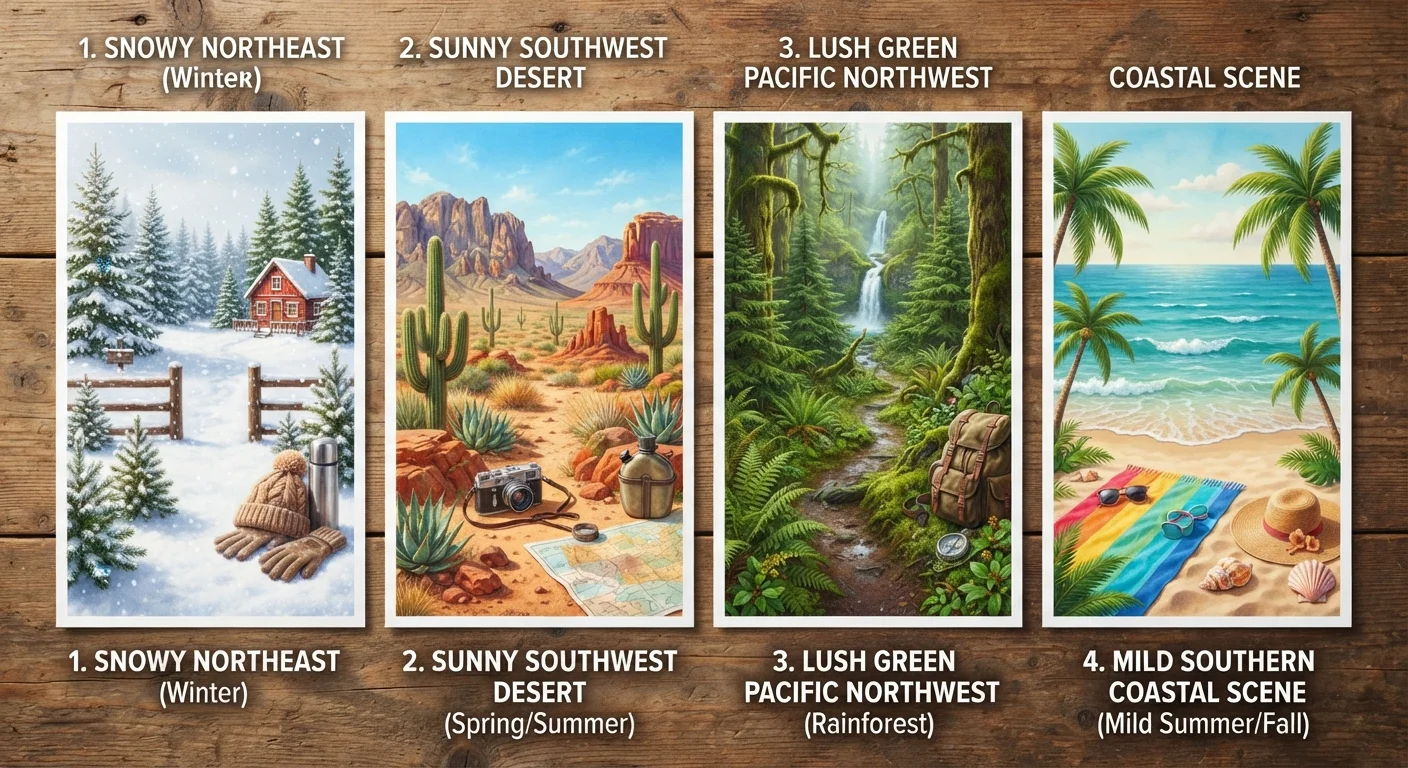
Why 'Season' Means Something Different Depending on Your Zip Code
Mainstream fashion advice tends to assume a single, universal experience of spring, summer, fall, and winter. But if you live in Miami, 'fall fashion' doesn't arrive with crisp air - it arrives with a minor dip from 92°F to 80°F. And if you're in Seattle, summer might mean a light jacket stays on until noon most days. Geography genuinely rewires what each season demands from your wardrobe.
Understanding your climate zone is the most practical first step toward dressing with intention rather than just following calendar-based trend cycles. As fashion's seasonal calendar shows, industry-driven season definitions are built around retail schedules - not your actual weather window.
The Four Major US Climate Zones and What They Mean for Style
The contiguous United States spans multiple climate types, and each one reshapes the seasonal dressing equation in meaningful ways.
Northeast and Midwest: True Four-Season Dressing
Residents here experience the fullest seasonal swings - genuine winters with heavy snowfall, humid summers, and distinct transitional periods in between. This climate rewards layering systems: a base layer, an insulating mid-layer, and a weather-resistant outer layer that can be swapped as temperatures fluctuate dramatically from morning to evening. Wool, flannel, and thermal knits earn their keep here. See transitional layering strategies for building a wardrobe that spans those in-between weeks gracefully.
The South and Gulf Coast: A Two-Season Reality
Much of the South operates on a long, intense summer and a mild, brief cool season. Heavy coats may be worn only a handful of days per year. Here, lightweight natural fabrics like linen and breathable cotton blends stay relevant nine to ten months of the year. 'Winter dressing' often means adding a layer of medium weight rather than switching categories entirely.
The Pacific Northwest: Cool, Damp, and Layered Year-Round
Seattle and Portland rarely see extreme cold or scorching heat, but the persistent moisture and grey skies create a consistent layering culture. Waterproof outer layers, moisture-wicking base fabrics, and versatile mid-season pieces (think lightweight merino sweaters) remain wardrobe staples through most of the calendar year. 'Summer' often just means swapping the rain shell for a lighter version.
Southwest and Desert Climates: Heat, Then Surprising Cold
Phoenix and Las Vegas summers are extreme - lightweight, breathable fabrics are non-negotiable - but desert evenings can drop significantly, and winters bring genuinely cold nights. Residents often need a broader temperature range in a single day's outfit than any other zone, making versatile layering pieces especially valuable.
Practical Principles for Climate-Smart Seasonal Dressing
Climate Zone
A geographic region defined by consistent weather patterns, including temperature range, precipitation, and humidity. In fashion, your climate zone determines which fabrics, layers, and seasonal pieces are actually practical.
Layering System
A method of dressing using multiple garment layers - typically base, mid, and outer - that can be added or removed as temperature changes throughout the day. Especially useful in climates with wide daily temperature swings.
Transitional Fabric
Fabrics that perform well across a range of temperatures, such as lightweight merino wool, cotton-modal blends, or chambray. These bridge the gap between seasonal wardrobe categories without requiring a full swap.
Fabric Weight
Measured in grams per square meter (GSM), fabric weight indicates how heavy or light a textile is. Lighter-weight fabrics (under 150 GSM) suit warm climates; heavier weights (200+ GSM) are better suited to cold-weather wear.
Regardless of climate zone, a few core principles help bridge the gap between trend-driven seasonal advice and your real-world conditions.
- Anchor to fabric, not calendar. Rather than switching your wardrobe on a fixed date, let fabric weight and weave guide you. Linen and open-weave cotton signal warm-weather dressing; tightly woven wool and fleece signal cold. Transitional fabrics like cotton-modal blends or mid-weight knits carry you through the overlap periods.
- Build for your temperature range, not the runway's. Fashion editorials often reflect climate-controlled environments. Your outfit needs to function outdoors, in transit, and indoors - sometimes all in one day.
- Use a pre-season audit. Before each season, spend a few minutes reviewing what you actually wore versus what sat untouched. A structured seasonal audit helps you identify real gaps without impulse purchases.
- Invest in climate-specific essentials. A high-quality waterproof layer is more valuable in Portland than in Phoenix. A linen blazer earns more wear in New Orleans than in Minneapolis. Align your wardrobe essentials with where you actually live.
Trend Calendars vs. Your Local Weather
Fashion industry seasons - Spring/Summer and Fall/Winter - are driven by retail and manufacturing schedules, not actual meteorological data. New collections often arrive in stores months before the weather catches up. Treating trend releases as a loose guide rather than a hard switch date gives you more practical flexibility and saves you from buying a heavy wool coat in August just because it's 'fall' on the runway.
The goal isn't to ignore trends - it's to filter them through your geographic reality. Many seasonal style rules that feel authoritative were written without a specific climate in mind. Adapting them to your zone is not a fashion mistake - it's smart dressing.