

Key Takeaways
- Open shelving rewards organization but requires consistent maintenance to look intentional.
- Closed cabinets hide visual noise and are generally easier to keep tidy with less effort.
- The best approach for most homes combines both - using each where it performs strongest.
- Rooms with high traffic or variable mess tend to benefit more from closed storage.
- Display shelves work best when the items on them are curated, not accumulated.
Option A
Open Shelving
The visible, display-forward storage solution.
Best for: Homeowners who keep things tidy and want storage to double as décor.
Option B
Closed Cabinets
The contained, low-maintenance storage workhorse.
Best for: Households that prioritize a calm, uncluttered look with minimal daily upkeep.
If you enjoy curating displays and keep surfaces naturally tidy
Open Shelving
Open shelves let organized households show off meaningful objects and add warmth to a space without feeling cluttered.
If your household generates a lot of visual clutter or you have young children
Closed Cabinets
Doors contain the chaos quickly and give you a clean-looking room even on hectic days.
If you're working with a small room and want to avoid a boxed-in feel
Open Shelving
Open shelving creates visual depth and lightness that solid cabinet fronts can suppress in compact spaces.
If you want low-maintenance storage for a kitchen or pantry
Closed Cabinets
Closed cabinets protect food and cookware from grease and dust, and require far less frequent cleaning and restyling.
If you want flexibility to mix style and function in a living room or office
Open Shelving
Open shelves in low-mess zones let you blend books, plants, and decorative objects in a way closed doors simply cannot.
What Each Storage Type Actually Does
Open shelving and closed cabinets both solve the same fundamental problem - where to put things - but they do it in completely different ways that suit different rooms, habits, and households.
Open shelving keeps everything visible. Items are accessible at a glance, which can speed up daily routines. But visibility is a double-edged quality: whatever is on those shelves is always part of the room's visual story. That makes styling important and upkeep non-negotiable.
Closed cabinets conceal their contents behind doors or drawers. The result is a quieter visual environment that doesn't demand constant maintenance. The tradeoff is that cabinets can make it easy to overfill and lose track of what's stored inside - particularly in deep units where items disappear at the back.
Neither is universally superior. The productive question isn't "which is better?" but rather "which belongs where?" For a deeper look at how storage decisions ripple into room design, see how storage choices can backfire.
| Criterion | Open Shelving | Closed Cabinets |
|---|---|---|
| Visual impact | Adds warmth and personality | Creates a calm, neutral look |
| Maintenance required | Regular dusting and restyling | Less frequent, lower visibility |
| Accessibility | Items visible and easy to grab | Requires opening doors or drawers |
| Tolerance for mess | Low - disorder is immediately visible | High - clutter is hidden behind doors |
| Best room types | Living rooms, offices, reading nooks | Kitchens, bathrooms, bedrooms |
| Effect in small rooms | Can open up visual space | Can feel heavy if overused |
| Dust and grease exposure | Items exposed - more cleaning needed | Items protected behind doors |
Where Open Shelving Performs Well - and Where It Struggles
Open shelving earns its place in rooms where items are used regularly, kept consistently tidy, and worth displaying. Living rooms, home offices, and reading nooks are strong candidates. A shelf of books, framed photos, and a few plants adds character without requiring any special design skills.
In kitchens, open shelving is more divisive. It works well for households that cook with a defined set of items - a matching set of everyday dishes, a few frequently used jars - and who are comfortable wiping shelves down weekly. Grease and steam settle on open surfaces quickly, so items that aren't used often become dusty and grimy faster than most people anticipate.
Open shelving can also help in small spaces. A wall of closed cabinets in a compact room can feel imposing and heavy. Open shelving creates visual breathing room by letting the eye pass through to the wall behind. If your space already feels tight, common design choices that shrink rooms visually are worth reviewing alongside your storage decisions.
Where open shelving tends to struggle: busy entryways, bathrooms with humidity, and any area where items get grabbed and replaced in a hurry. These conditions make maintaining a curated look genuinely difficult.
~30%
Kitchen renovations adding open shelving
Design surveys from Houzz have consistently found open shelving among the top kitchen renovation choices, though adoption varies by region and household type.
2-3×
More frequent cleaning for open shelf items
Interior organization experts generally note that open shelving in kitchens requires noticeably more routine cleaning than the same items stored behind cabinet doors.
Where Closed Cabinets Earn Their Place
Closed cabinets are the more forgiving option in most rooms. Because their contents are hidden, a slightly messy interior doesn't undermine the room's overall appearance. That makes them well-suited to kitchens, bathrooms, laundry rooms, and home offices where functional items - cleaning supplies, toiletries, paperwork - aren't particularly attractive.
In the kitchen and pantry, closed storage protects food from light, dust, and pests more effectively than open shelving. It also makes the space look calm even when things are imperfectly arranged inside. For a more detailed look at how to make closed pantry storage work over time, pantry organization principles that hold up for months is a useful companion read.
In bedrooms, closed storage - wardrobes, dressers with drawers, bedside cabinets with doors - reduces visual stimulation at rest, which many people find genuinely helpful for winding down. A bedroom full of open shelving displaying every belonging can feel more like a stockroom than a refuge.
The main risk with closed cabinets is accumulation. Because the mess is invisible, it's easy to keep adding items without a clear system. If you find cabinets regularly becoming chaotic, that's typically an organizational habit issue rather than a problem with the cabinet format itself.
Consider Your Household's Daily Habits First
Storage decisions that look ideal in a showroom can become frustrating in practice if they don't match how your household actually operates. Before committing to open shelving, spend a week noting how often surfaces in that area accumulate clutter - that pattern is usually a reliable predictor. Closed cabinets tend to forgive more daily variation without requiring intervention.
Mixing Both: How Most Rooms Actually Work Best
Most well-designed rooms use a combination of open and closed storage, assigning each type to the tasks it handles best. A practical approach is to ask: Would I be comfortable with guests seeing exactly what's stored here? If yes, open shelving is a reasonable choice. If no, a door or drawer earns its place.
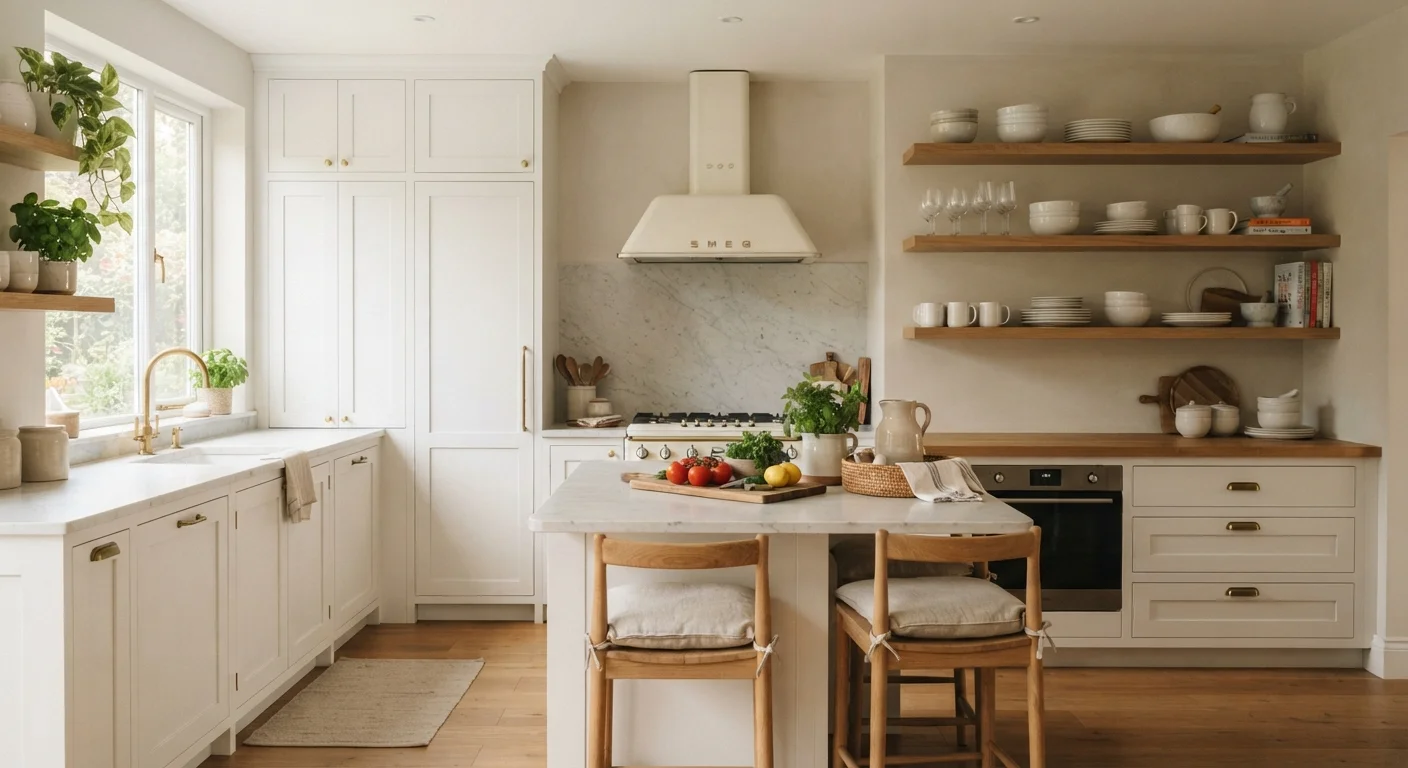
In a kitchen, this might mean upper open shelves for everyday dishes and lower closed cabinets for pots, appliances, and cleaning products. In a home office, open shelves for books and reference materials alongside closed drawers for supplies and paperwork keeps the space looking organized without hiding everything.
For room-specific guidance on balancing function and style, room-by-room decorating that balances function and style covers the distinct demands of each space in more depth.
The goal isn't to choose a side - it's to use each storage type deliberately, where it genuinely helps rather than creates more work to maintain.