

Key Takeaways
- Grouping food by category and use frequency reduces daily friction and forgotten items.
- First-in, first-out rotation is the single most effective habit for cutting food waste.
- Labeling containers by contents and date makes restocking faster and more accurate.
- Sustainable organization matches the system to how your household actually shops and cooks.
- Buying containers before establishing a system often creates more clutter, not less.
Why Most Pantry Systems Fall Apart
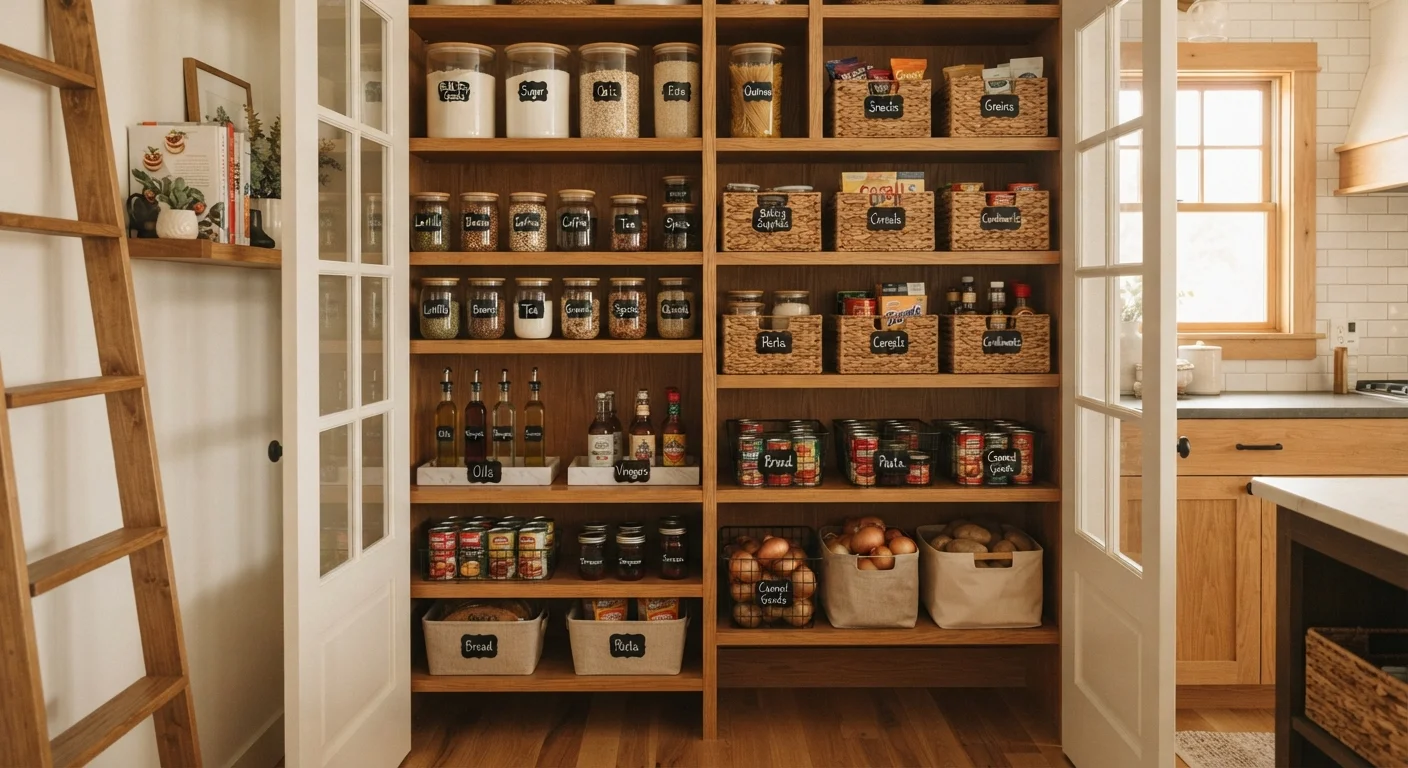
A well-organized pantry photograph is easy to admire and difficult to maintain. Most attempts at pantry organization collapse within weeks because they prioritize appearance over function. Matching containers look tidy on day one, but if they don't fit the way your household shops, they become one more thing to work around.
The organizing missteps worth avoiding often start before a single container is purchased - as covered in our guide on storage choices that create clutter instead of fixing it. The core issue is that most systems are designed for a snapshot, not for the ongoing reality of a kitchen that's actually used.
What holds up over months isn't aesthetics - it's structure. Specifically, structure that accommodates irregular shopping trips, different food formats, and the fact that pantries get restocked by whoever happens to be putting groceries away.
Zone your pantry by food category and use frequency
When similar items live together, restocking is faster and you're less likely to duplicate purchases. Placing frequently used items at eye level reduces the chance that something gets buried and forgotten.
Practice first-in, first-out rotation every time you restock
Moving older items to the front when new groceries arrive is the most reliable way to prevent food waste. Expiration dates matter less when products are used in the order they were purchased.
Label containers with contents and the date they were filled
Unlabeled containers slow down cooking and invite guesswork. A date on the label helps anyone in the household know at a glance whether something needs to be used soon.
Conduct a brief monthly audit instead of waiting for a major overhaul
Short, regular checks prevent the slow accumulation of expired items and forgotten duplicates. A five-minute scan once a month is far less disruptive than a two-hour reorganization every six months.
Design the system around your actual shopping habits, not ideal ones
A pantry organized for weekly farmers market trips will fail if your household primarily shops at a warehouse store monthly. Mismatched systems get abandoned because they create friction instead of reducing it.
The Foundational Habits That Actually Last
Durable pantry organization comes down to a handful of decisions made consistently, not a one-time overhaul. The practices below reflect what works in real households over extended periods - not just immediately after a reorganization session.
For a broader view of how pantry habits fit into overall kitchen management, see keeping a kitchen running well - which covers everything from appliance upkeep to food storage routines.
Deciding Between Open and Closed Storage
Whether your pantry uses open shelving, closed cabinets, or a mix of both affects how you'll need to approach organization. Open shelving keeps everything visible, which supports the rotation habits described above - but it also means dust accumulates faster and visual clutter is more apparent.
Closed cabinets offer more protection and a calmer appearance, but they reward a stricter zoning system, since items pushed to the back become invisible. A deeper look at open shelving versus closed cabinets can help you decide what works for your specific layout.
Pantry Format Affects Which Habits Matter Most
Open shelving makes rotation habits easier to maintain because everything stays visible at a glance. Closed cabinet pantries require a more deliberate zoning system to prevent items from disappearing behind others. Neither format is inherently better - the right choice depends on your space, household size, and how consistently you can maintain the associated habits.
Whatever the physical format, the same principle applies: the system needs to match how your household actually uses the space, not how you'd like it to be used in theory.
30-40%
Share of the US food supply wasted each year
According to the USDA, between 30 and 40 percent of the US food supply is wasted, with household storage habits cited as a significant contributing factor.
$1,500+
Estimated annual food waste cost per household
The Natural Resources Defense Council has estimated that the average American family discards roughly $1,500 worth of food annually, much of it from pantry items that expire before use.