

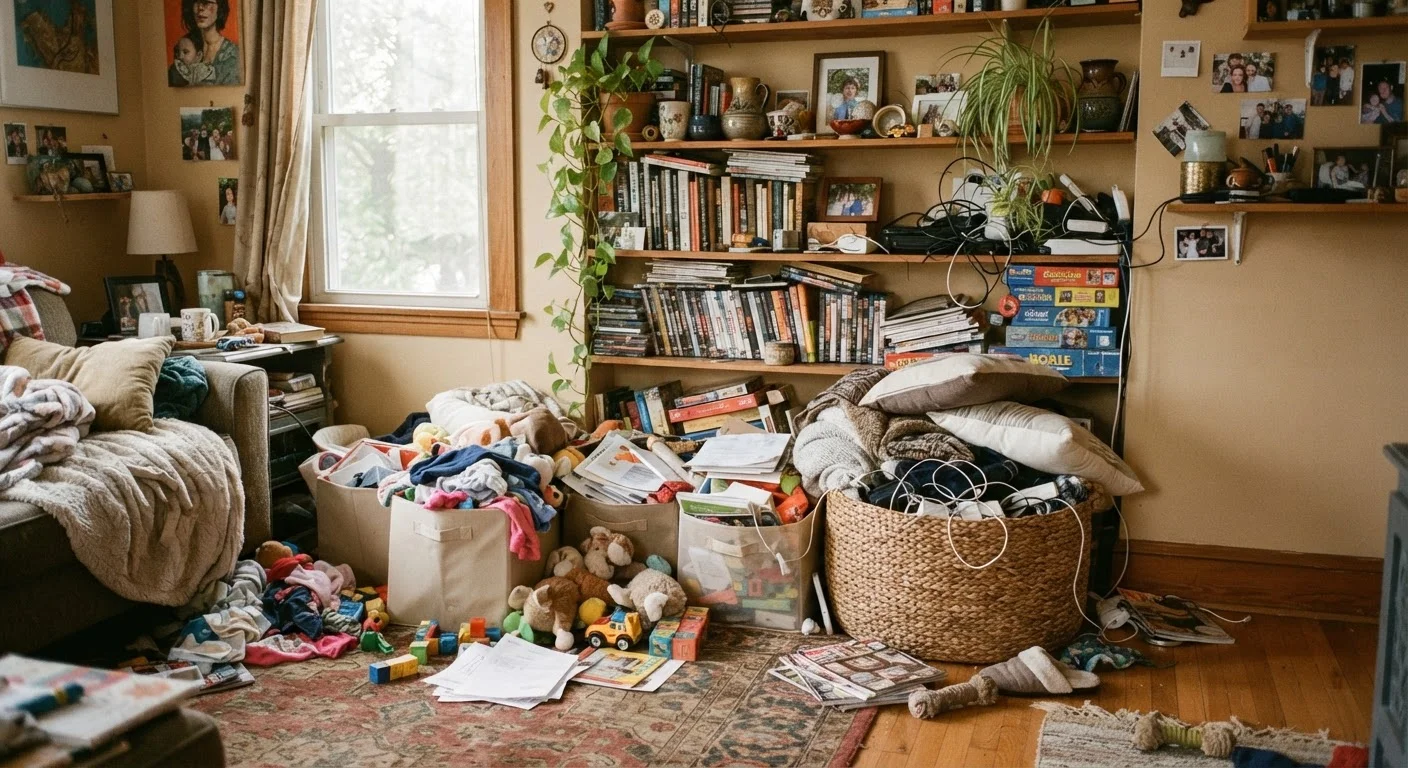
Key Takeaways
- Buying more storage containers before decluttering typically makes disorganization worse, not better.
- Catchall bins and baskets hide clutter temporarily but prevent you from ever really solving it.
- Storage solutions only work when they match how you actually use a space day to day.
- Containers without labels quickly become unrecognizable mystery boxes that nobody opens.
- Duplicating storage categories across rooms fragments your system and causes things to get lost.
Why Adding Storage Often Makes Things Worse
The logic seems sound: if your home feels cluttered, add more storage. But in practice, adding shelves, bins, and baskets without a clear system tends to give clutter more places to hide rather than solving the underlying problem. The result is a home that looks organized but functions just as chaotically as before.
Real organization is built on decisions - what stays, where it lives, and why. Storage products are only the final step. When they become the first step, they typically make the problem harder to untangle later. For a closer look at how this plays out in specific rooms, our guide on open shelving vs. closed cabinets walks through which approach actually suits different spaces.
80%
Of clutter is tied to indecision, not lack of space
Professional organizers frequently cite indecision - rather than insufficient storage - as the primary driver of household clutter accumulation.
1 in 4
US households can't park in their garage due to clutter
According to a UCLA Center on Everyday Lives of Families study, a significant share of American households use their garage primarily for overflow storage rather than vehicles.
The Most Common Storage Mistakes - and How to Correct Them
Most storage missteps follow predictable patterns. Recognizing them makes it easier to sidestep them before you've already purchased a cart full of containers.
Buying storage products before decluttering first.
Why it happens: When a space feels chaotic, the instinct is to contain things immediately - and shopping for bins feels productive. But it skips the essential step of deciding what actually belongs.
Using large, opaque catchall bins for miscellaneous items.
Why it happens: Generic bins offer a fast way to clear a surface, and they feel organized. But without visible categories, the bin becomes a black hole where items go to disappear.
Choosing storage based on aesthetics rather than workflow.
Why it happens: Decorative baskets and stylish boxes are easy to fall for, but form-first choices often ignore how people actually reach for things during daily routines.
Skipping labels on containers and shelves.
Why it happens: When you set up a system yourself, you remember what goes where - at first. Over time, categories drift and other household members can't maintain a system they can't see.
Splitting storage for the same category across multiple rooms.
Why it happens: Items accumulate wherever they get used, and storage gets added reactively in each spot. The result is fragmented systems where no one location holds everything.
Storage Isn't a Substitute for Editing
No amount of shelving, binning, or organizing can compensate for owning more than your space can reasonably hold. Before adding any storage product, assess whether everything you're trying to store genuinely needs to stay. Items that haven't been used in over a year are worth reconsidering. A good storage system starts with having the right volume of belongings - not just better containers for all of them.
If you're working on a specific area of the home, the same principles apply with equal force. Our article on pantry organization that holds up over months illustrates how systems - not supplies - determine whether a space stays functional.
Building a Storage System That Actually Holds
Once you've cleared the common pitfalls, building a storage system that lasts comes down to a few durable principles. Every item in your home should have one designated location. That location should be convenient to where the item gets used. And the system should be simple enough that everyone in the household can maintain it without effort.
Matching Containers Don't Equal a Working System
Aesthetically coordinated storage sets look appealing in photos but can give a false sense of organization. If the categories inside those containers aren't clearly defined and consistently maintained, a beautiful shelf becomes just as dysfunctional as a messy one. Prioritize logical grouping and ease of access over visual uniformity.
Storage systems that work look a bit boring from the outside - a consistent place for everything, clearly marked, sized to fit exactly what's stored there. That's a feature, not a flaw. If you're also dealing with a room that feels cramped regardless of how organized it is, it may be worth reviewing why small rooms feel smaller than they are for layout and scale adjustments that restore a sense of space. And for those tackling a specific clutter hotspot, overhauling your closet without starting over offers a structured approach to editing what you own before reorganizing what remains.