

Key Takeaways
- You don't need design training to create a space that looks and feels intentional.
- Every decorating decision comes back to three things: function, scale, and cohesion.
- Starting with a clear style reference point prevents costly trial-and-error purchases.
- Color choices carry more visual weight than any single piece of furniture or décor.
- Small, reversible changes - like pillows, lighting, and rugs - have an outsized impact.
- Budget constraints rarely limit good design; unfocused spending does.
Start here
Why Decorating Feels So Overwhelming at First
Build your foundation
The Core Concepts Every Beginner Needs to Know
Take action
How to Start: Your First Three Moves
Avoid pitfalls
Common Beginner Mistakes to Avoid
Keep going
Where to Go From Here
Why Decorating Feels So Overwhelming at First
Walk into a home goods store without a plan and you'll quickly understand why so many people freeze. There are hundreds of choices - and no obvious right answer. Interior decorating feels overwhelming at first because it appears to require taste you either have or don't, a vocabulary you've never learned, and a budget you may not have.
None of that is actually true. Decorating is a skill set, not a personality trait. Like cooking or home repair, it has underlying principles that make results predictable once you understand them. The goal of this guide is to hand you those principles before you spend a dollar or move a single piece of furniture.
It also helps to recognize that decorating and renovating are different things. This guide focuses on decorating - the arrangement of furniture, color, light, and objects within an existing space. If you're thinking about structural changes, see our guide to home renovation for first-timers for a separate starting point.
The Core Concepts Every Beginner Needs to Know
Before choosing a single throw pillow, it pays to understand the three principles that drive every decorating decision.
Focal point
The element in a room that draws the eye first - a fireplace, a large window, or a prominent piece of artwork. Good decorating acknowledges the focal point and arranges other elements around it.
Color undertone
The subtle secondary hue beneath a paint or fabric color - a white can lean pink, yellow, or green depending on its undertone. Undertones affect how colors look together in the same space.
Visual weight
How heavy or dominant an object appears to the eye, regardless of its actual mass. Dark colors, dense textures, and large patterns carry more visual weight than light, smooth, or small-scale alternatives.
Negative space
The empty or undecorated areas in a room. Intentional negative space gives the eye a place to rest and prevents a space from feeling cluttered or chaotic.
Layering
The practice of combining multiple textures, patterns, and materials in a room to add depth and visual interest. Layering is what makes a space feel curated rather than sparse.
Traffic flow
The path people naturally walk through a room. Furniture placement should leave clear pathways - typically at least 36 inches wide - so movement through the space feels easy and intuitive.
Function First
Every room has a primary job. A bedroom promotes rest; a kitchen supports food preparation; a living room hosts conversation and relaxation. Effective decorating starts by being honest about what a room actually needs to do - and for whom. Décor that conflicts with function creates friction you'll feel every day.
Scale and Proportion
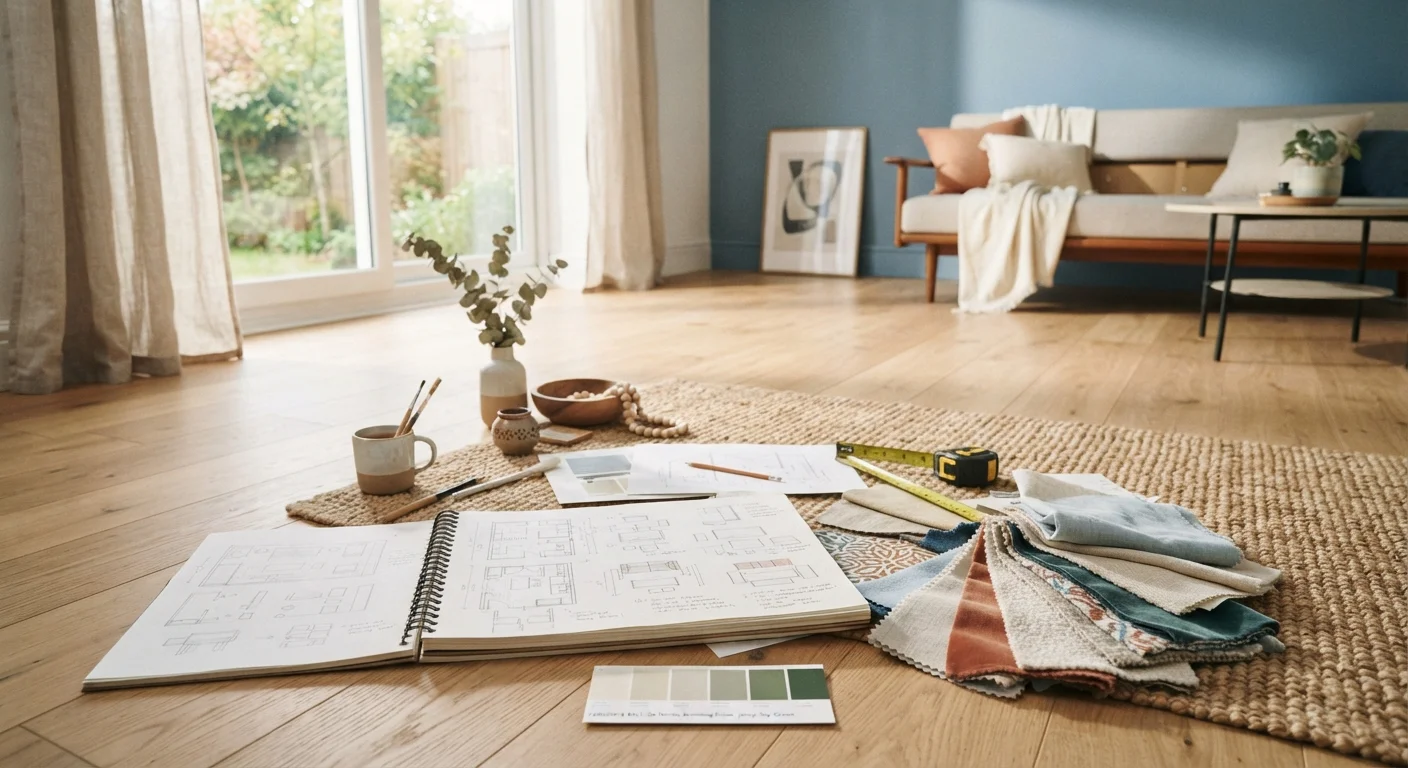
Scale refers to the size of objects relative to the room and to each other. A oversized sofa in a small room crowds the space; a tiny rug under a large sectional looks like an afterthought. Before purchasing anything significant, measure your floor plan and sketch furniture placement. A hand-drawn sketch on graph paper works fine.
Cohesion
Cohesion is what makes a room feel designed rather than assembled by accident. It doesn't require matching sets - it requires repeating a limited number of colors, materials, or shapes throughout a space so the eye moves through it naturally. Three coordinating colors, two wood tones, and one metal finish is a workable starting framework for most rooms.
How to Start: Your First Three Moves
Save References Before You Shop Anything
Set up a dedicated folder - on your phone, a tablet, or even a physical folder with clippings - before visiting any store or browsing any product listings. When you have 15-20 images you genuinely love, patterns emerge that guide every subsequent decision. This takes under an hour and consistently prevents impulsive purchases that don't fit together.
1. Gather Visual References Before You Shop
The single most useful thing a beginning decorator can do is collect images of interiors they genuinely like - not rooms they think they should like. Look for recurring patterns: Are the rooms light or moody? Minimal or layered? Do they lean toward natural materials or polished surfaces? Those patterns reveal your instinctive preferences and give you a filter for every future purchase.
2. Identify Your Anchor Piece
In most rooms, one element sets the tone for everything else - typically the largest or most expensive item. In a living room this is usually the sofa; in a bedroom, the bed and its textiles. Choose this anchor piece first, and choose it carefully. Picking accent items before you have an anchor is how rooms end up feeling disjointed.
3. Address Color Early
Wall color has more influence over the mood and perceived size of a room than almost any other single decision. Even if you aren't ready to paint, understanding how undertones work - and how natural light changes color throughout the day - saves you from costly mistakes. Our guide to decorating with color covers this in depth as a natural next step.
Common Beginner Mistakes to Avoid
Don't Buy Before You Measure
Returning large furniture is often difficult, expensive, or impossible, and some retailers do not accept returns on opened or assembled items. Take room dimensions - length, width, ceiling height, and the size of doorways - before visiting any showroom or placing any order. A tape measure and a notepad are the most important decorating tools you own.
- Skipping measurements. Furniture that looked manageable in a showroom can overpower an actual room. Measure your space - including doorways and hallways the furniture must pass through - before committing.
- Buying everything at once. Furnishing a room in a single shopping trip rarely produces a cohesive result. Live with each major addition for a week before deciding what comes next.
- Underestimating lighting. Overhead fixtures alone create flat, harsh light. Adding floor lamps, table lamps, or under-cabinet strips fundamentally changes how a room feels - often for less money than a new piece of furniture.
- Ignoring the floor plane. Rugs anchor a seating arrangement and define zones in open-plan spaces. A rug sized too small is one of the most common visual missteps in otherwise well-decorated rooms; the front legs of all major seating pieces should rest on the rug.
- Replicating a look wholesale. A room copied directly from a catalog often feels impersonal. Use references as a starting point, then introduce items that reflect how you actually live.
If you want to make changes on a limited budget, decorating without the space looking cheap focuses specifically on where to direct limited funds for maximum visible impact.
Where to Go From Here
Once you have a feel for the fundamentals, the natural next step is moving room by room. Each space in a home has distinct functional demands that should shape its décor differently. Our room-by-room decorating guide walks through what each area of a home actually requires to work well - from entryways to bedrooms.
For broader household management and organization beyond décor, the Household Essentials hub covers everyday home maintenance topics that often intersect with how a space looks and functions.
Interior decorating is, at its core, a process of making deliberate choices rather than default ones. You don't need a large budget or a design background - you need a clear sense of how a space should function, a few consistent visual references, and the patience to add things one at a time. Start small, measure carefully, and adjust as you go. The rooms you'll be most satisfied with are the ones that took shape gradually, with intention.