

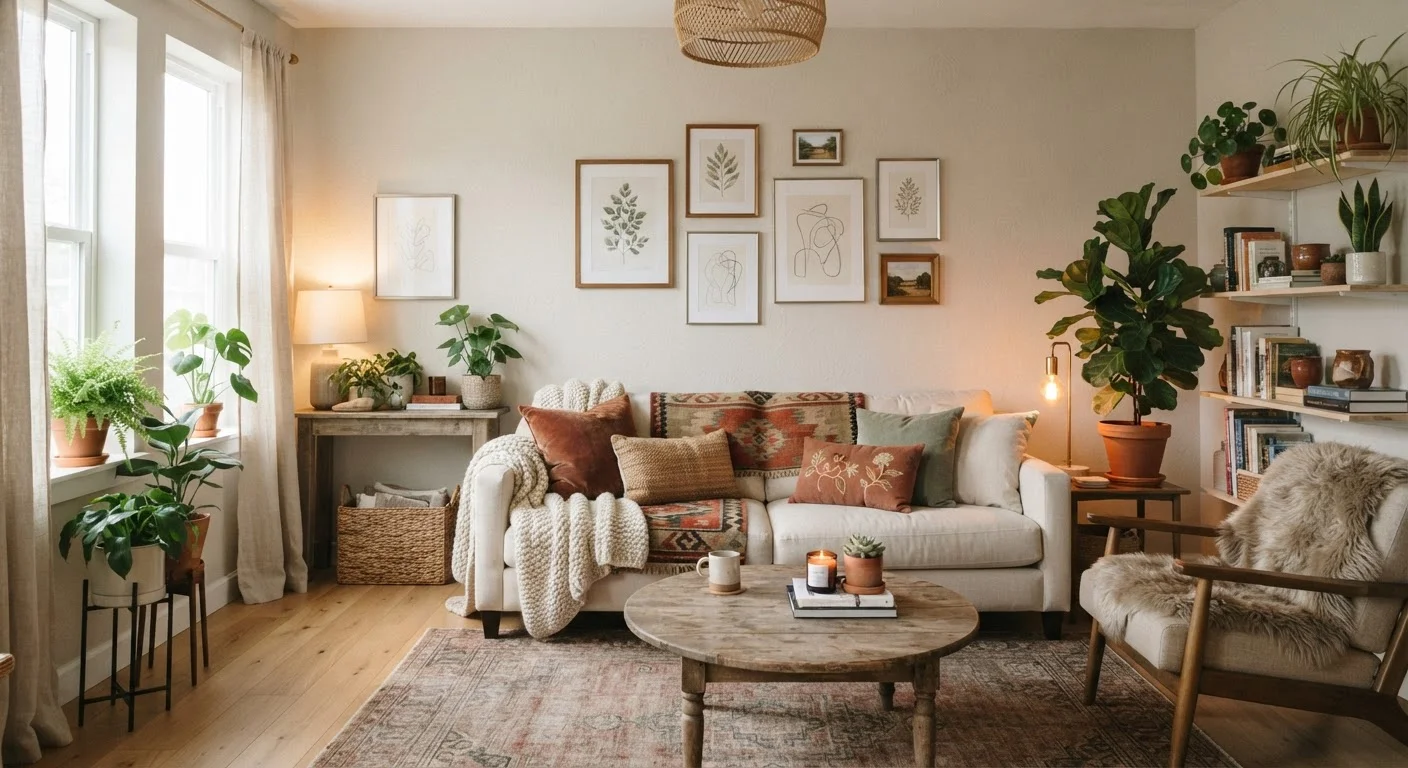
Key Takeaways
- Spend more where the eye naturally lands first - walls, lighting, and textiles signal quality fastest.
- Cohesive color limits make a space look intentional and well-designed, regardless of price point.
- Layered lighting transforms a room's mood more effectively than any single furniture upgrade.
- Decluttering is free and makes every item you own look more deliberate and considered.
- Scale matters more than cost - one correctly sized piece reads as more expensive than several small ones.
- Rentals have workable options too; removable and temporary solutions can look just as polished.
Why Budget Decorating Gets a Bad Reputation
Most rooms that look cheap share a few common traits: mismatched scales, visual clutter, harsh overhead lighting, and no clear color through-line. None of those problems are caused by spending less - they're caused by spending without a plan. Budget decorating earns its poor reputation not from frugality itself but from scattershot decision-making that ignores what the eye actually registers first.
The good news is that a deliberate approach fixes most of this without requiring you to spend more. It requires spending differently - prioritizing the elements that carry the most visual weight and keeping everything else simple. Whether you're furnishing a new place from scratch or refreshing what you already have, these principles work across any spending level. If you're also rethinking your overall finances, our guide to spotting budget gaps can help you figure out what's available to allocate toward your home.
Commit to a Tight Color Palette
Pick two or three colors and repeat them throughout the room - in textiles, small objects, and wall accents. Cohesion is what makes a space look designed. A room full of inexpensive items in a consistent palette will read as more polished than one with costly pieces that don't relate to each other visually.
Neutrals as a base with one or two accent colors is a forgiving formula that also makes future updates easier without starting over. See our guide to visual balance for how color interacts with composition across a room.
Cohesion beats cost - a limited palette makes any room look intentionally designed.
Prioritize Lighting Over Almost Everything Else
Overhead fixtures alone flatten a room and expose every imperfection. Layered lighting - ambient (general illumination), task (reading, cooking), and accent (highlighting objects or architecture) - changes how a space feels at a fraction of what new furniture costs. Floor lamps, table lamps, and plug-in sconces are all relatively affordable ways to add warmth and depth.
Warm-toned bulbs (around 2700K) make most interiors feel significantly more inviting than cool white light. For a deeper look at how lighting layers work together, our lighting layers article explains the logic behind each type.
Layered lighting changes a room's mood more effectively than almost any furniture purchase.
Get the Scale Right Before You Buy Anything
Undersized furniture in a large room and oversized pieces crammed into a small one are two of the most common - and most visually expensive-looking - mistakes. One correctly proportioned sofa reads as more substantial and considered than three small loveseats fighting for the same footprint.
Before purchasing, tape out the footprint of prospective furniture on the floor using painter's tape. It takes ten minutes and prevents costly returns. Our article on small room perception covers how scale choices affect how spacious a room feels overall.
Correct scale reads as expensive - one well-proportioned piece outperforms several mismatched ones.
Declutter Before You Decorate
Clutter is the fastest way to make a space look chaotic and low-effort, no matter what you've spent. Removing excess - keeping surfaces mostly clear, storing what doesn't need to be on display - makes every remaining item look more deliberate. This step costs nothing and often makes a bigger difference than any purchase.
If you find that storage solutions you've already tried aren't helping, it may be worth reading about storage choices that create clutter rather than reducing it.
Decluttering is free and makes every object you keep look more intentional.
Invest in Textiles, Not Furniture
Throw pillows, blankets, curtains, and area rugs carry enormous visual weight relative to their cost. A well-chosen rug anchors a seating arrangement and signals intentionality. Floor-length curtains hung close to the ceiling add height and warmth even in rooms with modest dimensions. These are among the most impactful - and reversible - changes you can make.
Textiles also layer well: mixing textures (linen, knit, velvet) within the same color family adds depth without requiring expensive individual pieces. Renters will find that textiles are among the safest investments since they move with you - see our rental-friendly décor guide for more portable approaches.
A well-chosen rug and curtains can transform a room for less than almost any furniture upgrade.
Use Walls Strategically, Not Randomly
Empty walls make a space feel unfinished; overfilled walls make it feel chaotic. A single large piece of art or a carefully planned gallery wall creates a visual anchor without requiring expensive originals. Framed prints, architectural drawings, fabric panels, and even well-matted photographs can all work within a modest budget.
Grouping works intentionally - consistent frame finishes or a unified color theme - keeps a wall display looking curated rather than accumulated. Before committing to holes in the wall, plan the layout on the floor first. Gallery wall planning covers the spacing and layout logic in detail.
One intentional wall display reads as more elevated than a dozen randomly placed pieces.
Putting It All Together
The thread connecting every item on this list is intentionality. A room that looks considered - where colors echo across objects, where the lighting shifts by zone, where furniture fits the space rather than fighting it - reads as well-designed regardless of what individual pieces cost. That perception of care is what separates spaces that look elevated from spaces that just look full.
If you're working room by room, our room-by-room decorating guide can help you identify what each space genuinely needs before you spend a dollar. And if wall space is a priority, gallery wall planning is one of the most cost-effective ways to add visual interest to any room.
Start With What You Already Own
Before buying anything new, do a full audit of what's already in your home. Items from other rooms often work well in new contexts - a bedroom lamp moved to a reading nook, a tray repurposed as a coffee table organizer. Rearranging and editing what you have is the lowest-cost design move available, and it often reveals that you need less than you thought.