
Subscription vs. Transactional Streaming: Two Ways to Watch, One Big Decision

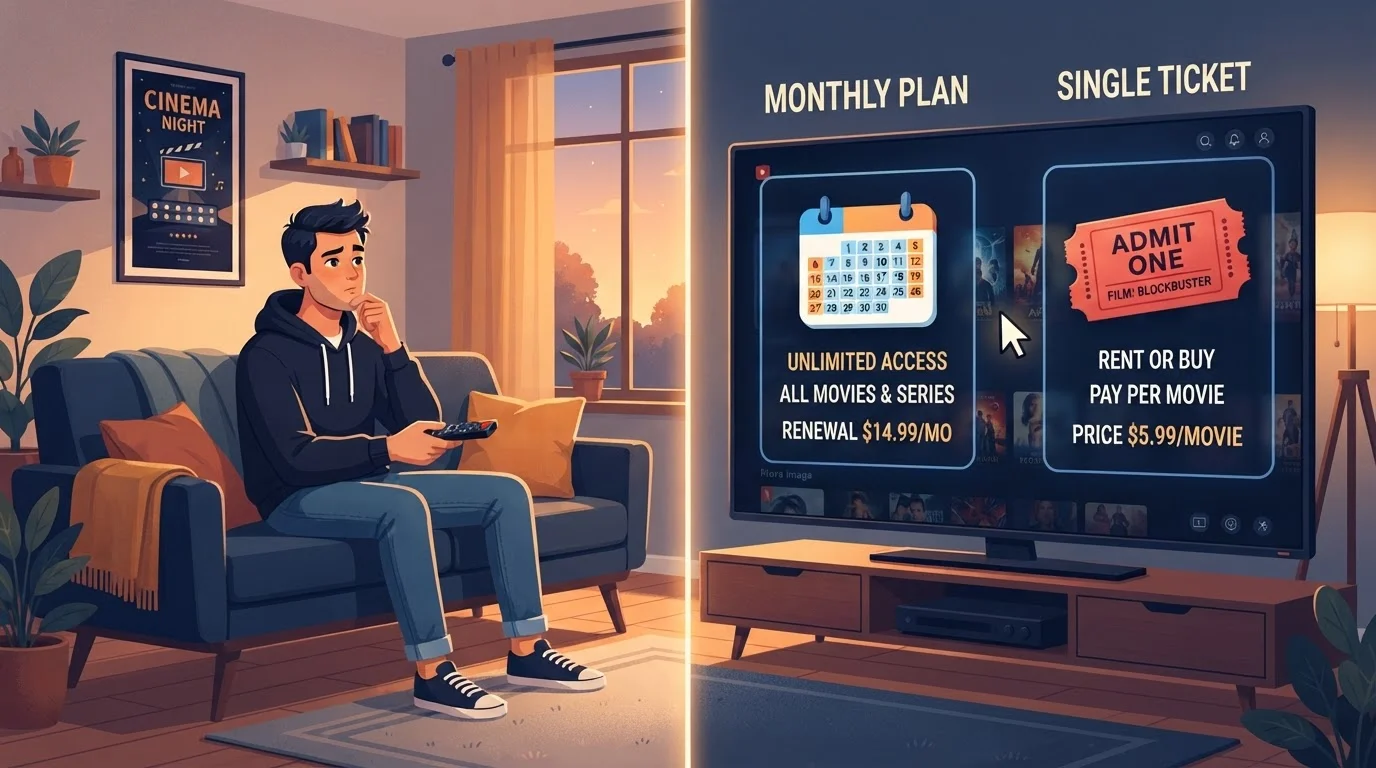
Key Takeaways
- SVOD charges a flat monthly fee for unlimited access to a platform's entire library.
- TVOD lets you rent or buy individual titles without an ongoing subscription.
- AVOD is a third model - free access funded by advertising - distinct from both.
- New theatrical releases often appear on TVOD before landing on SVOD platforms.
- Your ideal model depends on how often you watch and whether you value variety or specific titles.
- Mixing both models strategically can help avoid subscription fatigue and overspending.
Option A
Subscription Streaming (SVOD)
The all-you-can-watch monthly pass.
Best for: Viewers who watch frequently and want unlimited access to a deep library without per-title costs.
Option B
Transactional Streaming (TVOD)
The pay-per-view approach to digital content.
Best for: Casual or selective viewers who want specific titles - often newer releases - without committing to a monthly subscription.
If you watch multiple titles every week across genres
Subscription Streaming (SVOD)
A flat monthly fee pays off quickly when you're watching regularly. Unlimited access means no per-title math to do.
If you only watch a few titles per month
Transactional Streaming (TVOD)
Renting a handful of movies each month typically costs less than maintaining a subscription you rarely use.
If you want to watch a brand-new theatrical release at home before it hits a subscription platform
Transactional Streaming (TVOD)
New releases typically arrive on TVOD weeks or months before they're added to SVOD libraries.
If you want to explore a deep back-catalogue of films and series
Subscription Streaming (SVOD)
SVOD libraries typically run deep with older titles, originals, and entire TV series available to browse freely.
If you're managing subscription costs across multiple platforms
Transactional Streaming (TVOD)
Supplementing one core subscription with occasional TVOD rentals can be cheaper than holding multiple subscriptions simultaneously.
The Two Models Explained
Streaming has its own alphabet soup - SVOD, TVOD, AVOD - and while the acronyms can feel intimidating, the underlying ideas are straightforward once you break them down.
SVOD (Subscription Video on Demand) is the model most people think of when they hear "streaming." You pay a recurring monthly or annual fee, and in exchange you get unlimited access to everything on that platform's library. Watch one show or fifty - the price stays the same.
TVOD (Transactional Video on Demand) works more like a digital video store. You pay per title - either renting it for a short window (typically 24-48 hours after you start watching) or purchasing it outright to keep indefinitely. No subscription required.
There's also AVOD (Advertising-supported Video on Demand), which offers free access funded by ad breaks - think of it as the digital equivalent of broadcast TV. It's worth knowing about, but it's a separate conversation from the subscription-versus-transactional debate. For a closer look at what ad-supported tiers involve, see Ad-Supported Streaming Tiers: The Trade-Offs You Should Understand.
| Criterion | Subscription Streaming (SVOD) | Transactional Streaming (TVOD) |
|---|---|---|
| Payment structure | Flat monthly or annual fee | Pay per title (rent or buy) |
| Access to content | Unlimited within the library | One title at a time |
| New theatrical releases | Often delayed by months | Available earlier in release window |
| Library depth | Extensive back-catalogues and originals | Wider title selection across studios |
| Best value for frequent watchers | Yes - cost per view drops fast | No - costs accumulate quickly |
| Best value for casual watchers | No - fee applies even unused | Yes - only pay for what you watch |
| Content ownership | None - access ends with subscription | Optional - purchase grants permanent access |
| Commitment required | Ongoing subscription | No subscription needed |
Where Each Model Shines - and Falls Short
SVOD's biggest appeal is value at scale. If you watch regularly, that monthly fee quickly becomes cost-efficient. Platforms invest heavily in original series and films exclusive to their libraries, giving subscribers a reason to stay. The catch? You're paying whether you watch or not, and streaming fatigue is a real phenomenon when libraries feel overwhelming.
TVOD's strength is precision. You pay for exactly what you want to watch - nothing more. This model also tends to surface new releases faster. Understanding why requires knowing how theatrical windows work: studios typically release films to TVOD platforms before they reach subscription services. The difference between a film's theatrical run and its streaming window explains this timeline in detail.
The downside of TVOD is that costs can accumulate if you're renting multiple titles regularly. A few rentals per week quickly exceeds the price of a monthly subscription. It also requires more active decision-making - you choose and pay per title rather than browsing a pre-paid library.
~30-90 days
Typical TVOD window before SVOD availability
The gap between a film's TVOD release and its arrival on subscription platforms varies by studio deal and theatrical performance.
4+
Average streaming subscriptions held by US households
Industry research has consistently found that many US households maintain multiple SVOD subscriptions simultaneously, raising questions about overall value.
$3-$6
Typical rental cost for a new-release TVOD title
Standard digital rental pricing for new releases generally falls in this range, though purchase prices and 4K premiums vary.
How to Think About Which Works for You
The honest answer is that many viewers end up using both models - just not simultaneously for everything. A practical approach is to maintain one or two core SVOD subscriptions for regular browsing, then turn to TVOD for specific new releases or titles that aren't available on your subscription platforms.
If you find yourself juggling too many subscriptions, rotating them - subscribing to one platform for a month, then pausing and switching - can stretch your budget. Making sense of your streaming subscriptions without overpaying walks through exactly how to audit and rotate platforms strategically.
For group viewing situations - watch parties, shared households - SVOD typically makes more sense since multiple people get value from the same subscription. The art of the watch party has more on making shared viewing work across distances.
Finally, consider what you're actually watching. If you gravitate toward new theatrical releases and specific award-season films, TVOD may be worth the per-title cost. If you love deep-diving into back-catalogues, discovering series, or watching originals, SVOD is where that content lives. Neither model is universally superior - they're tools, and the right one depends on your habits.
Understanding how streaming algorithms shape your recommendations can also help you get more value from whatever platform you choose.