

Key Takeaways
- Your owner's manual is the most reliable source for your vehicle's specific maintenance intervals.
- Breaking maintenance into time-based and mileage-based categories makes scheduling far more manageable.
- Small, regular checks between professional visits can catch problems before they become expensive repairs.
- Tracking your service history in one place simplifies future decisions and protects resale value.
Why Most Maintenance Routines Fall Apart
Car maintenance is one of those responsibilities that feels urgent only when something goes wrong. A tire goes flat, a warning light appears, or a mechanic mentions a service that's been overdue for two years. At that point, the cost - financial and logistical - is almost always higher than it would have been with a consistent routine.
The problem isn't that drivers don't care. It's that most people have never been taught a practical framework for organizing vehicle upkeep. Vague advice like "get your oil changed regularly" or "check your fluids" doesn't translate into a calendar or a habit. What actually sticks is a structured, layered approach that accounts for your specific vehicle, your driving patterns, and your schedule.
If you're newer to car ownership, our plain-English introduction to car maintenance is a good starting point before building out a full routine.
The Core Practices That Make a Routine Work
Building a maintenance routine that holds up over time isn't about willpower - it's about design. The following practices address the most common points where vehicle upkeep breaks down, and each one is actionable regardless of your mechanical knowledge level.
Anchor your routine to your owner's manual, not generic advice.
Every vehicle has manufacturer-specified intervals for oil changes, filter replacements, fluid flushes, and belt inspections. These intervals vary significantly by make, model, and engine type. Ignoring them in favor of one-size-fits-all rules risks both under-maintaining and over-spending.
Separate your tasks into time-based and mileage-based categories.
Some maintenance items degrade with time regardless of how many miles you drive - cabin air filters, brake fluid, and coolant are examples. Others, like engine air filters and spark plugs, wear with use. Mixing both types into a single list without distinguishing them leads to missed service on low-mileage vehicles.
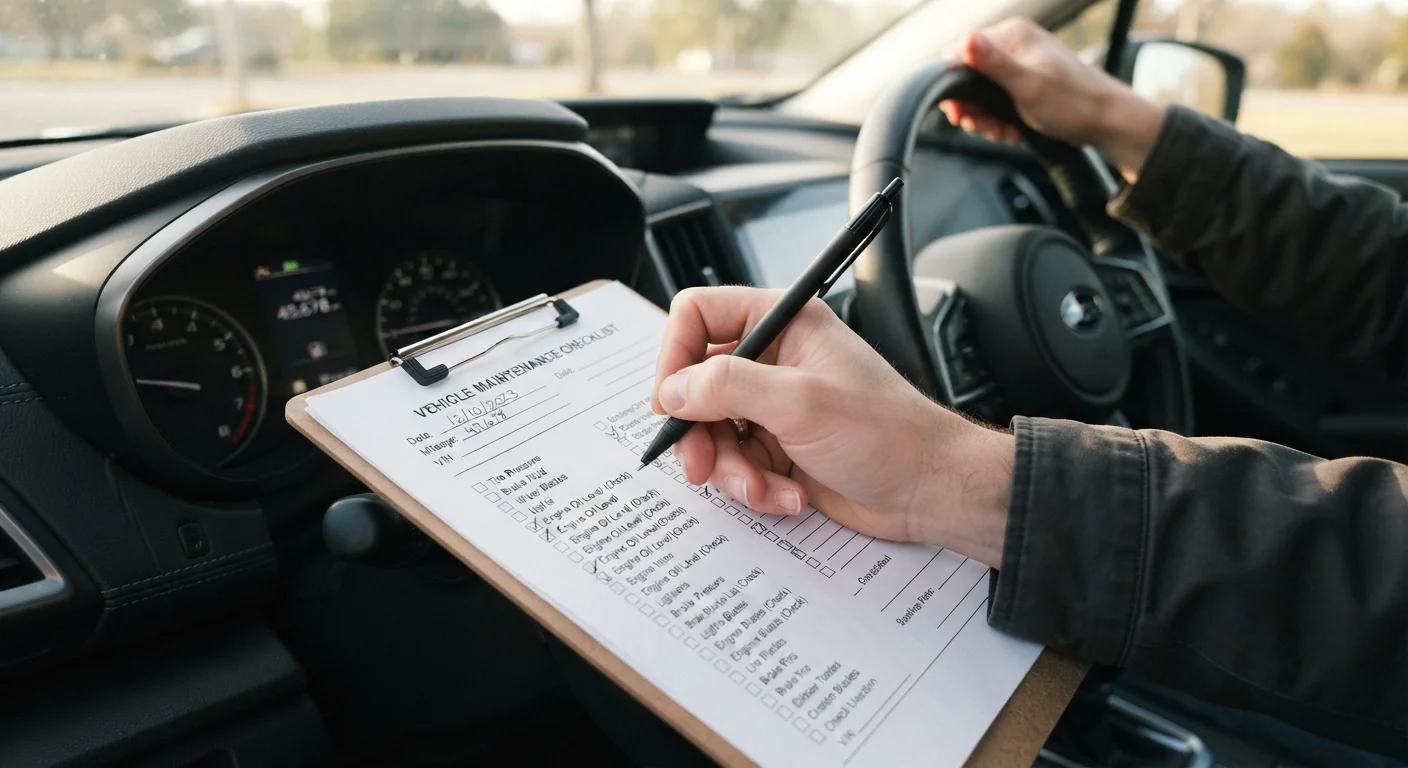
Use a consistent tracking system for every service performed.
Without a record, it's easy to lose track of what was done and when - especially after switching shops or doing minor work yourself. A simple log, whether a dedicated notebook in the glove box, a spreadsheet, or a smartphone app, creates a clear service history that helps you plan ahead and provides documentation at resale.
Build in monthly visual checks you can do yourself.
Professional service intervals are spaced weeks or months apart. Between visits, tire pressure changes, fluids drop, and wiper blades wear. Brief monthly checks - typically taking ten to fifteen minutes - catch these issues before they become safety hazards or cause avoidable damage.
Treat seasonal transitions as built-in maintenance checkpoints.
Temperature shifts affect tires, batteries, coolant levels, and wiper performance in predictable ways. Aligning certain checks with the change of seasons gives your routine a natural rhythm that's easy to remember and act on.
Your Driving Conditions Matter
Manufacturers often publish two maintenance schedules: one for normal driving conditions and one for severe conditions - frequent short trips, dusty environments, extreme temperatures, or heavy towing. If your daily driving involves stop-and-go city traffic or very short commutes, the severe-use schedule may apply even if it sounds extreme. Check your owner's manual to see which category fits your routine.
Quick Wins to Start This Week
You don't need to overhaul your approach all at once. These immediate actions build the foundation of a routine without requiring a trip to a mechanic or hours of research.
For a broader set of owner-friendly checks you can perform between professional service visits, see our guide to safe maintenance practices between mechanic visits.
Scaling Your Routine as Your Vehicle Ages
A maintenance routine that works well for a vehicle with 30,000 miles will need adjustment as the odometer climbs. Older vehicles - particularly those past 100,000 miles - often require attention to components that rarely need service early in a car's life: timing belts or chains, transmission fluid, suspension bushings, and valve clearances, among others.
The principle of tracking and scheduling remains the same, but the list of items expands and the intervals may shorten. Checking in with a trusted mechanic at higher mileage milestones for a more comprehensive inspection is worthwhile, even if nothing seems wrong. Our guide to maintaining high-mileage vehicles covers what shifts in your approach as the miles add up.
The underlying logic is similar to how consistent small actions compound over time in any domain - a well-maintained vehicle at 150,000 miles is almost always the product of consistent attention across its entire life, not a single intervention late in its history. For a year-round ownership perspective, the annual car ownership checklist for US drivers is a useful companion reference.