

Key Takeaways
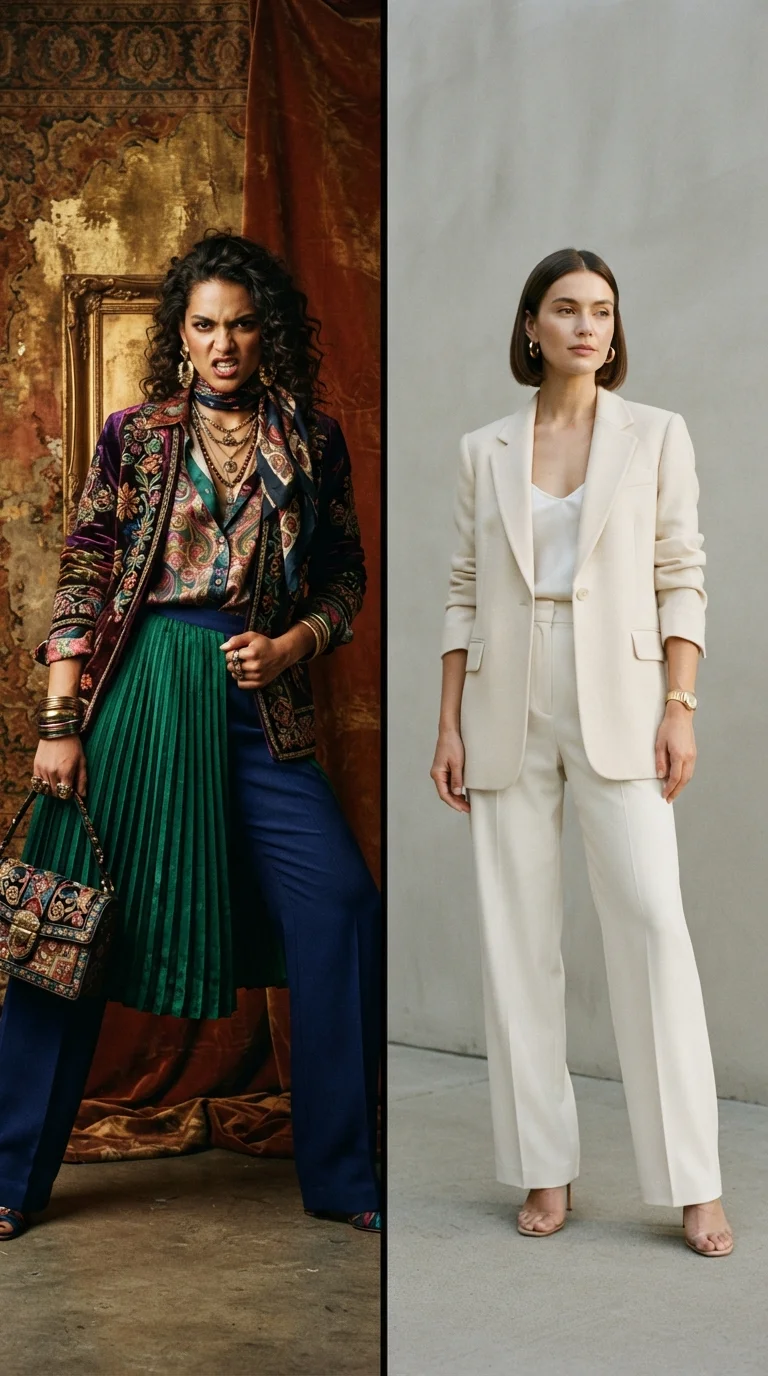
- Maximalism embraces layering, bold color, mixed prints, and visible personality-driven choices.
- Quiet luxury prioritizes neutral palettes, precise tailoring, and high-quality fabrication over logos.
- Neither aesthetic is inherently more expensive - both can be explored at any budget with intention.
- The two styles are not mutually exclusive; many wardrobes blend elements of each.
- Your lifestyle, personality, and existing wardrobe are better guides than trend cycles alone.
Option A
Maximalism
The bold, expressive approach that more is more.
Best for: Anyone who wants their wardrobe to tell a story, spark conversation, and celebrate personal identity through color, pattern, and layering.
Option B
Quiet Luxury
The restrained, refined approach that less speaks loudest.
Best for: Anyone drawn to understated elegance, investment-quality basics, and outfits that project calm confidence without obvious branding.
If you love self-expression and aren't afraid of being noticed
Maximalism
Maximalism is built for people who see clothing as a creative outlet. Layering textures, clashing prints intentionally, and stacking accessories are all part of the vocabulary.
If you prefer a streamlined, versatile wardrobe that travels easily
Quiet Luxury
A neutral, well-tailored wardrobe mixes and matches effortlessly and rarely looks out of place across different settings.
If you enjoy trends but want some longevity in your closet
Quiet Luxury
The quiet luxury palette - camel, ivory, grey, navy - remains relevant season to season with minimal refreshing required.
If you find minimal dressing flat or uninspiring
Maximalism
Maximalism energizes a wardrobe and gives everyday dressing a sense of occasion, even for casual contexts.
If you want to draw from both directions without committing to one
Maximalism
Starting with a quiet luxury base and layering one bold maximalist element - a printed scarf, a statement earring - is one of the most wearable ways to blend both aesthetics.
What These Two Aesthetics Actually Mean
Fashion right now is pulling in two opposite directions at once, and both have genuine momentum. Maximalism - characterized by layered textures, clashing prints, rich saturated color, and an anything-goes approach to accessories - celebrates individuality and visual abundance. Quiet luxury, sometimes called "stealth wealth" dressing, goes the other way entirely: neutral palettes, impeccable tailoring, minimal branding, and a studied restraint that communicates confidence through subtlety rather than volume.
Neither is simply a social media phase. Maximalism draws from a long tradition of expressive dressing rooted in subcultures, art movements, and global textile traditions. Quiet luxury, meanwhile, reflects a shift toward understated quality signals - fabric drape, seam construction, color cohesion - rather than visible logos. Understanding both helps you dress more deliberately, whatever your personal style actually is. For a foundational look at balancing different style approaches, the Everyday Style Tips hub is a useful starting point.
How Each Aesthetic Works in Practice
Maximalism in practice means embracing intentional complexity. That could look like a floral blouse worn over a striped turtleneck, vintage jewelry stacked alongside contemporary pieces, or a vivid color-blocked coat anchoring an otherwise eclectic outfit. The key word is intentional - maximalism at its most effective has a point of view rather than being chaotic for its own sake. Layering accessories thoughtfully is one of the fastest ways to explore a maximalist sensibility without overhauling a wardrobe.
Quiet luxury, by contrast, operates through omission. The palette narrows - cream, camel, charcoal, navy, soft white. Fit becomes the focal point rather than print or embellishment. Fabric choice carries significant weight: a well-structured cashmere or a precisely cut trouser reads differently than the same silhouette in a cheaper material. The absence of obvious branding is itself a signal in quiet luxury dressing.
| Criterion | Maximalism | Quiet Luxury |
|---|---|---|
| Color palette | Bold, saturated, mixed | Neutral, muted, monochromatic |
| Pattern use | Mixed prints, clashing textures welcome | Minimal to no pattern; solid fabrics preferred |
| Accessories | Stacked, layered, statement-making | Sparse, understated, high-quality single pieces |
| Branding | Visible logos can feature | No visible branding; logo-free preferred |
| Wardrobe size | Typically larger, more varied | Smaller, curated, capsule-style |
| Budget flexibility | Very flexible; thrives on thrift finds | Flexible, but fabric quality is prioritized |
| Fit emphasis | Relaxed; oversized or layered silhouettes common | Precise tailoring is central to the look |
Cost, Accessibility, and What Each Style Actually Requires
A common assumption is that quiet luxury requires significant spending because of its emphasis on fabric quality. That assumption is only partially true. The aesthetic's principles - restrained color, clean silhouette, understated accessories - are genuinely achievable at different price points by shopping thoughtfully and prioritizing fit (often achievable through simple tailoring alterations). What quiet luxury does demand is selectivity: fewer, more considered pieces rather than a large, varied wardrobe.
Maximalism, despite looking expensive, can be assembled very affordably. Vintage and secondhand markets are natural maximalism territory - the aesthetic's appreciation for pattern, texture, and eclecticism is perfectly suited to thrift shopping and mixing eras. The investment is more in time and curiosity than in price tags. For readers weighing classic pieces against trend-driven picks across either aesthetic, this side-by-side breakdown offers a practical framework.
62%
Shoppers prioritizing personal style over trends
A 2023 consumer survey by McKinsey & Company found that a majority of fashion consumers say personal expression outweighs trend-following in their purchasing decisions.
Top 3
Resale & secondhand market growth driver
ThredUp's 2023 Resale Report identified maximalist and eclectic dressing as one of the top three styling trends fueling secondhand apparel demand.
Choosing What Fits Your Life - Or Blending Both
The most useful question isn't which aesthetic is right but which principles resonate with how you actually live. A wardrobe filled with bold maximalist pieces can become exhausting if your daily life calls for low-key adaptability. Conversely, a rigidly quiet luxury wardrobe can feel flat if you crave self-expression through clothing. Many people land somewhere between the two - a neutral tailored base with pockets of personality introduced through accessories, outerwear, or footwear.
If you're curious about how either aesthetic fits into a longer-term wardrobe strategy, balancing classic and trendy pieces is worth reading alongside this comparison. Aesthetic labels like maximalism and quiet luxury are useful as orientation tools, not rules. The goal is a wardrobe that makes getting dressed feel good - expressive, comfortable, and genuinely yours.
Aesthetics Overlap More Than They Oppose
Maximalism and quiet luxury are often framed as opposites, but in practice wardrobes frequently borrow from both. A quiet luxury base - a precisely cut neutral trouser, a clean knit - can absorb one maximalist statement piece without losing its grounded feel. Thinking of each aesthetic as a dial rather than a binary choice gives you far more flexibility. The classic vs. trendy framework applies equally well here: any piece earns its place by working with what you already own.