

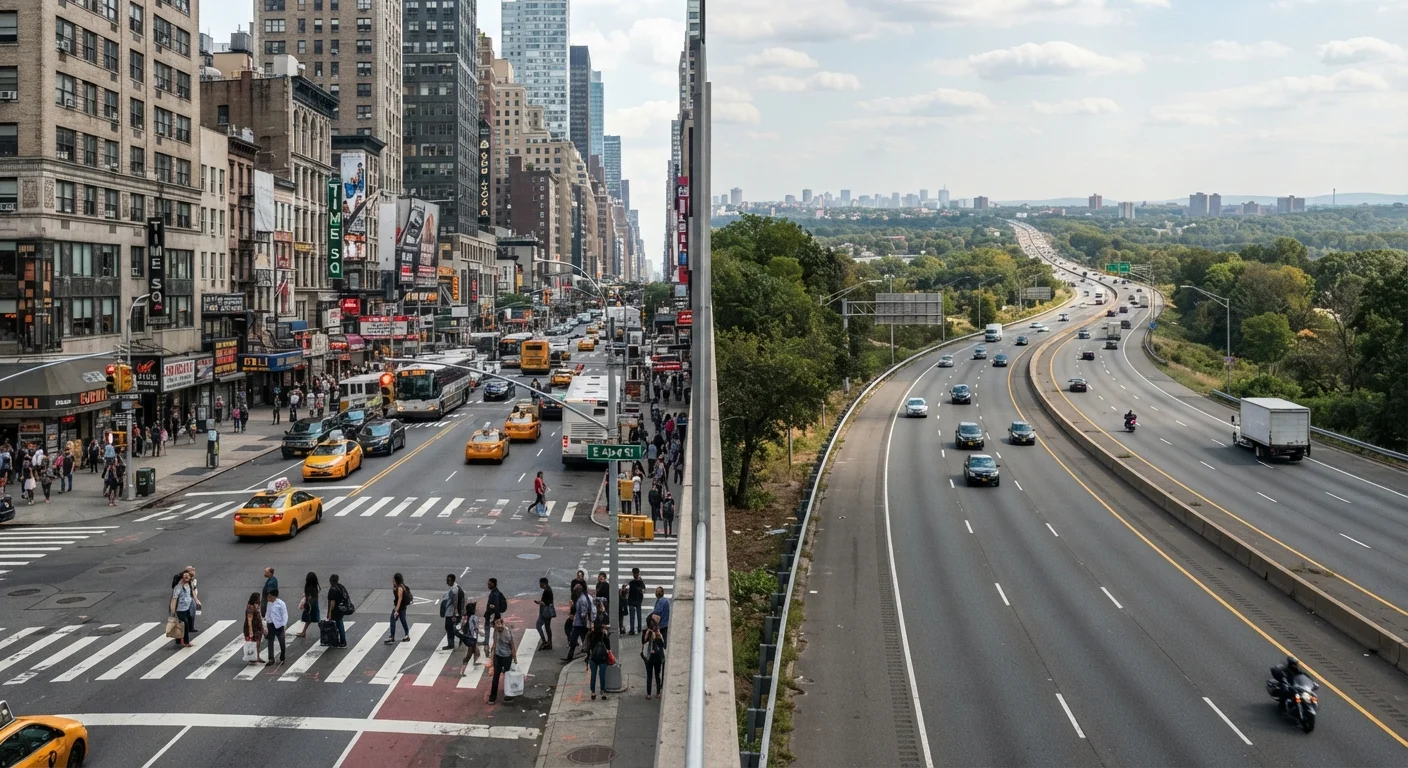
Key Takeaways
- Highway driving demands sustained attention, smooth lane changes, and safe following distances at speed.
- City driving requires constant vigilance for pedestrians, cyclists, intersections, and sudden stops.
- Both environments involve unique hazards - neither is categorically safer than the other.
- Defensive driving principles apply equally on highways and city streets.
- Transitioning between environments mid-trip requires a deliberate mental shift in technique.
Option A
Highway Driving
High-speed, long-range travel with sustained focus demands.
Best for: Drivers covering long distances who need strong merging, lane discipline, and speed management skills.
Option B
City Driving
Complex, unpredictable environments requiring sharp reactive skills.
Best for: Drivers navigating dense traffic, pedestrians, cyclists, and frequent stops in urban areas.
If you primarily commute on interstates or travel long distances
Highway Driving
Developing highway-specific skills - smooth merging, maintaining safe gaps at high speed, and managing fatigue - will have the greatest impact on your everyday safety.
If you drive mainly in urban or suburban areas
City Driving
City driving skills like scanning intersections, anticipating pedestrian movement, and managing stop-and-go traffic are your highest-priority competencies to sharpen.
If your trips regularly include both highway and city segments
Highway Driving
Mastering highway entry and exit - the transition zones where crashes cluster - is the single most useful cross-environment skill to build first.
Two Roads, Two Mindsets
Most licensed drivers operate in both environments, yet few consciously shift their approach when conditions change. Highway driving and city driving aren't simply fast versus slow - they impose fundamentally different cognitive and physical demands. Recognizing those differences is the first step toward handling each environment with genuine competence.
On a highway, the primary challenge is sustained, high-speed attention over extended distances. On city streets, the challenge is managing complexity: unpredictable pedestrians, cyclists, one-way grids, signal timing, and vehicles making sudden stops or turns. Treating one skill set as sufficient for both roads is a common source of preventable incidents.
Understanding situational awareness - the habit of continuously scanning, anticipating, and adjusting - underpins both environments, even though the specific cues you're scanning for differ significantly.
How Highway and City Driving Compare
The table below breaks down the core differences across the skills and conditions that matter most to everyday drivers.
| Criterion | Highway Driving | City Driving |
|---|---|---|
| Typical speed | 55-75 mph | 15-45 mph |
| Primary hazard | High-speed lane changes, fatigue | Pedestrians, cyclists, intersections |
| Following distance needed | 3+ seconds minimum | 2-3 seconds, constantly adjusted |
| Key entry/exit skill | Speed-matching merges | Intersection scanning |
| Mental demand type | Sustained vigilance over distance | Rapid, frequent decision-making |
| Lane discipline | Keep right, signal early | Navigate turn lanes, one-ways |
| Fatigue risk | High on long stretches | Lower, but stress is higher |
These contrasts aren't just academic. A driver who exclusively uses highways may underestimate how quickly city intersections escalate. Conversely, a driver accustomed only to urban streets may be unprepared for the consequences of a lapse in attention at 70 mph.
Highway-Specific Skills Every Driver Needs
Merging at speed is where highway driving most often goes wrong. A safe merge requires matching the speed of highway traffic before entering the lane - not slowing down on the ramp and hoping for a gap. Rushed or poorly timed merges are a leading source of highway collisions. See where drivers go wrong with merging and lane changes for a deeper look at the rules and common habits that drift.
Following distance increases dramatically at highway speeds. At 65 mph, a vehicle travels roughly 95 feet per second. The commonly cited three-second rule is a minimum - in wet or reduced-visibility conditions, more space is always warranted. See how adverse weather affects stopping distances for guidance on adjusting for conditions.
Fatigue management is a highway-specific concern that city driving rarely forces drivers to confront in the same way. Monotonous stretches reduce stimulation and accelerate mental fatigue - experts generally recommend a break every two hours on long trips.
~95 ft/sec
Distance traveled per second at 65 mph
This figure, derived from basic physics, illustrates why highway following distances must be far greater than city driving buffers.
40%
Share of US traffic fatalities at intersections
According to the Federal Highway Administration, intersections are the site of a significant proportion of annual US traffic fatalities and injury crashes.
City-Specific Skills Every Driver Needs
Intersection management is the core city driving competency. Even with a green light, a brief scan for red-light runners and crossing pedestrians before proceeding is a habit that pays dividends. Intersections account for a disproportionate share of urban crashes precisely because multiple streams of conflicting movement converge simultaneously.
Pedestrian and cyclist awareness operates on different rules in cities. Pedestrians can appear between parked cars, step off curbs mid-block, or misread a signal. Cyclists may occupy a full lane, ride in a door zone, or move unpredictably in traffic. City drivers need a wider, slower visual scan than highway driving requires.
Stop-and-go traffic places unique demands on vehicle control and attention. Rear-end collisions in urban traffic are often the result of distraction during the momentary gap between a car stopping and the following driver responding. Keeping a consistent buffer - even at low speeds - matters.
Defensive driving principles apply in full force on city streets, where hazards emerge with little warning and at close range. Anticipating rather than reacting is the difference between a near-miss and a collision.
Speed Doesn't Always Mean Greater Risk
It may seem counterintuitive, but highways often have lower crash rates per mile traveled than urban roads. This is largely because highway traffic flows in one direction, conflicts are fewer, and access points are controlled. The severity of highway crashes, however, tends to be higher when they do occur - making skill and preparation especially important.
Transitioning Between Environments Safely
Many trips include both highway and city segments - a highway approach into a dense downtown, or a suburban arterial that feeds onto an interstate. These transition zones are statistically higher-risk because drivers carry the habits of one environment into the demands of another.
Exiting a highway into city traffic requires deliberately reducing speed, recalibrating your following distance, and widening your scan pattern to include pedestrians and cyclists. Entering a highway from city streets requires the opposite shift: building speed confidently, committing to a merge, and extending your gaze further down the road.
Night driving adds a further layer of complexity to both environments - reduced visibility on highways lengthens the perceptual gap, while city street lighting can be uneven and misleading.
The more consciously a driver treats environment changes as requiring a skill shift, the safer those transitions become.