

Key Takeaways
- New vehicles typically lose 15-25% of their value in the first year of ownership.
- Depreciation is one of the most significant - and least visible - costs of owning a car.
- Mileage, condition, and market demand all influence how quickly a vehicle loses value.
- Understanding depreciation helps you make smarter decisions about buying, selling, and financing.
- Regular maintenance can slow depreciation by preserving vehicle condition and service history.
Vehicle Depreciation
Vehicle depreciation is the decline in a car's monetary value over time. It's the difference between what you paid for a vehicle and what it's worth when you sell or trade it in. Depreciation is considered one of the largest ongoing costs of vehicle ownership, even though it doesn't show up as a monthly bill.
Depreciation is an accounting concept that recognizes the gradual loss of an asset's value due to age, wear, and market conditions - it does not require a sale to occur financially.
Why Cars Lose Value Over Time
Unlike a house, which may appreciate under the right conditions, a vehicle is a depreciating asset - it loses value steadily from the moment it's purchased. Several forces drive this decline simultaneously.
Age and mileage are the most straightforward factors. The older a car gets and the more miles it accumulates, the more wear its components have absorbed. Buyers naturally pay less for a vehicle that has more of its useful life behind it. This is also why high-mileage vehicles require a different level of evaluation - their depreciation curve has already progressed significantly.
Market conditions and consumer preferences matter too. A sudden rise in fuel prices, for instance, can depress demand for large trucks and SUVs while boosting interest in fuel-efficient alternatives. When demand for a vehicle type falls, resale values follow.
New model releases also push down the value of older versions of the same vehicle. When a manufacturer introduces an updated model, the prior generation becomes less desirable in the used market almost immediately.
~20%
Typical first-year new vehicle value loss
Industry estimates consistently place first-year depreciation for new vehicles between 15% and 25%, with the average commonly cited around 20%.
~50%
Value remaining after five years
Many new vehicles retain only around half of their original purchase price after five years, according to broadly cited automotive valuation industry data.
#1
Depreciation rank among ownership costs
Multiple consumer finance analyses have identified depreciation as the single largest cost of vehicle ownership over a five-year period, exceeding fuel and insurance for many drivers.
The Depreciation Curve: When Value Falls Fastest
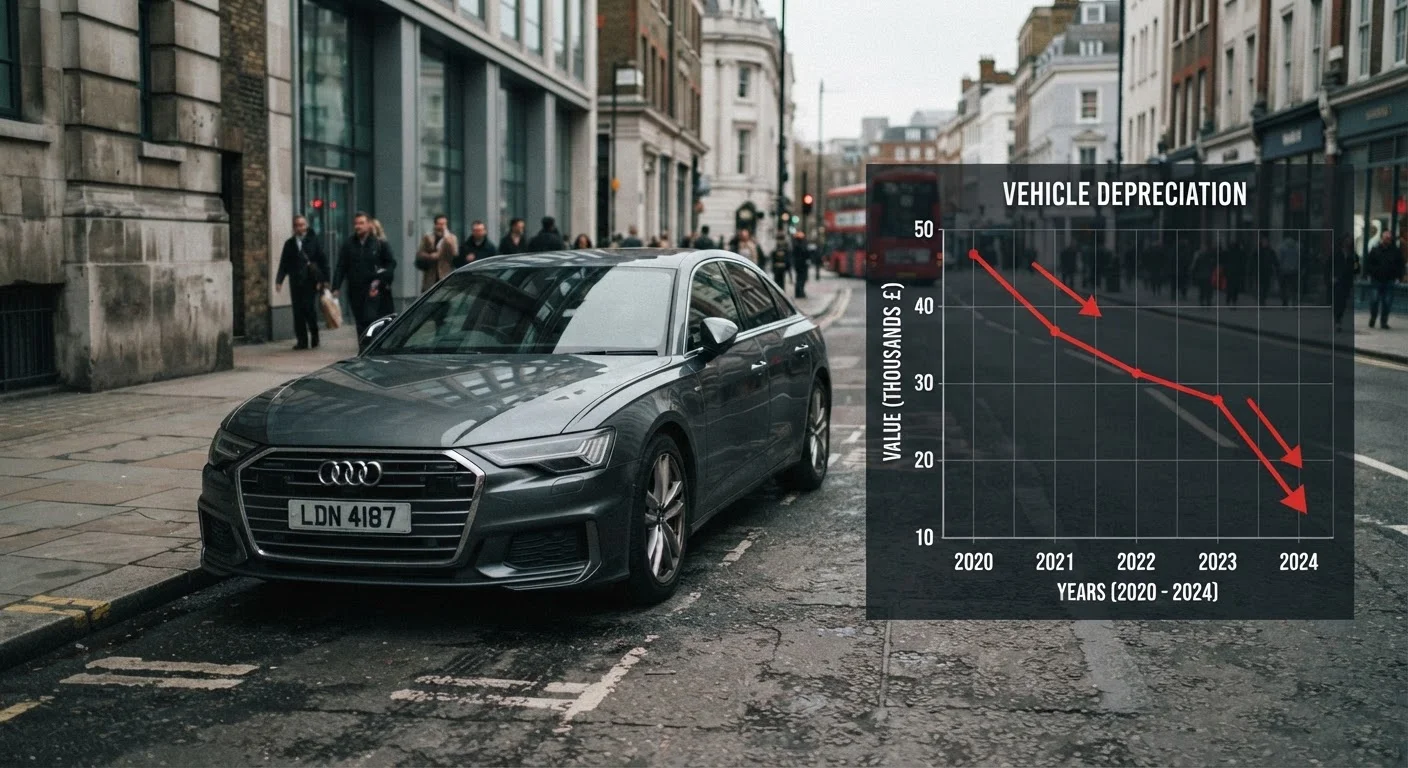
Depreciation isn't evenly spread across a vehicle's life. The loss is steepest in the earliest years of ownership. Industry data consistently shows that new vehicles can lose roughly 15-25% of their value in the first year, and may lose 50% or more of their original value within five years.
This front-loaded decline has a practical implication: drivers who purchase a vehicle that is two or three years old rather than brand new absorb significantly less of this initial loss. The vehicle has already passed through its steepest depreciation phase, and the buyer effectively gets more car per dollar spent.
After the five-year mark, depreciation typically slows and becomes more gradual. Older vehicles lose value at a steadier, lower rate - though their maintenance costs often increase, which introduces a different category of ownership expense. Understanding both sides of this trade-off is covered in more detail in our look at the real cost of owning a car.
“Depreciation is the cost of using an asset over time. For vehicles, it's unavoidable - but understanding it is the first step toward managing it intelligently as part of your overall financial picture.”
— Automotive & Driving Editorial Team, Editorial analysts specializing in vehicle ownership economics
How Depreciation Affects Ownership Decisions
Depreciation is rarely visible the way a car payment or insurance bill is - but its financial effect is substantial. When factored into your vehicle budget, depreciation often rivals or exceeds fuel and insurance costs over a typical five-year ownership period.
For drivers who finance their vehicle, depreciation carries additional risk. If a car's market value drops faster than the loan balance is being paid down, the owner can find themselves "underwater" - owing more than the vehicle is worth. This limits flexibility if they need to sell or trade in the vehicle before the loan is paid off.
Depreciation also shapes the lease-versus-own conversation. Lease payments are fundamentally based on a vehicle's projected depreciation during the lease term, not its full price. Understanding this mechanism helps drivers evaluate lease offers more clearly rather than focusing only on monthly payment amounts.
Check Residual Value Before You Buy
Before purchasing a vehicle, research how well that make and model typically holds its value over time. Vehicles with stronger resale histories can reduce the total financial impact of depreciation, particularly if you plan to sell or trade in within five years. This information is publicly available through automotive valuation services and industry publications.
Finally, depreciation interacts with the decision of when to sell. Selling a vehicle before major repairs become necessary - while it still holds reasonable resale value - can sometimes be a financially sound choice. Deferring needed maintenance, on the other hand, tends to accelerate value loss and lead to larger costs down the road, a dynamic explored in the hidden costs of deferred car maintenance.
Factors Within Your Control
While you can't stop depreciation, certain ownership practices can slow its pace and preserve resale value.
- Maintain your vehicle consistently. A documented service history signals to future buyers that the car was cared for properly. Visit our car maintenance hub for guidance on keeping up with routine upkeep.
- Keep mileage reasonable. Higher mileage directly reduces resale value. If you drive well above average annually, factor this into your long-term ownership cost estimates.
- Protect the vehicle's condition. Cosmetic damage - dents, scratches, worn interiors - reduces what buyers are willing to pay, even if the mechanical condition is solid.
- Avoid excessive modifications. Aftermarket changes can limit the pool of interested buyers, which tends to reduce resale value rather than increase it.
Depreciation is a financial reality of vehicle ownership, not a problem to be solved. But understanding how it works - and what influences its pace - gives you a clearer picture of the true cost of ownership and helps you make more informed decisions at every stage: buying, maintaining, and eventually selling or trading in your vehicle.