

Key Takeaways
- Fixed expenses don't change month to month and are harder to reduce quickly.
- Variable expenses fluctuate and offer the most immediate opportunities to cut spending.
- Identifying which type each expense is helps you build a more realistic budget.
- Some costs blend both traits - they're predictable but not monthly.
- Reducing fixed expenses often requires bigger life decisions but delivers lasting savings.
Fixed vs. Variable Expenses
Fixed expenses are costs that stay the same amount every billing cycle - things like rent, a car payment, or a monthly insurance premium. Variable expenses, by contrast, change from month to month based on your choices or usage, such as groceries, gas, or dining out. Knowing which category each expense falls into helps you figure out where you have room to adjust your spending.
Some expenses are called 'periodic' or 'irregular fixed' - costs like annual subscriptions or semi-annual insurance premiums that are predictable in amount but don't recur monthly. These are best handled with a sinking fund.
Why This Distinction Matters for Your Budget
Most people know they spend money on rent and groceries, but they rarely stop to categorize why those two costs feel so different to manage. The reason is straightforward: one is fixed and the other is variable. That single distinction changes everything about how you approach your budget.
When you can clearly sort your monthly outflows into fixed and variable buckets, you gain a realistic picture of where your money must go versus where you have actual choices. This clarity is the foundation of any workable budget. For a broader introduction to the terminology you'll encounter, see our plain-language budgeting glossary.
33%
Share of income Americans spend on housing
According to the U.S. Bureau of Labor Statistics Consumer Expenditure Survey, housing consistently represents the largest fixed expense category for American households.
~$6,000
Average annual food spending per U.S. consumer unit
The BLS Consumer Expenditure Survey tracks food as one of the largest variable expense categories, with amounts varying significantly based on household size and habits.
Fixed Expenses: The Predictable Commitments
A fixed expense is any cost that stays the same amount from one period to the next. Common examples include:
- Rent or mortgage payments
- Car loan or lease payments
- Health, auto, and renters insurance premiums
- Student loan payments
- Streaming or software subscriptions at a flat monthly rate
The predictability of fixed expenses is both an asset and a constraint. On the positive side, they're easy to plan for - you know exactly what's coming. The downside is that they're difficult to reduce quickly. Lowering a fixed expense usually requires a significant decision: refinancing a loan, moving to a less expensive home, negotiating a lower insurance rate, or canceling a service entirely.
Watch Out for Lifestyle Creep in Fixed Costs
Each time you add a new subscription, finance a purchase, or sign a service contract, you convert what could be variable spending into a fixed obligation. Over time, these small commitments accumulate and quietly shrink your financial flexibility. Periodically reviewing all fixed expenses - including recurring charges on your credit card statement - helps keep this under control.
This is why financial educators often say the biggest wins in a budget come from the fixed side - but they take longer to achieve.
Variable Expenses: Where Flexibility Lives
A variable expense is any cost that changes month to month based on your usage, habits, or choices. Examples include:
- Groceries and household supplies
- Gas and transportation costs
- Dining out and entertainment
- Clothing purchases
- Utility bills (electricity, water, gas)
Variable expenses are where most people find their fastest wins when trying to reduce spending. Because these costs respond directly to behavior, a conscious shift - cooking at home more often, consolidating errands to save gas - can show up in your numbers within weeks rather than months.
That said, variable spending isn't all discretionary. Groceries are variable, but eating is not optional. The skill is distinguishing how much you spend on necessities versus how much reflects habit or convenience. If you suspect your variable spending has quietly grown out of hand, our budget overhaul checklist can help you spot the gaps.
Putting It Together: Building a Budget Around Both
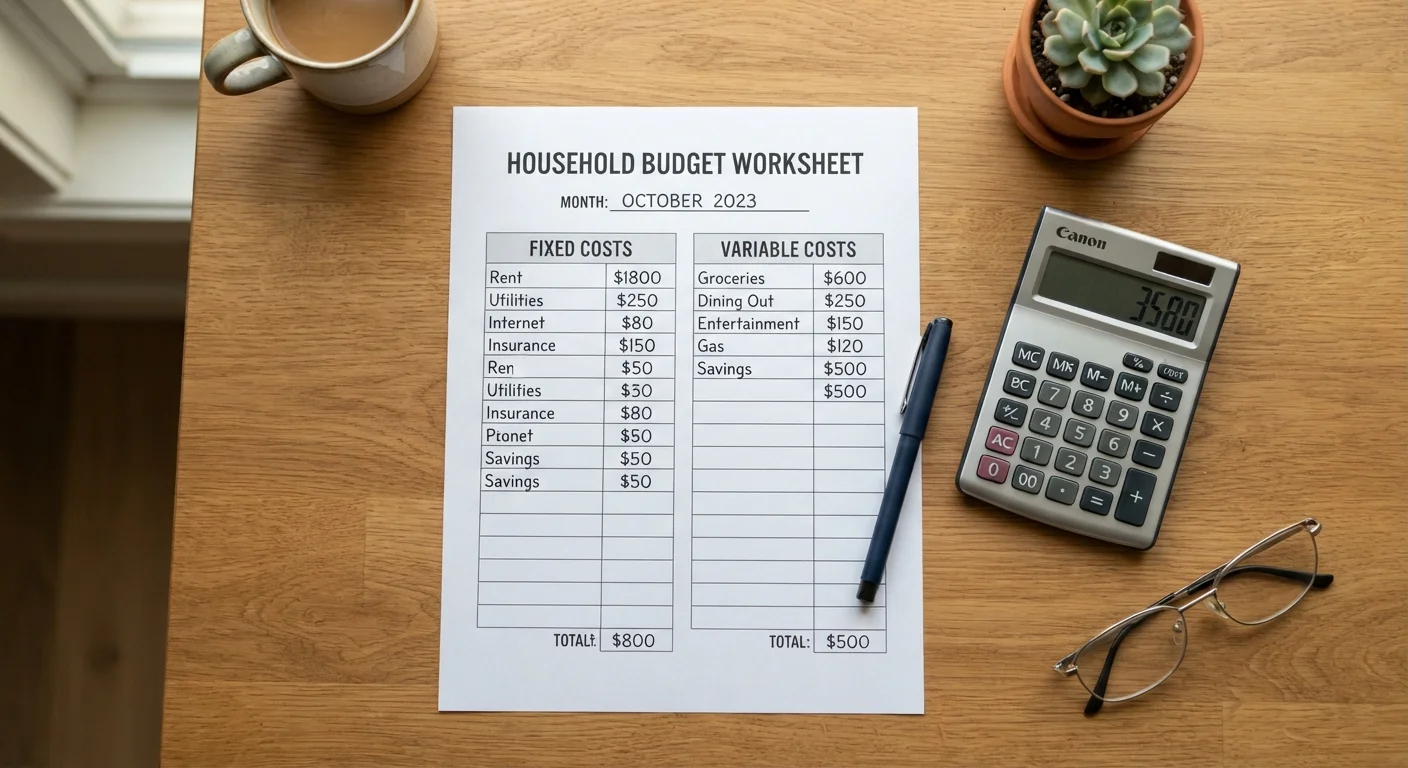
A practical approach is to list all your monthly expenses, label each as fixed or variable, and then total each column. Your fixed expenses represent the floor of what you must earn each month just to stay current. Everything above that floor is the income you have to work with for variable needs, savings, and discretionary spending.
Once you see the breakdown, you can make intentional decisions. If your fixed expenses consume too high a percentage of your take-home pay, that's a structural problem - and solving it may require bigger changes like building more flexibility into your overall financial plan. If your fixed costs are manageable but you're still coming up short, the answer usually lives in your variable column.
Start With a Simple Two-Column List
Open a notebook or spreadsheet and write every monthly expense in one of two columns: Fixed or Variable. Don't overthink it - place each item where it best fits. This exercise alone often reveals spending patterns that weren't obvious before and gives you an immediate action list for trimming variable costs or planning for fixed ones.
For readers who find the process of tracking these categories overwhelming, it helps to know that no single method of organizing a budget works for everyone. Explore whether a spreadsheet, app, or pen-and-paper system fits your style with our guide on matching the budgeting tool to the person.
This article is for general informational and educational purposes only and does not constitute personalized financial advice. Consult a qualified financial professional for guidance specific to your situation.