

Key Takeaways
- Engine oil lubricates, cools, and cleans - and loses all three abilities as it degrades.
- Skipping one oil change rarely causes immediate failure, but the damage accumulates silently over time.
- Old oil turns to sludge that can permanently clog critical engine passages.
- High-mileage vehicles are especially vulnerable to the effects of delayed oil changes.
- Most engine damage from neglected oil changes is irreversible and expensive to repair.
Engine Oil Degradation
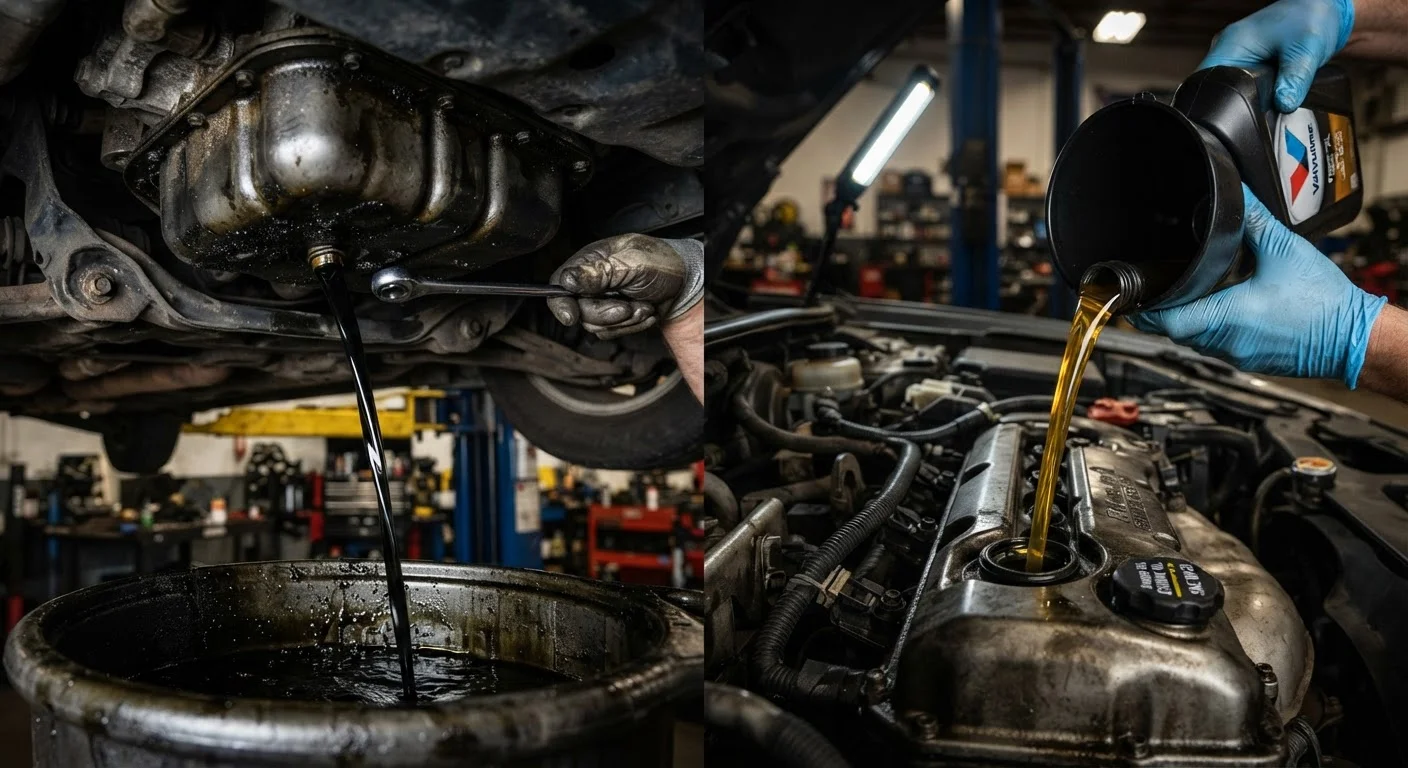
Engine oil doesn't last forever. Over time and mileage, it breaks down chemically, accumulates contaminants, and loses its ability to protect the metal surfaces inside your engine. An oil change replaces this degraded fluid before it begins causing damage rather than preventing it.
Motor oil degrades through oxidation, thermal breakdown, and contamination from combustion byproducts including soot, water vapor, and acidic compounds - all of which accelerate wear on engine components.
What Engine Oil Actually Does
Engine oil performs three critical jobs simultaneously: it lubricates moving metal parts to reduce friction, carries heat away from components that can't be cooled by the cooling system alone, and suspends microscopic contaminants so they can be trapped by the oil filter. Remove any one of these functions, and engine wear accelerates rapidly.
New oil is engineered with a carefully balanced package of additives - detergents that clean deposits, anti-wear compounds that protect metal surfaces, and antioxidants that slow the oil's own breakdown. These additives are consumed over time. By the end of a typical service interval, much of that protective chemistry is already exhausted, even if the oil still looks like oil.
5,000-10,000 mi
Typical synthetic oil change interval
Most modern vehicle manufacturers recommend synthetic oil change intervals well beyond the old 3,000-mile guideline - always verify with your owner's manual.
$4,000+
Estimated cost of engine sludge repairs
Engine damage caused by neglected oil changes can require partial or full engine replacement, with costs varying widely by vehicle type and repair scope.
40%
Of engine wear occurs at startup
Industry engineering data suggests a significant portion of engine wear happens in the moments before oil fully circulates - degraded oil makes this window even more damaging.
The Quiet Progression of Oil Breakdown
Oil degradation doesn't happen all at once. In the early miles of a fresh oil fill, the fluid does its job effectively. As mileage climbs, oxidation begins - oxygen molecules react with oil molecules at high temperatures, thickening the fluid and forming varnish-like deposits on engine surfaces. Combustion gases that slip past piston rings (a normal process called blow-by) introduce soot and acidic compounds into the oil, further accelerating breakdown.
The result is oil that becomes progressively thicker, more acidic, and less capable of flowing through narrow engine passages. Metal-on-metal contact increases. Heat builds where it shouldn't. This is the damage that accumulates silently - no warning light, no obvious symptom - until it reaches a threshold where something gives.
Check Your Oil Between Changes
Pull the dipstick every few weeks and check both the oil level and its color. Oil that looks black and gritty well before your service interval is a sign your engine is working hard - or that your interval may be too long for your driving conditions. Low oil level between changes can also indicate a leak or internal consumption that warrants attention from a mechanic.
Sludge: The Most Serious Consequence
If degraded oil is left in an engine long enough, it can polymerize - essentially solidifying into a thick, tar-like substance called engine sludge. Sludge is particularly destructive because it doesn't just degrade lubrication; it physically blocks the narrow oil passages that feed critical components like the valve train and crankshaft bearings.
Starved of oil, these components experience rapid, severe wear. In extreme cases, an oil passage can become completely blocked, causing a bearing to seize or a camshaft to fail. Repairs at this stage - if repair is even possible - typically run into thousands of dollars. Engine replacement becomes a real possibility.
The hidden costs of deferred maintenance extend well beyond the inconvenience of the service itself; neglected oil changes are one of the most direct paths to catastrophic repair bills.
Who Is Most at Risk
Not every driver faces equal risk from a skipped oil change. Driving conditions matter enormously. Frequent short trips (under 10 miles), stop-and-go traffic, extreme temperatures, and towing or hauling heavy loads all accelerate oil degradation - these are what manufacturers call severe service conditions, and they typically call for shorter intervals than the standard recommendation.
High-mileage vehicles are also particularly vulnerable. Older engines tend to have slightly more internal clearances from wear, meaning more oil passes through and more contaminants enter the oil supply. Their seals and gaskets are also more susceptible to the acidic chemistry of degraded oil.
Building a consistent service habit is the most effective protection. See our guide to building a car maintenance routine for practical approaches to staying on schedule without the hassle.
“The oil change is the single most important thing you can do for your engine. Everything else is secondary.”
— Bob Sikorsky, Automotive journalist and author of 'Drive It Forever'