
Common Myths About Charging Habits That Are Actually Hurting Your Devices

Key Takeaways
- Modern lithium-ion batteries do not need to be fully drained before recharging.
- Overnight charging rarely causes significant damage thanks to built-in charge management circuits.
- Keeping a battery between 20% and 80% charge generally supports longer lifespan.
- Heat - not charging frequency - is one of the biggest accelerators of battery degradation.
- Older nickel-cadmium battery advice does not apply to the lithium-ion cells in today's devices.
Why Charging Myths Persist
Charging advice has been passed around online for decades - often originating from genuinely accurate information about older battery types and then never updating as the technology changed. The result is a landscape where confident, well-intentioned tips regularly contradict what engineers and battery researchers actually observe in lithium-ion cells.
Understanding why old rules existed makes it easier to recognize when they no longer apply. Most of the persistent myths trace back to nickel-cadmium (NiCd) batteries, which were standard in consumer electronics through the 1990s. NiCd cells truly did suffer from a memory effect if partially charged repeatedly. Lithium-ion chemistry - the standard in today's smartphones and portable devices - does not share this vulnerability.
Old Battery Rules No Longer Apply
Charging advice that circulated in the early 2000s was written for nickel-cadmium (NiCd) batteries, which suffered from a genuine 'memory effect.' Today's smartphones, tablets, and laptops use lithium-ion chemistry, which behaves very differently. Applying NiCd-era habits to modern devices can actually do more harm than following no routine at all.
The Myths, Corrected
The following myth-and-fact pairs address the most widely repeated charging misconceptions. Each one involves advice that is either outdated, misapplied from a different battery type, or simply a misunderstanding of how modern charge management works.
Myth
You should drain your battery to 0% before charging it again to keep it 'calibrated.'
Fact
Deep discharges stress lithium-ion cells and shorten their overall cycle life. Frequent top-ups are far less harmful.
This rule originated with older nickel-cadmium batteries that developed a memory effect if not fully discharged. Lithium-ion batteries - used in virtually every modern phone, tablet, and laptop - do not share this chemistry. Each full charge-discharge cycle contributes to measurable wear on the cell. Regularly running a device down to 0% accelerates that wear rather than preventing it. See what actually speeds up battery aging for a deeper look at the factors involved.
Myth
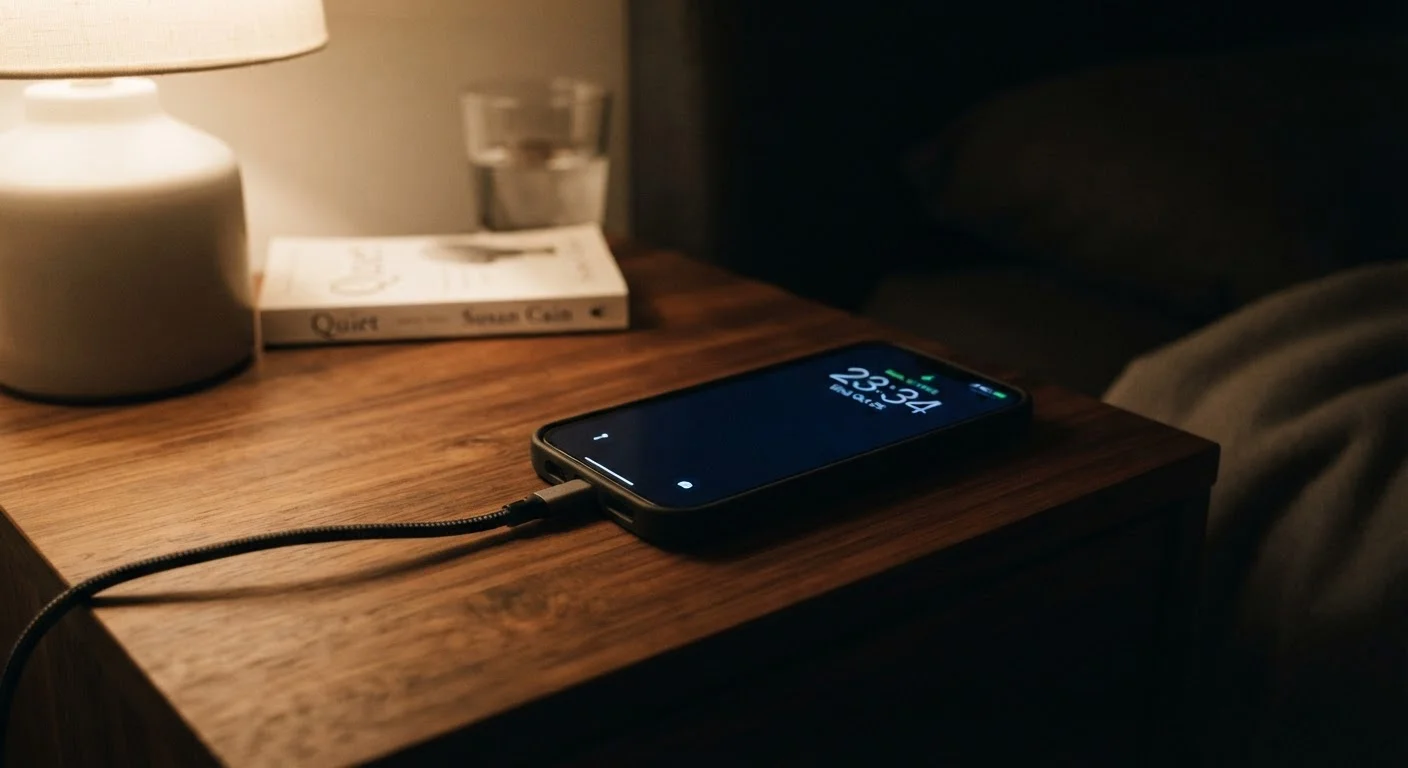
Leaving your phone plugged in overnight will overcharge and destroy the battery.
Fact
Modern devices stop actively charging once they reach 100% and manage trickle power automatically, preventing true overcharge.
Contemporary smartphones and laptops include charge management circuits that cut off the full charging current once the battery is full. Some platforms also incorporate adaptive charging features that learn your schedule and slow the final charge stage to reduce stress on the cell. While long-term storage at 100% is not ideal, the occasional overnight charge is far less damaging than many users fear.
Myth
Always charge to 100% to maximize how long you can go between charges.
Fact
Charging to around 80% regularly is gentler on battery chemistry and supports longer overall lifespan, even if it means plugging in more often.
Lithium-ion cells experience more electrochemical stress at the very top and bottom of their charge range. Manufacturers and battery researchers generally suggest keeping charge levels between roughly 20% and 80% for day-to-day use when longevity is a priority. Many device manufacturers now offer built-in 'optimized charging' settings that cap the charge at 80% or 85% for exactly this reason. For more on maintaining your devices, see our guide on extending the life of your electronics.
Myth
Third-party chargers always damage your battery or phone.
Fact
Chargers that meet established safety and compatibility standards are generally safe; the key is quality and certification, not brand name alone.
A charger that carries recognized safety certifications and matches your device's voltage and amperage requirements is unlikely to cause harm. The real risk lies in uncertified, low-quality chargers that may lack proper safety circuitry - not third-party chargers as a category. Checking for certification marks and buying from reputable retailers meaningfully reduces that risk. Also worth noting: common smartphone myths often lump all third-party accessories together unfairly.
Myth
Fast charging is harmful and should be avoided to protect battery health.
Fact
Fast charging does generate more heat than standard charging, but modern devices are designed to manage this; occasional fast charging is not significantly more damaging.
Fast charging protocols are developed in coordination with device manufacturers and include thermal management measures. The additional heat generated is real, but it is modest when charging in normal ambient conditions with an appropriate charger. Habitually fast-charging in already-hot environments (such as a sun-warmed car) compounds the thermal stress. Used sensibly, fast charging is a convenience feature, not a battery threat.
Heat Is the Real Enemy
Charging your device in direct sunlight, under a pillow, or inside a case that traps heat creates conditions that genuinely degrade lithium-ion cells faster than almost any charging habit. If your device feels hot while charging, remove the case and move it to a cooler, ventilated surface. Persistent overheating during charging warrants attention.
What Actually Supports Battery Health
Rather than following rigid rules, a few practical habits reflect what battery chemistry research actually supports:
- Avoid sustained heat during charging. Temperature is a primary driver of capacity fade in lithium-ion cells. Charge in cool, ventilated conditions where possible.
- Use partial charges when practical. Topping up from 30% to 70% is gentler than cycling from 0% to 100%, even though it feels less satisfying.
- Trust built-in optimized charging features. Many operating systems now include settings that slow the final charging stage overnight, specifically to reduce wear at high charge levels.
- Don't stress over perfection. The difference between good and ideal charging habits is measured in months over a multi-year battery lifespan - not a dramatic cliff.
For a broader look at how usage patterns and environmental factors affect your devices, see our article on maintenance habits that make a difference. It is also worth knowing that some devices consume power even when you think they are off - phantom power draw can affect how you manage your charging routine overall.
~500
Typical lithium-ion full charge cycles before noticeable capacity loss
Battery manufacturers and independent researchers commonly cite 300-500 full cycles as the range where lithium-ion cells begin showing meaningful capacity reduction, though this varies by chemistry and usage conditions.
20-80%
Recommended daily charge range for lithium-ion longevity
Battery engineers and device makers broadly recommend this partial-charge window to reduce electrochemical stress and extend usable battery lifespan.