

Key Takeaways
- Outfit formulas are repeatable clothing combinations that remove daily decision fatigue.
- Monochrome dressing, smart-casual layering, and contrast pairings cover most everyday occasions.
- Proportion and fit matter more than price tag or trend status when putting a formula together.
- A few versatile anchor pieces let you rotate formulas without needing a large wardrobe.
Why Formulas Beat Winging It
Decision fatigue is real, and the wardrobe is one of its most persistent battlegrounds. Outfit formulas - reliable, repeatable clothing combinations - sidestep the daily scramble by giving you a structural shortcut. Instead of staring at a closet full of options, you work from a pattern that you already know functions well.
The payoff isn't just speed. Formulas also improve consistency: when you know why a combination works - contrast, proportion, tonal harmony - you can adapt it across seasons and occasions without starting from scratch each time. Our morning routine guide explores how to build this kind of structure into a busy schedule.
Formulas Work Across Budgets
Outfit formulas are structural principles, not shopping lists. They work whether your wardrobe is built around high-street basics or investment pieces. What matters is fit, proportion, and how the elements relate to each other - not the price tag on any individual item. Focusing on formula logic rather than specific products is also what makes these combinations seasonally repeatable.
The seven formulas below are designed to cover the widest range of everyday situations. Each one is built around principles that hold regardless of trend cycles, so you can return to them year after year.
Seven Formulas Worth Memorising
The Monochrome Stack
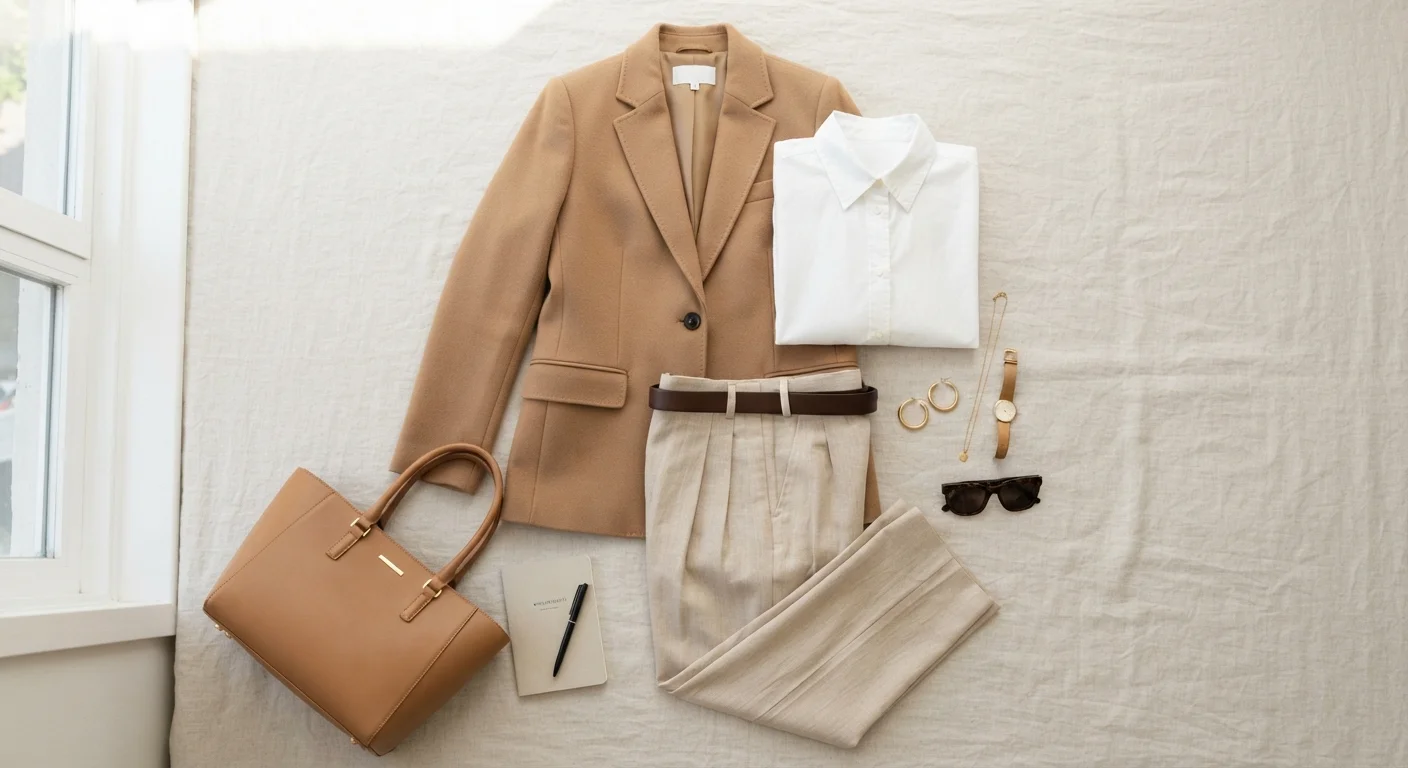
Wearing one colour family head to toe - different shades, same hue - is one of the most foolproof formulas in everyday dressing. It creates an effortlessly elongated silhouette and reads as intentional without requiring any colour-matching work. Navy trousers with a light-blue shirt and a mid-blue cardigan is a classic example; so is an all-camel or all-grey combination.
The trick is varying texture rather than tone. Smooth cotton next to brushed jersey next to structured knit keeps the look visually interesting. If you want a gentle edge, one accent - a tan belt or a darker shoe - grounds the palette without breaking the formula.
One colour family, varied textures - monochrome works every time.
The Smart-Casual Blazer Lift
A well-fitting blazer thrown over a simple outfit - dark jeans, a plain T-shirt or crewneck - instantly moves the look into smart-casual territory. The blazer does the heavy lifting so the rest of the outfit can stay relaxed. This formula travels well from a daytime work meeting to an informal dinner without any mid-day changes.
Fit is everything here. A blazer that pulls at the shoulders or swamps the torso defeats the purpose. If you want to explore what smart casual actually covers across different occasions, our dress codes guide breaks down the terminology clearly.
A well-fitted blazer is the fastest route from casual to smart-casual.
Dark Bottom, Light Top
This classic contrast pairing - dark trousers or jeans with a lighter top - works because it naturally draws the eye upward while keeping the lower half grounded. It's a proportional default that flatters a wide range of body types, which is part of why it has endured across decades.
The formula thrives on simplicity. A white button-down with navy trousers, a pale grey tee with black jeans, a cream blouse with charcoal slacks - each combination follows the same logic. For more on how this single garment punches above its weight, see the white button-down guide.
Dark bottoms and light tops create effortless contrast that works for almost everyone.
The Tonal Neutral Base Plus One Statement
Build the core outfit in neutrals - beige, white, grey, black, or soft brown - then introduce a single bolder element: a burgundy scarf, a cobalt shoe, a printed bag. This formula keeps getting dressed simple while giving you a visual focal point. Because the rest of the outfit is quiet, that one element reads as deliberate rather than loud.
Understanding how colours interact without needing art-school theory can sharpen this formula considerably. Our colour coordination guide offers practical pairing principles for exactly this kind of approach.
Let one bold element shine against a neutral base - restraint is the secret weapon.
The Layered Casual Formula
A basic tee or fitted long-sleeve, topped with an open shirt or lightweight jacket, paired with straight-leg trousers or well-fitted jeans - this three-piece layering formula adapts to both cool mornings and warm afternoons simply by removing a layer. It also adds visual depth without bulk when the pieces are proportionally balanced.
The key rule: each layer should be slightly longer or cut differently from the one beneath it. Avoid doubling up on thick fabrics at the same point on the body. If layering without bulk is a recurring challenge, this layering principles guide explains why fit and fabric order matter so much.
Three balanced layers cover you from a brisk morning to a warm afternoon seamlessly.
The Relaxed Tuck
Partially tucking a top - front-tuck or half-tuck - into trousers, a skirt, or high-waisted jeans is a simple styling move that transforms a shapeless outfit into a proportional one. It creates a visual waistline, breaks up the top-to-bottom line, and signals that the outfit was assembled on purpose rather than thrown on.
This formula works best with softer fabrics that fall naturally rather than stiff ones that poke out awkwardly. If you notice outfits feeling slightly off without knowing why, proportion is often the hidden culprit - this proportion guide covers the principle in straightforward terms.
A partial tuck is a small move with a big impact on overall outfit proportion.
The Transitional Season Formula
When weather is unpredictable, an outfit formula built around a medium-weight anchor piece - a shirt-jacket, a long cardigan, or a lightweight trench - keeps you comfortable without constant wardrobe changes. Pair it with a season-neutral base (slim trousers, a fitted top) and let footwear signal the seasonal lean: loafers for warm days, ankle boots for cooler ones.
This formula is especially valuable during the weeks between summer and fall or winter and spring. For more on navigating that tricky in-between period, see our guide on transitional dressing.
A medium-weight anchor piece and neutral base keeps you ready for unpredictable weather days.
Anchor Your Formula to Your Lifestyle
Choose two or three formulas that match the occasions you actually dress for - not the ones you occasionally wish applied to your life. If most of your days are casual, lean into the layered casual or monochrome stack. If work or social events dominate, practise the blazer lift and contrast pairing. The best formula is the one you'll actually reach for every morning.
Making Formulas Your Own
The real strength of outfit formulas is that they're starting points, not rigid rules. Once you understand the logic behind a combination - why dark bottoms ground an outfit, why a partial tuck creates a waistline - you can adjust it to suit your shape, climate, and personal taste. Our body shape guide is a helpful companion for tailoring these formulas to your specific proportions.
Accessories, pattern choices, and colour direction can all personalise a formula further. For guidance on when accessories enhance an outfit versus when they compete with it, see accessorising an outfit. And if you're ready to bring pattern into the mix, mixing patterns without the guesswork covers the principles that make it look intentional rather than accidental. The goal is a wardrobe that you can dress from quickly and confidently - and these formulas are a dependable foundation for exactly that.