

Key Takeaways
- Hard water contains dissolved calcium and magnesium that leave mineral deposits throughout your home.
- Scale buildup inside pipes gradually restricts water flow and reduces appliance efficiency.
- Water heaters, dishwashers, and washing machines are especially vulnerable to hard water damage.
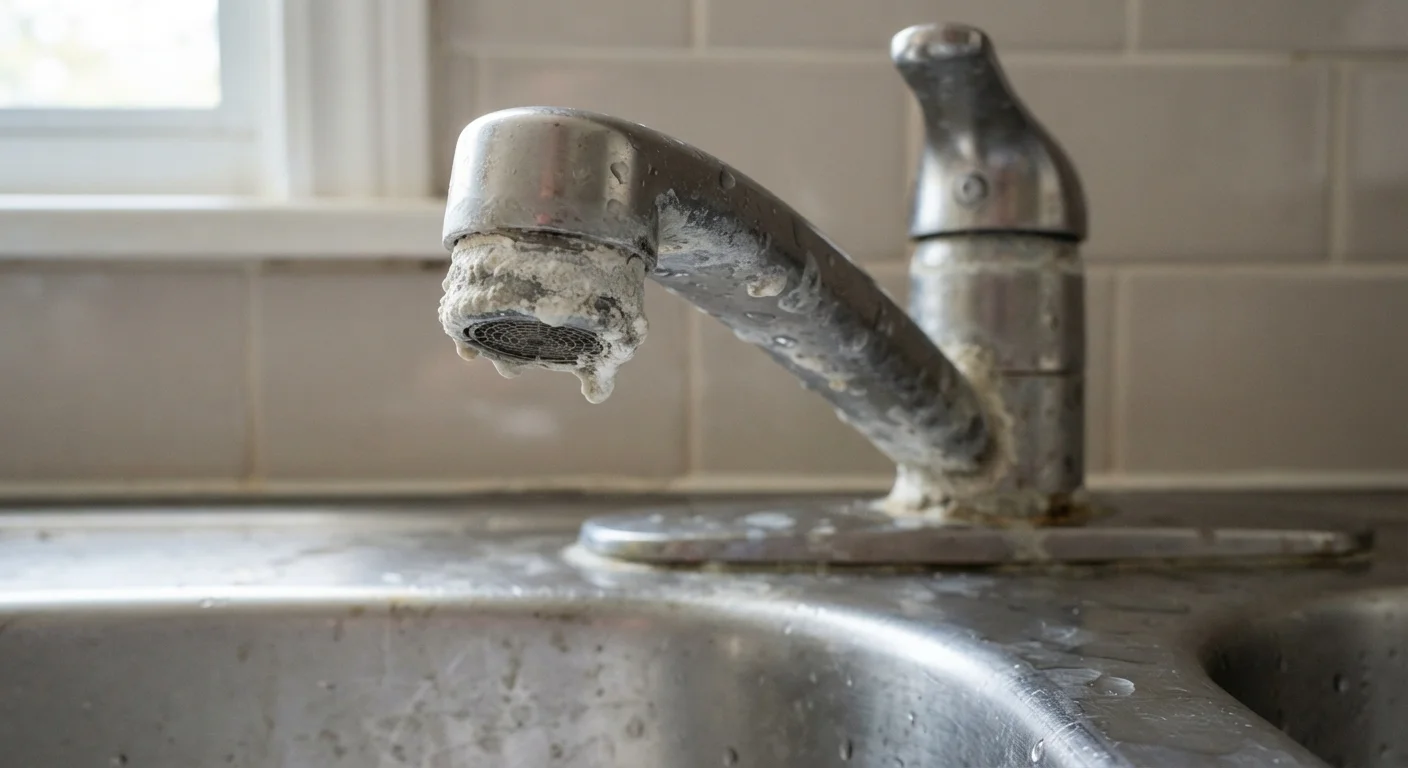
- Visible signs include white spots on dishes, soap scum on tiles, and chalky residue on faucets.
- Water softeners and descaling treatments can slow or prevent mineral accumulation.
Hard Water
Hard water is tap water that contains elevated levels of dissolved minerals - primarily calcium and magnesium. These minerals enter the water supply as it moves through rock and soil before reaching your home. The higher the mineral concentration, the "harder" the water is considered. Hard water is not a health hazard, but it does cause cumulative damage to plumbing, appliances, and fixtures over time.
Water hardness is measured in grains per gallon (GPG) or milligrams per liter (mg/L). Water above 7 GPG is generally classified as hard; above 10.5 GPG is very hard.
How Minerals Accumulate Inside Your Plumbing
Every time water flows through your pipes, it carries dissolved calcium and magnesium with it. When water is heated or simply left to sit, these minerals precipitate out and cling to whatever surface they touch - pipe walls, valve seats, and fixture interiors included. This deposit is called limescale, and it builds up one microscopic layer at a time.
Inside supply lines, scale gradually narrows the interior diameter. In a pipe that was once fully open, years of accumulation can meaningfully reduce water pressure throughout the house. Understanding how your home's plumbing system works makes it easier to recognize where scale is most likely to cause problems - particularly in elbows, valves, and the narrow inlets of fixtures where flow slows and deposits have time to set.
Your Local Water Quality Report
U.S. water utilities are required by the EPA to publish an annual Consumer Confidence Report (CCR) that includes water hardness data for your area. You can typically find yours on your utility's website or request a copy directly. This is the most accurate starting point before deciding on any treatment approach.
The Appliances Most at Risk
Hard water shortens the working life of several common household appliances by forcing them to work harder against mineral interference.
- Water heaters: Scale coats the heating elements (in electric models) or settles as sediment on the tank floor (in gas models). Both outcomes reduce efficiency - the heater has to run longer to deliver the same temperature, which increases energy use and wear on components.
- Dishwashers: Mineral deposits clog spray arm nozzles and coat interior walls, leaving dishes spotted and the machine working harder than necessary.
- Washing machines: Hard water reacts with laundry detergent to form a curd-like residue that can accumulate in the drum and on fabrics, leaving clothes feeling stiff or looking dull.
- Coffee makers and kettles: Heating elements scale up quickly. A heavily scaled kettle takes longer to boil and uses more energy per cycle.
85%
U.S. homes affected by hard water
The U.S. Geological Survey estimates roughly 85% of American homes receive hard or very hard water from their local supply.
Up to 25%
Efficiency loss in scaled water heaters
Research from water treatment industry sources suggests significant scale buildup can reduce water heater efficiency by as much as 25%, increasing energy costs.
Visible Damage to Fixtures and Surfaces
The effects of hard water aren't always hidden inside pipes. Some of the most common signs are right on the surfaces you see every day.
Faucets and showerheads develop a chalky white or cream-colored crust around their openings. This buildup can block individual spray holes in showerheads, creating uneven water distribution and reducing flow. Tile grout and tub surrounds develop soap scum more readily in hard water areas - the minerals bond with soap to create a stubborn film that doesn't rinse away cleanly. Glass shower doors accumulate a foggy mineral haze that becomes harder to remove the longer it's left untreated.
Quick Fix for Clogged Showerheads
Fill a plastic bag with undiluted white vinegar, secure it around the showerhead with a rubber band so the head is fully submerged, and leave it overnight. The acetic acid dissolves most limescale deposits without chemicals or disassembly. Rinse thoroughly before use.
Chrome and brushed nickel finishes are particularly susceptible to etching over time if limescale is repeatedly left to dry on the surface.
What You Can Do About It
Addressing hard water involves either treating the water before it enters your home or managing the deposits it leaves behind.
Whole-house water softeners connect to the main supply line and use an ion-exchange process to remove calcium and magnesium before water reaches your pipes. They are the most comprehensive solution, but they require regular salt replenishment and periodic maintenance. Salt-free conditioners (sometimes called template-assisted crystallization systems) alter the physical structure of minerals so they're less likely to stick to surfaces, without adding sodium to the water. They suit households that prefer to avoid softened water for drinking.
For existing buildup, descaling solutions - typically diluted acids such as white vinegar or citric acid - can dissolve limescale from fixtures, showerheads, and small appliances. Soaking a clogged showerhead in white vinegar overnight is a low-cost, widely used approach. For appliance interiors, follow the manufacturer's descaling instructions to avoid voiding warranties or damaging components.
If you suspect significant scale buildup in your pipes or water heater, having a plumber assess the situation is worthwhile before a buildup-related failure causes more extensive and expensive damage.