

Key Takeaways
- Natural cleaners like vinegar and baking soda work well for light cleaning but have real limitations against pathogens.
- Conventional cleaners are more reliably effective for disinfection and heavy-duty grime but carry more chemical exposure concerns.
- Cost differences between the two approaches are modest when factoring in concentration and product longevity.
- Mixing cleaners - natural or conventional - can create hazardous reactions regardless of ingredient origin.
- The most practical approach for most households is likely a combination of both, matched to the task at hand.
Our Verdict
Neither natural nor conventional cleaners win outright - each category has genuine strengths that the other lacks. Natural options excel for everyday maintenance, odor control, and low-risk surface cleaning, while conventional products remain the more dependable choice when disinfection or stubborn buildup is the priority. Matching the cleaner to the task, rather than committing to one camp, tends to deliver the best results for most homes.
| Best for | Recommended |
|---|---|
| Routine surface wiping, deodorizing, and light grease removal | Natural cleaners (vinegar, baking soda, castile soap) |
| Disinfecting bathrooms, kitchens, and high-touch surfaces after illness | Conventional EPA-registered disinfectants |
| Households with young children or chemical sensitivities | Natural cleaners for daily use, conventional for targeted disinfection |
| Removing heavy soap scum, mold stains, or baked-on grime | Conventional cleaners formulated for the specific surface |
What We Mean by Natural vs. Conventional
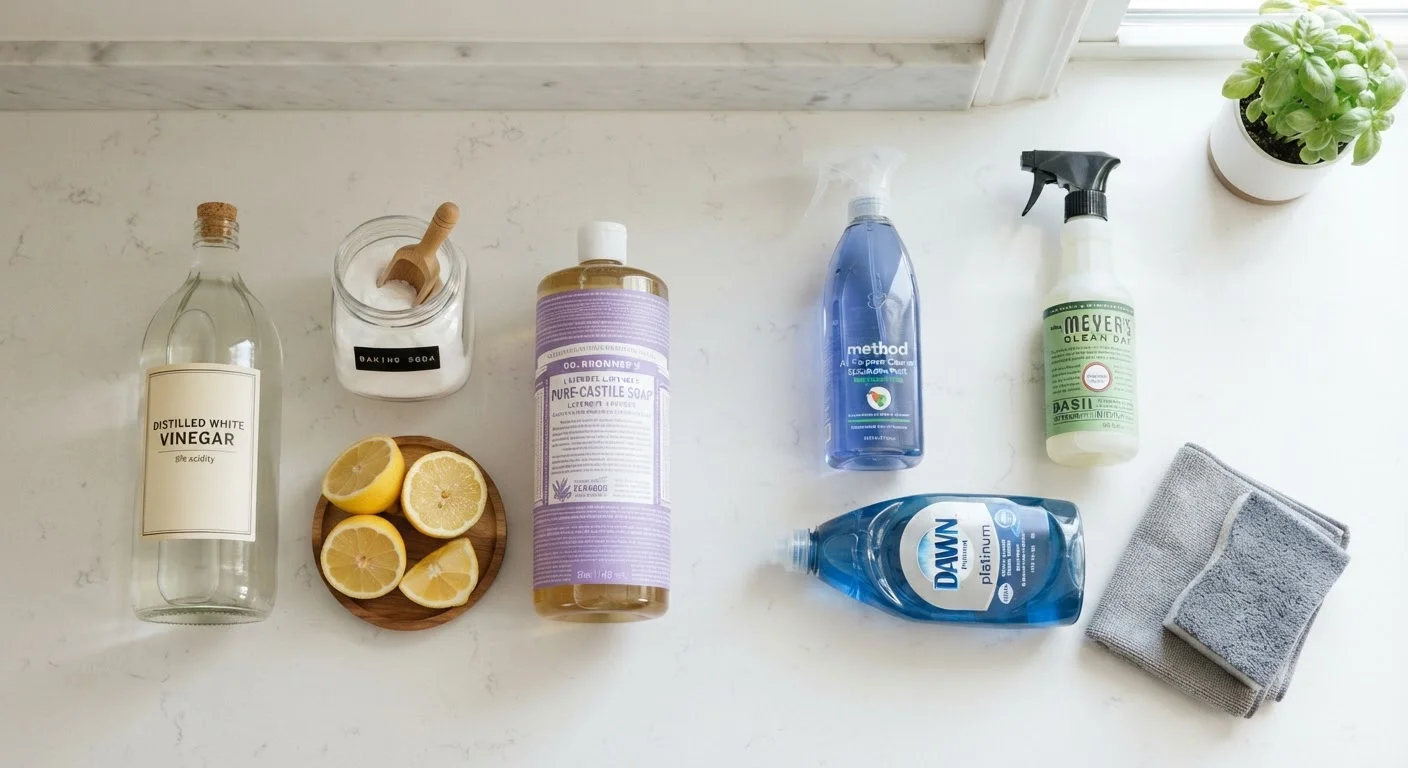
The term natural cleaner generally refers to products - or DIY mixtures - built around ingredients like white vinegar, baking soda, castile soap, lemon juice, or hydrogen peroxide. These are minimally processed, widely available, and often used in combination at home.
Conventional cleaners are commercially formulated products that typically contain surfactants, solvents, preservatives, fragrances, and in some cases registered disinfecting agents (such as quaternary ammonium compounds or sodium hypochlorite, commonly known as bleach). They are designed and tested for specific cleaning or disinfecting tasks.
It's worth noting that the word "natural" carries no regulated definition in the cleaning product industry. A product marketed as natural may still contain synthetic preservatives or fragrances. Reading ingredient lists matters more than label language.
Cleaning Power: Where Each Category Excels and Falls Short
Natural cleaners perform reliably for a meaningful range of everyday tasks. White vinegar, which is mildly acidic, dissolves mineral deposits, cuts light grease, and neutralizes odors. Baking soda is a gentle abrasive and deodorizer well suited to scrubbing sinks and absorbing refrigerator smells. Castile soap - a plant-oil-based soap - lathers and lifts surface grime effectively.
Where natural cleaners tend to fall short is disinfection. Vinegar does have some antimicrobial properties, but research consistently shows it is not an EPA-registered disinfectant and does not reliably eliminate pathogens like Salmonella, Staphylococcus aureus, or norovirus at household concentrations. For surfaces where true disinfection matters - cutting boards after raw meat, toilet seats during illness - vinegar alone is not sufficient.
Conventional disinfectants, when used according to label directions, are tested and registered by the EPA to kill specific pathogens. They are also generally more effective against heavy soap scum, mildew staining, and baked-on kitchen grease. The trade-off is increased chemical exposure and more stringent ventilation requirements.
| Natural Cleaners | Conventional Cleaners | |
|---|---|---|
| Disinfection efficacy | Not EPA-registered; limited pathogen kill | EPA-registered options available; reliable kill claims |
| Everyday cleaning performance | Good for light grease, odors, mineral deposits | Good to excellent across a wide range of soils |
| Surface compatibility | Can damage natural stone and some metals | Varies by formula; check label for surface guidance |
| Chemical exposure risk | Generally lower acute toxicity | Higher; requires ventilation and safe storage |
| Cost per use | Low for DIY; moderate for packaged products | Moderate; lower with concentrated formats |
| Environmental biodegradability | High for core ingredients | Variable depending on formula |
Be cautious about combining cleaners from either category. Learn which combinations are dangerous - for example, mixing vinegar with hydrogen peroxide in the same container, or bleach with ammonia, can produce harmful compounds.
Cost, Safety, and Environmental Considerations
On a pure per-use cost basis, DIY natural cleaners (particularly vinegar and baking soda) are typically inexpensive. However, the cost advantage narrows when you compare concentrated conventional products used in small amounts. Neither approach is dramatically cheaper across a full year of household use for most families.
Safety and exposure: Conventional cleaners - especially those containing bleach, ammonia-based compounds, or strong solvents - require careful handling, good ventilation, and secure storage away from children. Some individuals experience respiratory irritation or skin sensitivity with repeated exposure to common cleaning chemicals. Natural ingredients generally carry lower acute toxicity, though undiluted vinegar or essential oils used in some natural formulas can irritate skin and eyes.
Test Before You Apply Widely
Whether using a natural or conventional cleaner on a new surface, always test a small, inconspicuous area first. Vinegar can etch natural stone; bleach-based cleaners can discolor grout or fabrics. A 30-second spot test can prevent an expensive or irreversible mistake.
Environmental impact is more nuanced than marketing suggests. Vinegar and baking soda biodegrade readily. Many conventional cleaners contain surfactants and preservatives with varying environmental persistence. That said, the plastic packaging of both product types contributes similarly to waste, and concentrated conventional formulas may have a smaller packaging footprint per use than single-use natural product bottles.
Building a consistent cleaning routine - natural or conventional - helps avoid the reactive, over-application of products that drives both cost and exposure up. A structured cleaning schedule can help you use any cleaner more intentionally.
A Practical Framework for Choosing
Rather than an all-or-nothing commitment, most households benefit from using each category where it is genuinely strongest:
- Daily wipe-downs and deodorizing: Diluted castile soap or a vinegar-water spray work well and minimize unnecessary chemical exposure during routine tasks.
- Bathroom and kitchen disinfection: Use an EPA-registered disinfectant after illness, when handling raw proteins, or in situations where pathogen reduction is the actual goal - not just visual cleanliness.
- Tough stains and mineral buildup: Assess by surface type. Vinegar works on some mineral deposits but can damage natural stone (marble, granite) - a common and costly mistake. Conventional limescale removers may be more appropriate and safer for those surfaces.
- Households with sensitivities: Natural options are a reasonable default for daily use, with conventional products reserved for specific tasks where efficacy matters more than reduced chemical load.
Whatever you choose, follow product directions, store cleaners safely, and never mix products without verifying compatibility first.