

Key Takeaways
- Preventive care focuses on reducing health risks before symptoms appear.
- Reactive medicine addresses conditions after they have already developed.
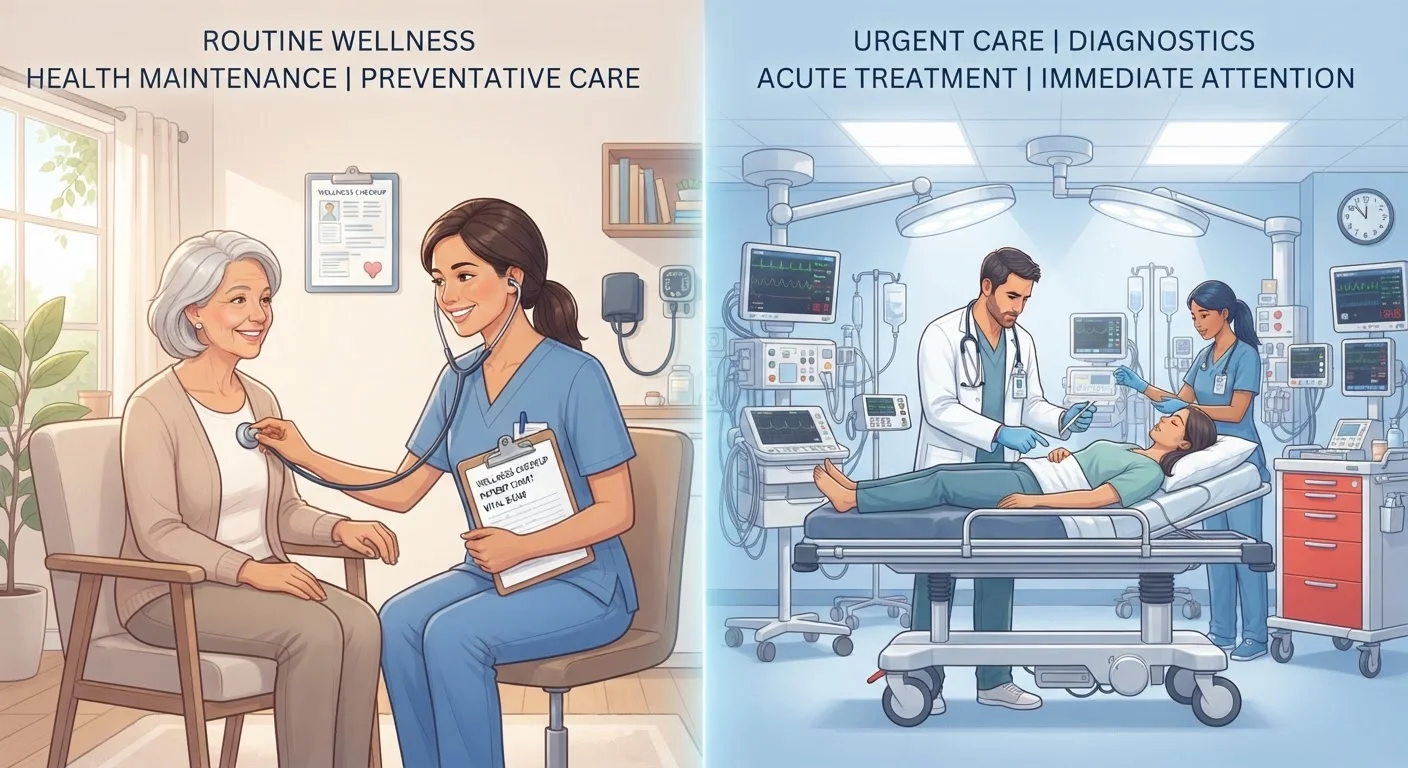
- Both approaches are necessary and complementary parts of a complete healthcare strategy.
- Routine screenings and lifestyle habits are cornerstones of effective preventive care.
- Early detection through preventive care can make treatment more manageable when conditions do arise.
Option A
Preventive Care
The proactive, long-term approach to maintaining wellness.
Best for: Individuals looking to reduce health risks, catch issues early, and build sustainable healthy habits over time.
Option B
Reactive Medicine
The responsive, essential approach to treating illness and injury.
Best for: Anyone experiencing active symptoms, illness, injury, or a medical crisis requiring immediate diagnosis and treatment.
If you want to reduce your long-term risk of chronic illness
Preventive Care
Regular screenings, checkups, and healthy lifestyle habits are specifically designed to identify and reduce risk factors before disease develops.
If you are experiencing active symptoms or a health crisis
Reactive Medicine
When illness, injury, or acute symptoms arise, reactive medicine provides the diagnosis, treatment, and management needed for recovery.
If you want a complete, well-rounded approach to health
Preventive Care
While reactive medicine handles what goes wrong, preventive care reduces the frequency and severity of those moments - making both essential together.
Two Philosophies, One Goal: Your Health
At their core, preventive care and reactive medicine share the same ultimate aim - keeping you as healthy as possible. But they approach that goal from very different directions, and understanding both can help you make smarter, more confident decisions about your own wellbeing.
Preventive care is the practice of taking steps to protect your health before problems develop. Think of it as routine maintenance: annual physical exams, vaccinations, blood pressure screenings, and lifestyle choices like regular physical activity and a balanced diet. These efforts are designed to catch warning signs early or, better yet, prevent issues from starting at all.
Reactive medicine, by contrast, is what happens when the healthcare system responds to a problem that already exists. You feel chest pain, develop a persistent cough, or break a bone - and you seek medical attention to treat that specific condition. Reactive medicine is essential and, in many situations, life-saving. It is simply structured around the presence of illness or injury rather than its prevention.
Neither approach is superior on its own. They work together as part of a complete healthcare picture. The goal of understanding the difference is not to choose one over the other - it is to recognize where each fits in your life. For a deeper look at building proactive habits, see our beginner's guide to building a preventive health routine.
| Criterion | Preventive Care | Reactive Medicine |
|---|---|---|
| Primary focus | Preventing or detecting issues early | Diagnosing and treating existing illness |
| Timing | Ongoing, before symptoms appear | After symptoms or illness emerge |
| Examples | Annual checkups, screenings, vaccines | ER visits, prescriptions, surgery |
| Patient role | Active, routine participation | Responsive to a health event |
| Long-term aim | Reduce risk and maintain wellness | Restore health and manage conditions |
| Urgency | Low urgency, scheduled | Often urgent or immediate |
What Preventive Care Actually Looks Like
Preventive care encompasses a broad range of activities, many of which may already be part of your life. Routine checkups with a primary care provider, recommended health screenings (such as cholesterol checks, blood glucose tests, or cancer screenings), and immunizations all fall under this umbrella. Lifestyle factors - physical activity, sleep habits, nutrition, and stress management - are also widely recognized as preventive tools.
Preventive care is often divided into three categories:
- Primary prevention aims to stop a health problem before it starts - like vaccinations or quitting smoking.
- Secondary prevention focuses on early detection, catching conditions in their earliest, most treatable stages through screenings.
- Tertiary prevention helps people manage existing conditions to prevent complications or progression.
It is worth noting that preventive care needs shift across a lifetime. The screenings recommended for a 25-year-old differ considerably from those for a 60-year-old. Our overview of preventive care at every life stage breaks this down in detail. You may also want to explore common preventive health myths that sometimes discourage people from taking action.
7 in 10
Deaths linked to chronic, preventable conditions
According to the CDC, approximately 7 in 10 deaths in the United States are attributed to chronic diseases, many of which are influenced by preventable risk factors.
~35%
US adults who skip annual checkups
Research from the Kaiser Family Foundation has found that a significant proportion of US adults do not see a doctor for routine preventive visits each year.
Why the Balance Between Both Matters
One common misconception is that prioritizing preventive care means avoiding or dismissing reactive medicine. In reality, they are deeply interconnected. Preventive care can reduce the likelihood of needing urgent intervention - but when reactive care is needed, it should never be delayed or avoided.
For example, someone who maintains regular checkups and monitors their blood pressure may catch hypertension early enough to address it through lifestyle changes and medical guidance. But if a hypertensive crisis occurs, reactive emergency care becomes immediately essential. Preventive habits do not make reactive medicine obsolete - they work alongside it.
When to Seek Care Right Away
No amount of preventive care should delay seeking help for urgent symptoms. Chest pain, difficulty breathing, sudden severe headache, or signs of stroke require immediate emergency attention. If you are experiencing a medical emergency, call 911 or go to the nearest emergency room. Preventive habits support long-term health - they do not replace acute medical care when it is needed.
Understanding which type of care you need - and when - is partly about knowing who to involve. Your primary care provider is often the starting point for both routine preventive visits and initial assessments when something feels wrong. Our article on primary care vs. specialist for preventive needs can help you navigate those decisions. Regular physical activity is also one of the most well-studied preventive strategies available - learn how it connects to long-term wellness in our piece on physical activity and preventive health.
This article is for general informational and educational purposes only and is not a substitute for professional medical advice, diagnosis, or treatment. Always consult a qualified healthcare provider with questions about your health or any medical condition.