

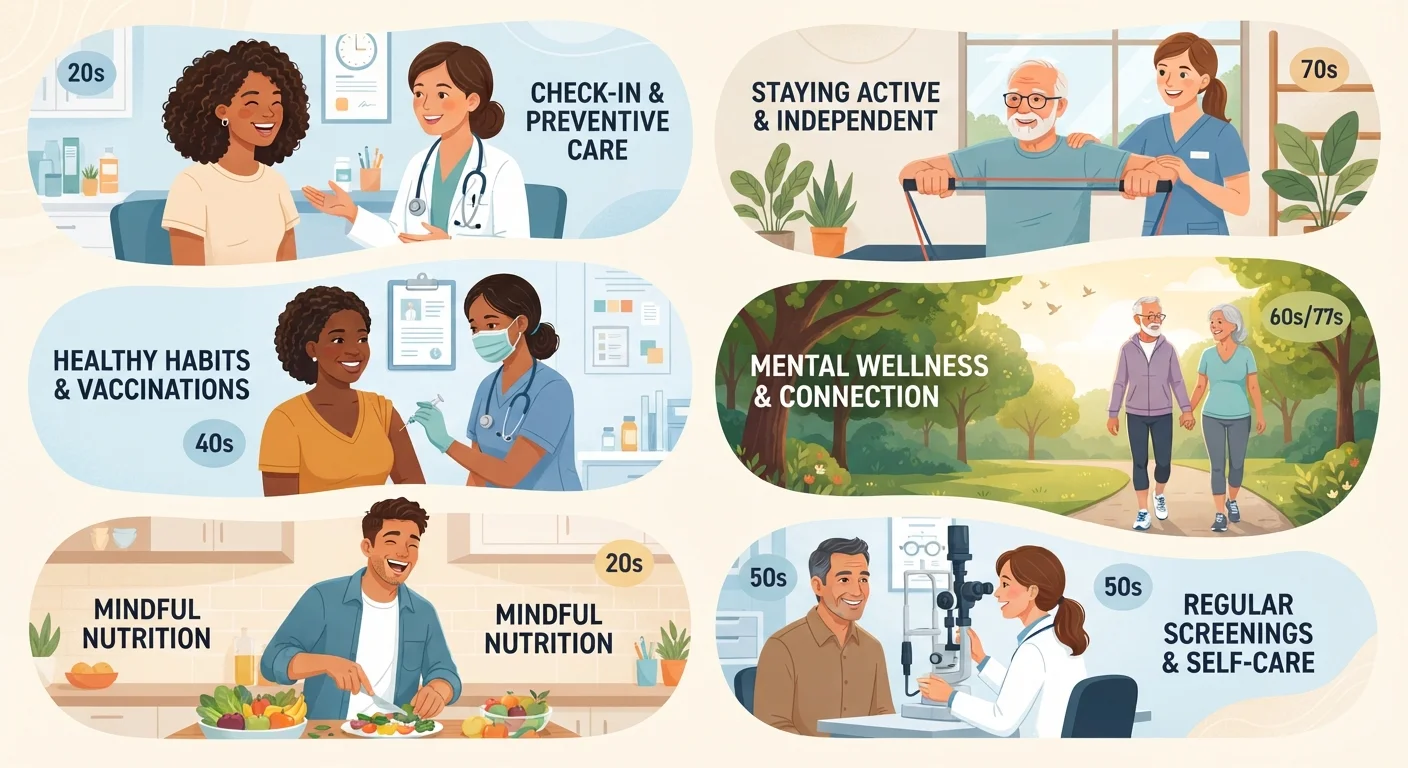
Key Takeaways
- Preventive care priorities shift meaningfully across your 20s, 40s, and 60s.
- Many screenings are recommended before symptoms appear - feeling well does not mean screenings can wait.
- Vaccinations remain important throughout adulthood, not just in childhood.
- Lifestyle habits - sleep, movement, nutrition - support health at every age.
- A primary care provider is your best partner for personalizing a preventive care plan.
Why Preventive Care Matters at Every Age
Preventive care is health maintenance you pursue before illness takes hold - not a response to symptoms, but a steady investment in your future self. It encompasses routine check-ups, screenings, immunizations, and lifestyle guidance designed to detect risk early and reduce the likelihood of serious disease.
The evidence behind preventive care is strong. Major health organizations, including the U.S. Preventive Services Task Force (USPSTF) and the Centers for Disease Control and Prevention (CDC), consistently show that early detection of conditions such as hypertension, type 2 diabetes, and several cancers dramatically improves outcomes. Yet surveys regularly find that many adults skip recommended screenings, often because they feel healthy or assume certain tests are only for older people.
If you've encountered that thinking, you're not alone - and you can learn more about how those misconceptions hold people back in our piece on preventive health myths.
“An ounce of prevention is worth a pound of cure. The best time to address health risks is before they become health problems.”
— U.S. Preventive Services Task Force, Independent panel of national experts in disease prevention and evidence-based medicine
This article is for general informational and educational purposes only, and is not a substitute for professional medical advice. Always consult a qualified healthcare provider about your individual health needs.
Young Adulthood (Ages 18-39): Building Healthy Foundations
Early adulthood is often the period when people feel their healthiest - and, paradoxically, when preventive care is most easily overlooked. Yet these years are ideal for establishing habits and baselines that protect you for decades.
Key priorities in your 20s and 30s:
- Annual blood pressure checks: Hypertension often has no symptoms. Knowing your numbers early gives you time to address lifestyle factors before medication becomes necessary.
- Cholesterol and blood glucose: Baseline readings in early adulthood help identify trends over time. Frequency depends on individual risk factors - discuss timing with your provider.
- Cervical cancer screening (Pap smear/HPV test): Recommended beginning at age 21 per USPSTF guidelines, with frequency depending on test type and results.
- STI screenings: Routine screening for sexually transmitted infections, including HIV, is recommended for sexually active adults, with frequency based on individual risk.
- Mental health: Depression screening is recommended for all adults. This decade often brings significant life stressors - establishing mental health support early matters.
- Vaccines: Ensure you are current on boosters such as Tdap and flu vaccine, and discuss HPV vaccination if not previously completed.
Even if you haven't had a check-up in years, there's no penalty for starting now. Schedule a baseline appointment and ask your provider to help you map out what's overdue - most will welcome the conversation.
Many adults feel embarrassed about gaps in care, which delays them further. Practitioners understand that life gets in the way, and a non-judgmental fresh start is always possible.
When you go to any health appointment, bring a written list of your current medications, supplements, and any symptoms you've noticed - even ones that seem minor or unrelated.
Studies on clinical communication show that patients who arrive prepared get more out of shorter visits. Providers can connect dots between seemingly unrelated details that patients might not flag on their own.
For a broader picture of how your physical health evolves across these years, see our guide on physical health across every decade.
Midlife (Ages 40-59): Catching Changes Early
The middle decades bring a meaningful shift in preventive priorities. Metabolic changes, hormonal transitions, and cumulative lifestyle effects can increase risk for several chronic conditions - making proactive screening especially valuable.
Recommended focus areas:
- Colorectal cancer screening: The USPSTF recommends beginning colorectal cancer screening at age 45 for average-risk adults. Options include colonoscopy, stool-based tests, and others - your provider can help you choose.
- Mammography: Breast cancer screening recommendations vary by organization and individual risk; discuss your personal history with your provider to determine the right approach and timing.
- Blood pressure and lipids: More frequent monitoring is often warranted as cardiovascular risk increases with age.
- Diabetes screening: The USPSTF recommends screening for prediabetes and type 2 diabetes beginning at age 35 for those with overweight or obesity.
- Vision and hearing: Gradual changes in both are common in midlife; periodic evaluation supports quality of life and safety.
- Bone density: Women approaching or in menopause should discuss bone health and whether a baseline DEXA scan is appropriate for their risk profile.
Don't Wait for Symptoms to Appear
Many serious conditions - including high blood pressure, prediabetes, and early-stage cancers - produce no noticeable symptoms in their earliest, most treatable phases. Feeling healthy is not a reliable signal that screenings can be skipped. Following age- and risk-appropriate guidelines is the safest approach.
Staying organized across these screening types can feel complex. Your primary care provider plays a central coordinating role - learn more about how to navigate that relationship in our article on primary care vs. specialist.
Older Adults (Ages 60+): Protecting Independence and Vitality
Preventive care in later life shifts toward maintaining function, quality of life, and independence. While the number of recommended screenings may increase, the goal remains the same: catch problems early and support your ability to thrive.
Important areas of focus:
- Lung cancer screening: Annual low-dose CT scanning is recommended for adults aged 50-80 with a significant smoking history (current or former heavy smokers). Discuss eligibility with your provider.
- Osteoporosis: Bone density screening is recommended for women aged 65 and older, and for younger postmenopausal women with elevated fracture risk.
- Cognitive health: While no universal cognitive screening is mandated, discussing any memory concerns with your provider opens pathways for evaluation and support.
- Fall prevention: Exercise interventions and home safety assessments are evidence-based strategies for reducing fall risk - a leading cause of injury in older adults.
- Vaccinations: Shingles (Shingrix), pneumococcal, annual flu, and updated COVID-19 vaccines are all recommended for most adults 65 and older. Staying current is one of the simplest preventive steps available.
- Vision and dental care: Regular eye exams support glaucoma detection; dental visits help identify oral health issues linked to systemic disease.
Start With What You Can Control
If navigating multiple screenings feels overwhelming, focus first on the two or three that are most overdue for your age group. Ask your primary care provider to prioritize alongside you - a phased approach is better than avoiding care altogether.
Screenings, Vaccines, and Lifestyle Habits: What Applies to Everyone
Some preventive principles hold across all life stages and are worth reinforcing regardless of your age.
Universal preventive habits:
- Annual flu vaccination: Recommended for virtually all adults every year by the CDC.
- Blood pressure awareness: Adults of all ages benefit from knowing their numbers.
- Not smoking: If you currently smoke, cessation support is available through healthcare providers and proven programs - quitting at any age yields real health benefits.
- Sleep: Consistently poor sleep is associated with increased risk for cardiovascular disease, metabolic conditions, and mental health challenges. Most adults function best with seven to nine hours nightly.
- Physical activity: Current public health guidelines suggest at least 150 minutes of moderate-intensity activity per week for adults, though any movement is better than none. See our physical health hub for more on building sustainable habits.
- Healthy eating patterns: No single diet is right for everyone, but diets emphasizing vegetables, whole grains, legumes, and lean proteins are associated with lower chronic disease risk.
45%
Adults skipping recommended screenings
CDC data suggest that nearly half of U.S. adults are not up to date on at least one recommended preventive service.
150 min/week
Recommended moderate physical activity
The U.S. Department of Health and Human Services Physical Activity Guidelines for Americans recommend at least 150 minutes of moderate-intensity aerobic activity per week for adults.
Age 45
Start of colorectal cancer screening
The U.S. Preventive Services Task Force updated its recommendation to begin colorectal cancer screening at age 45 for average-risk adults.
Making Preventive Care Work in Real Life
Understanding what's recommended is only the first step - the real challenge is making preventive care a consistent part of your life.
Practical strategies that help:
- Schedule annual wellness visits
- Even when you feel fine, a yearly check-in with your primary care provider creates space to review screenings, update vaccines, and raise any concerns before they escalate.
- Keep a personal health record
- Track your last mammogram, colonoscopy, or cholesterol test date. A simple list - on paper or in a notes app - helps you and your provider stay organized.
- Use preventive benefits in your insurance
- Under the Affordable Care Act, many preventive services are covered at no cost-sharing for plans in the individual and employer markets. Check with your insurer to understand your specific coverage.
- Address access barriers directly
- If cost, transportation, or time are obstacles, community health centers, federally qualified health centers (FQHCs), and local public health departments often offer low- or no-cost preventive services.
Preventive care is a partnership - one that works best when you feel informed and supported. We hope this overview helps you feel equipped to take the next step, whatever life stage you're in.
This article is for general informational and educational purposes only and does not constitute medical advice. Screening guidelines vary based on individual risk factors, family history, and other considerations. Please consult a qualified healthcare professional for guidance tailored to your personal health situation.