

Key Takeaways
- Reality TV works partly because watching others navigate conflict and vulnerability is psychologically compelling.
- The genre exploits our natural tendency to compare ourselves to others and make social judgments.
- Social media has supercharged reality TV's cultural footprint, turning contestants into full-blown celebrities.
- Audiences can engage critically with reality TV while still genuinely enjoying it.
- The line between 'real' and 'produced' is almost always blurrier than the genre implies.
Reality Television
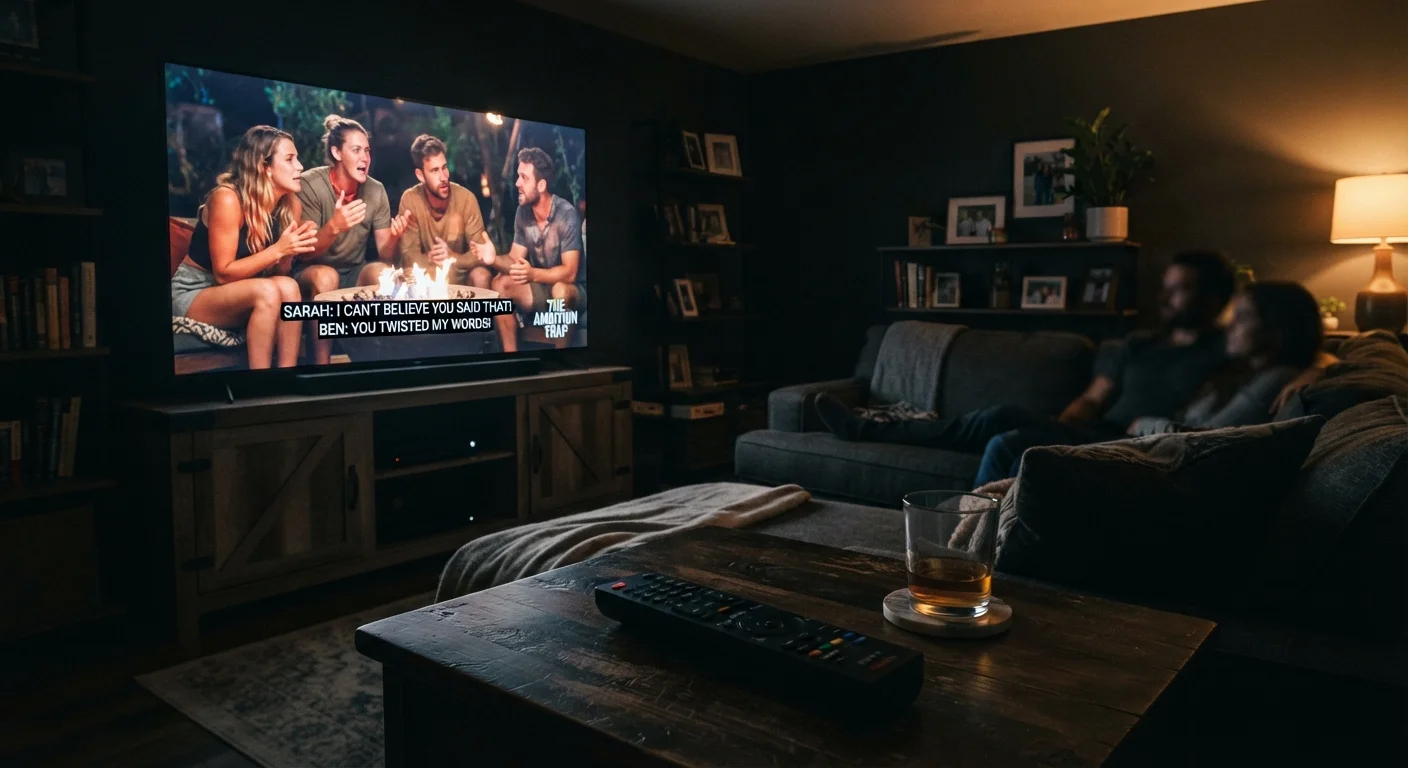
Reality television is a genre of programming that presents unscripted situations featuring ordinary people or celebrities navigating real-world scenarios - from competitions and social experiments to relationship drama and survival challenges. The format promises an unfiltered look at authentic human behavior, even when producers heavily shape the narrative. Its appeal lies in the tension between what feels spontaneous and what is carefully constructed for maximum entertainment value.
Media scholars often describe reality TV as a hybrid genre that blends documentary techniques, game-show mechanics, and soap-opera narrative arcs - making it resistant to a single clean definition.
The Mirror We Can't Stop Looking Into
There's a reason millions of Americans flip on a show featuring strangers making questionable decisions - and it isn't just a lack of anything better to watch. Reality television has held a grip on popular culture for more than three decades because it functions as a very specific kind of mirror: one that reflects human behavior at its most unguarded, competitive, and emotionally raw.
Psychologists point to social comparison theory - the idea that humans instinctively evaluate themselves by measuring against others - as a key engine beneath the genre's appeal. Watching someone crumble under pressure, make a choice you'd never make, or triumph against the odds all give viewers reference points for their own lives. It's not voyeurism in any sinister sense; it's a deeply wired human habit playing out on a 65-inch screen.
The genre also delivers something scripted drama often can't: genuine unpredictability. Even the most meticulously plotted series can't replicate the moment a contestant says something so unfiltered it becomes a meme by morning. That friction between the produced environment and the uncontrolled human inside it is the secret sauce.
“Reality television has tapped into something very primal: the human need to observe how others handle conflict, resources, and social hierarchies - the same things our ancestors had to navigate every day.”
— Steven Reiss, Psychologist and professor emeritus, Ohio State University, known for research on human motivation
From 'Survivor' to Streaming: How the Genre Evolved
The modern reality format didn't arrive fully formed. Early competition shows established the grammar - alliances, eliminations, confessional cameras - while docusoaps (think the franchise that follows various wealthy social circles across American cities) layered in ongoing relationship drama. Each wave borrowed from the last while responding to what audiences found most compelling.
~40%
Share of primetime US TV hours that are unscripted or reality-format
Industry analyses have consistently found that unscripted content accounts for a substantial portion of broadcast primetime schedules, particularly on major networks.
1992
Year 'The Real World' premiered, launching the modern reality era
MTV's 'The Real World' is widely cited by media historians as the format that established the conventions - confessional cameras, cast dynamics, ongoing drama - that define the genre today.
51M+
Viewers for 'Survivor' Season 1 finale (2000)
According to Nielsen historical records, the first 'Survivor' finale drew one of the largest audiences in US television history at the time, cementing the genre's mainstream arrival.
Streaming platforms changed the equation again. Binge-release models created space for longer character arcs, while international formats - imported competition shows, dating programs developed overseas - introduced American audiences to cultural templates that felt fresh. Social media's rise ran parallel, and the two forces fed each other in ways the early producers of 'Big Brother' never anticipated. Today, a contestant's off-camera persona, social media presence, and post-show trajectory can matter as much as anything that happens on screen.
That ecosystem has made reality TV one of the most powerful celebrity-creation machines in entertainment. It's worth noting that the intense public attention contestants attract - including passionate fan communities - mirrors the dynamics explored in parasocial relationships, where viewers feel genuine connection to people who have no idea they exist.
The Psychology of Watching People We Wouldn't Want to Be
Here's the genuine paradox at the genre's core: audiences are often most riveted by contestants they'd never want to emulate. The loud villain, the person making clearly self-destructive choices, the competitor whose strategy backfires spectacularly - these are frequently the figures who dominate conversation and drive ratings.
Part of the explanation is downward social comparison: watching someone else stumble can produce a subtle but real sense of reassurance. Another factor is narrative momentum - producers understand that conflict is the engine of story, and they structure editing and casting to ensure there's always a foil, always a ticking clock, always something at stake.
Watch With Awareness, Not Guilt
Enjoying reality TV doesn't require turning off your critical thinking - it often works best alongside it. Noticing editing choices, producer manipulation, and narrative construction can actually deepen your appreciation of the genre as a craft. You can find the drama compelling and understand exactly how it was built for you at the same time.
The drama that plays out on reality television also shares DNA with the public feuds that have long captivated audiences in entertainment more broadly. The ingredients - perceived betrayal, public confrontation, loyalty tested under pressure - are explored in depth in what makes celebrity rivalries stick. Reality TV just delivers those ingredients on a weekly, episodic schedule.
Critically, most viewers hold their enjoyment of the genre alongside a clear-eyed awareness that what they're watching is shaped by producers. That dual awareness - I know this is constructed, and I'm still invested - is part of what makes the experience pleasurable rather than deceptive. If you ever find the drama bleeding into real stress, staying level-headed about pop culture is a worthwhile recalibration.
What the Genre Tells Us About Ourselves
Reality TV's longevity isn't an accident or a symptom of cultural decline - it reflects something genuine about how humans process social information, construct identity, and seek entertainment. The format has proven remarkably adaptable: when competition fatigue sets in, docusoaps rise; when celebrity access feels stale, the genre pivots to ordinary people in extraordinary circumstances.
For viewers experiencing streaming fatigue, reality TV often functions as comfort food - familiar in structure, low in cognitive demand, and easy to watch socially. That's not a criticism; it's a legitimate mode of engagement with a demanding media landscape.
What the genre ultimately surfaces is how hungry audiences are for story, stakes, and human connection - even when the connection is mediated, edited, and broadcast to millions. We watch people we'd never want to be because doing so helps us figure out, quietly and entertainingly, exactly who we are.