
Key Takeaways
- Most viral slang originates in marginalized or niche communities before entering mainstream use.
- Social media platforms dramatically accelerate the speed at which new words spread.
- When slang crosses over, its original meaning often shifts or loses specificity.
- Media coverage and celebrity use are the two biggest amplifiers of new language.
- Language adoption is a form of cultural exchange - and sometimes cultural appropriation.
Internet Slang Diffusion
Internet slang diffusion is the process by which words, phrases, and expressions that originate in specific online communities gradually spread into wider cultural use - eventually appearing in news headlines, brand copy, and everyday conversations. This journey often takes a term from a small, tight-knit subculture all the way to the mainstream in a matter of months. The speed and path of that spread depend on social platforms, influencers, and media amplification.
Linguists study this phenomenon under the broader umbrella of language change and lexical diffusion - the idea that new words spread through populations in patterns that can be observed and sometimes predicted.
Where the Words Come From
Almost every word that eventually trends on social media started somewhere much smaller. The ballroom scene of New York gave mainstream culture 'slay,' 'shade,' and 'reading.' Black Twitter incubated 'lowkey,' 'no cap,' and 'periodt' before they appeared in brand marketing. Gaming communities popularized 'GG,' 'noob,' and 'respawn' into general usage. The pattern is remarkably consistent: a tight-knit community develops language that fits its specific experiences, and that language eventually becomes too useful - or too cool - to stay contained.
Linguists describe this as lexical diffusion, the gradual spread of a linguistic innovation through a population. What's changed in the internet age is the speed and scale of that diffusion. Platforms give niche communities global visibility, which means the words they coin reach potential adopters almost instantly.
Language Change Is Always Ongoing
Slang adoption isn't a new phenomenon triggered by the internet - it's been documented throughout history as communities come into contact. What social media changed is the speed and visibility of that process, not the process itself. Scholars of linguistics note that every generation has worried about 'new' language corrupting the old - and every generation's slang eventually became part of the standard vocabulary.
The Pipeline: From Forum to Feed to Headline
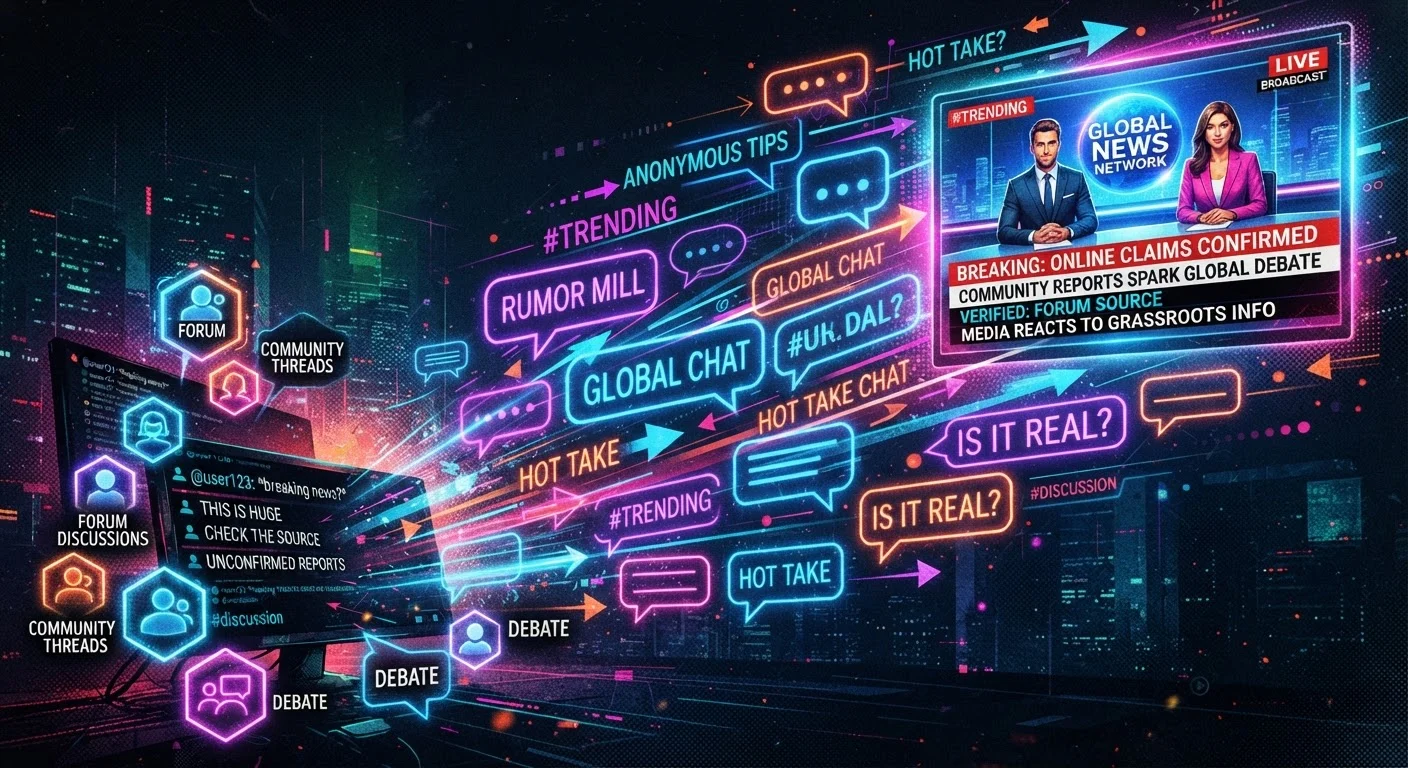
The typical path a slang term takes looks something like this: it emerges in a small community (a subreddit, a Discord server, a specific corner of Tumblr or TikTok), gets picked up by creators with larger audiences who find it funny or useful, then reaches celebrities or mainstream influencers who expose it to millions. From there, journalists and brand accounts notice the pattern - and suddenly the word is everywhere.
TikTok has become the single most powerful accelerant in this pipeline. The platform's algorithm surfaces content across community lines in ways older platforms didn't, so a term coined in one subculture can reach completely unrelated audiences within hours. This is a big reason why words like 'era' (as in 'I'm in my villain era') or 'roman empire' became conversational shorthand so quickly - TikTok's structure practically guarantees cross-pollination.
For more on how viral content spreads through these same channels, see how virality actually works.
17 days
Average TikTok trend lifespan before peak adoption
Research from social listening firms has tracked how quickly audio and phrase trends peak on TikTok compared to older platforms, where the same cycle could take months.
70%+
Of Gen Z who use slang from online communities daily
Surveys on youth language habits consistently find that the majority of younger Americans incorporate internet-derived terms into daily speech, often without knowing the words' origins.
What Gets Lost in Translation
Here's the part that cultural critics and linguists often flag: when slang crosses over, something is frequently left behind. The word travels; the full context doesn't. 'Slay' in ballroom culture carried weight tied to performance, identity, and survival in marginalized spaces. In a shampoo ad, it just means 'good job.' That flattening is not neutral - it's a form of erasure, even when the adoption is well-intentioned.
This conversation sits at the intersection of language, power, and representation. Communities whose language gets borrowed rarely receive credit, and sometimes face mockery for the same words that get praised when used by others. Understanding where slang comes from isn't just interesting trivia - it's a form of cultural literacy.
“Language has always changed through contact between communities. The internet hasn't changed that fundamental truth - it's just collapsed the timeline from generations to weeks.”
— John McWhorter, Linguist and author specializing in language change and Black American English
If you're interested in how visuals carry similar layers of meaning and loss, the language of memes covers parallel territory in a compelling way.
Why Some Words Stick and Others Disappear
Not every term that goes viral becomes permanent vocabulary. Some words peak and vanish with the moment that created them. Others embed themselves so deeply into everyday speech that people forget they were ever slang. What separates them?
- Utility: Words that name something previously unnamed tend to last. 'Ghosting,' 'doomscrolling,' and 'parasocial' all survived because they filled real gaps in the language.
- Brevity: Short, punchy terms are easier to adopt and integrate into natural speech.
- Flexibility: Words that work as multiple parts of speech (noun, verb, adjective) spread more easily and stick longer.
Trend-chasing language, by contrast, often burns bright and fades. When a term is tied to a single meme, moment, or celebrity, its shelf life is limited to that reference's relevance. For a parallel look at how visual trends follow similar rules, reading a trend versus a lasting shift offers useful framing.
Curious About a Word's Origins?
Before using new slang in a professional or public context, a quick search on Know Your Meme or the Oxford English Dictionary's online edition can reveal a term's documented origin and evolution. Understanding where a word comes from doesn't mean you can't use it - it just means you're engaging with language more thoughtfully.
Being a thoughtful consumer of pop culture - including its language - means staying curious about origins without being precious about change. Language has always evolved through contact and borrowing. The internet just turned up the speed. For more on engaging with fast-moving cultural moments without getting swept up, see following pop culture without the drama.