

Key Takeaways
- Touring remains one of the most reliable income streams for working musicians in the streaming era.
- Life on the road can build deep fan loyalty but takes a measurable toll on physical and mental health.
- Upfront touring costs-travel, lodging, crew, gear-often eat into revenue more than artists anticipate.
- Independent artists face different touring economics than label-backed acts; scale matters enormously.
- Community and creative growth on the road are real benefits often overlooked in financial analyses.
Direct, meaningful income from ticket and merch sales
Unlike streaming, live revenue goes more directly to the artist, especially for independent acts managing their own bookings and merchandise.
Builds deep, lasting fan loyalty
Fans who experience an artist live tend to become long-term supporters, driving streams, album purchases, and future ticket sales.
Accelerates creative development
Performing night after night-and collaborating with support acts and crew-pushes musicians to grow in ways that studio work alone rarely demands.
Expands audience into new markets
Touring city by city introduces artists to listeners who might never have found them through digital platforms, compounding visibility over time.
Creates community and professional networks
The road connects artists with bookers, promoters, fellow musicians, and industry contacts that often shape future career opportunities.
High upfront costs before revenue materializes
Travel, lodging, crew, and gear expenses accumulate before a single ticket is sold, leaving smaller artists financially exposed if attendance underperforms.
Physical health deteriorates on long runs
Poor sleep, irregular nutrition, and the physical demands of performing repeatedly take a measurable toll, particularly on vocalists and high-energy performers.
Mental health challenges are widespread
Isolation, emotional inconsistency, and the absence of routine contribute to documented rates of anxiety and depression among touring musicians.
Strains personal relationships and home life
Extended absence is one of the most commonly cited personal costs of touring, affecting romantic partnerships, family bonds, and friendships.
Creative output can stall mid-tour
The demands of performing and traveling leave little mental space for writing or recording, meaning long tours can create gaps in an artist's creative development.
Our Verdict
Touring is neither the pure adventure pop culture sells nor the financial trap skeptics describe-it's a calculated trade-off that looks different depending on an artist's career stage, support system, and personal resilience. For artists building a fanbase, the exposure and revenue can be invaluable. For those already stretched thin creatively or physically, the road can accelerate burnout faster than it builds momentum.
Best suited to artists with a growing regional or national fanbase, solid booking infrastructure, and a clear-eyed understanding of the real costs involved-not just the highlight reel.
Why Touring Still Matters in the Streaming Age
When streaming royalties pay fractions of a cent per play, live performance becomes one of the few places where musicians can earn meaningful money directly. Ticket sales, merchandise at the merch table, and venue-split deals put dollars in artists' hands in ways that playlist placement simply doesn't replicate at scale.
That economic reality has made touring more central-not less-to professional music careers over the past decade. Artists who might have once relied on album sales now structure entire release cycles around tour dates, using new music as fuel to sell shows rather than the other way around.
For fans, this shift means live performance has become the most direct way to support the artists they love. Understanding what that experience costs the artist gives that transaction a lot more weight. See what each live format actually delivers for a closer look at in-person versus virtual shows.
Direct, meaningful income from ticket and merch sales
Unlike streaming, live revenue goes more directly to the artist, especially for independent acts managing their own bookings and merchandise.
Builds deep, lasting fan loyalty
Fans who experience an artist live tend to become long-term supporters, driving streams, album purchases, and future ticket sales.
Accelerates creative development
Performing night after night-and collaborating with support acts and crew-pushes musicians to grow in ways that studio work alone rarely demands.
Expands audience into new markets
Touring city by city introduces artists to listeners who might never have found them through digital platforms, compounding visibility over time.
Creates community and professional networks
The road connects artists with bookers, promoters, fellow musicians, and industry contacts that often shape future career opportunities.
The Real Upside: Connection, Growth, and Career Momentum
There's something that happens between a performer and a live audience that no studio session or social media post can replicate. Touring builds that connection at scale-city by city, night by night-and the cumulative effect on fan loyalty is hard to overstate. A fan who sees an artist perform live is considerably more likely to follow their career long-term.
Beyond audience relationships, the road is also an accelerated creative classroom. Playing the same songs every night forces musicians to find new things inside them. Sharing a van or a tour bus with collaborators, support acts, and crew generates cross-pollination that frequently shapes future work in ways that don't show up until the next album.
Career momentum is another underrated benefit. Touring creates visibility in markets where an artist might be unknown, and that visibility compounds. This is especially true for independent acts-something the DIY music path makes even more apparent.
The Hidden Costs: Money, Health, and Relationships
Touring's financial picture is messier than it looks from the outside. Before a single ticket is sold, artists are often fronting costs for transportation, lodging, crew wages, equipment rental or shipping, and promotion in each market. For smaller acts especially, a run of poorly attended shows can leave a band deeper in the hole than before they left home.
High upfront costs before revenue materializes
Travel, lodging, crew, and gear expenses accumulate before a single ticket is sold, leaving smaller artists financially exposed if attendance underperforms.
Physical health deteriorates on long runs
Poor sleep, irregular nutrition, and the physical demands of performing repeatedly take a measurable toll, particularly on vocalists and high-energy performers.
Mental health challenges are widespread
Isolation, emotional inconsistency, and the absence of routine contribute to documented rates of anxiety and depression among touring musicians.
Strains personal relationships and home life
Extended absence is one of the most commonly cited personal costs of touring, affecting romantic partnerships, family bonds, and friendships.
Creative output can stall mid-tour
The demands of performing and traveling leave little mental space for writing or recording, meaning long tours can create gaps in an artist's creative development.
75%+
Revenue share from live music for many artists
Industry observers and musician advocacy groups have consistently noted that live performance accounts for the majority of income for many working artists in the post-album-sales era.
~$0.003-$0.005
Average streaming payout per play
Reported per-stream royalty rates across major platforms illustrate why live revenue remains essential for artists outside the top tier of streaming charts.
The physical toll is equally significant. Irregular sleep, fast food as a dietary staple, and the repetitive physical demands of performing-especially for vocalists and drummers-accumulate over a long run. Mental health challenges are also widely documented among touring musicians: isolation, disconnection from home, and the emotional whiplash of performing for thousands one night and sitting in a parking lot the next morning are genuinely hard to navigate.
Relationships-romantic, familial, and social-frequently bear the strain of extended absence. This isn't unique to music; it mirrors the hidden costs many professionals face when their work pulls them away from home, not unlike the ongoing costs that accumulate invisibly in other areas of working life.
What Fans Should Understand About the Road
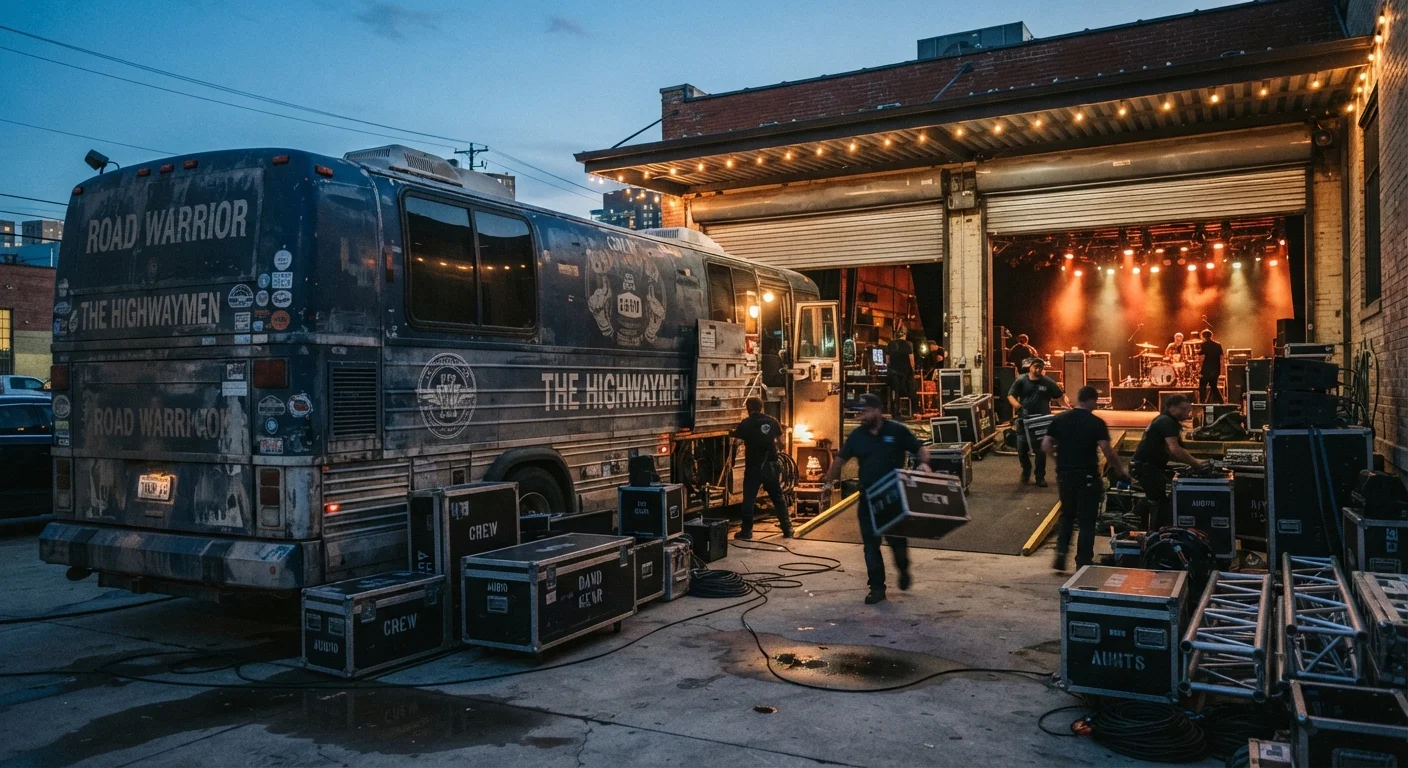
Pop culture has long romanticized touring-the festival shots, the crowd videos, the tour diary aesthetics on social media. What gets edited out is the unglamorous in-between: the 14-hour drives, the green rooms that are just broom closets, the nights when the sound system fails and the artist has to dig deep anyway.
Understanding this context doesn't diminish the spectacle-it enriches it. Knowing that an artist showing up to a mid-week show in a smaller city is making a genuine investment in that audience makes the experience feel more reciprocal. That mutual investment is part of what separates a live music fan from a casual listener. Going deeper with an artist's catalog is one way to build that appreciation before you ever step into a venue.
Scale Changes Everything on Tour
The economics and experience of touring vary enormously by career stage. An emerging artist playing 200-capacity clubs operates in a fundamentally different financial and logistical reality than a headliner selling out arenas. Generalizations about touring being 'profitable' or 'grueling' often collapse when you factor in the scale at which an artist is operating. Context-and realistic expectations-matter more than broad assumptions.
The artists dominating pop culture today didn't get there overnight, and their touring history is often a central part of that story. The mythology around overnight success masks years of exactly this kind of grinding, market-by-market work.